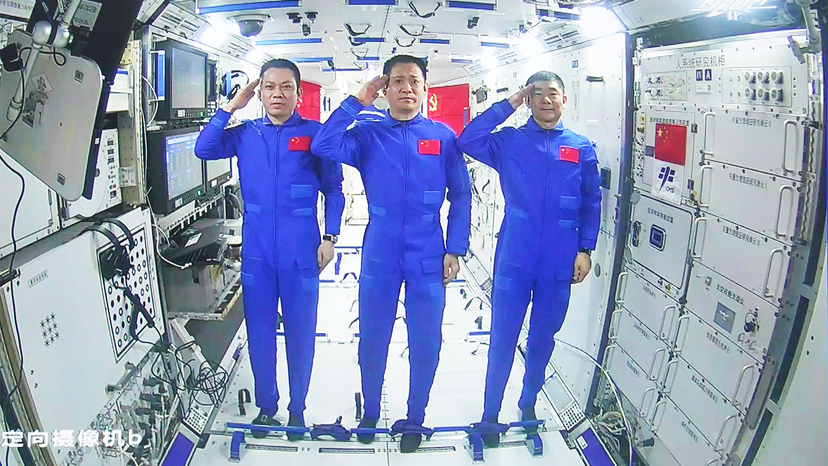
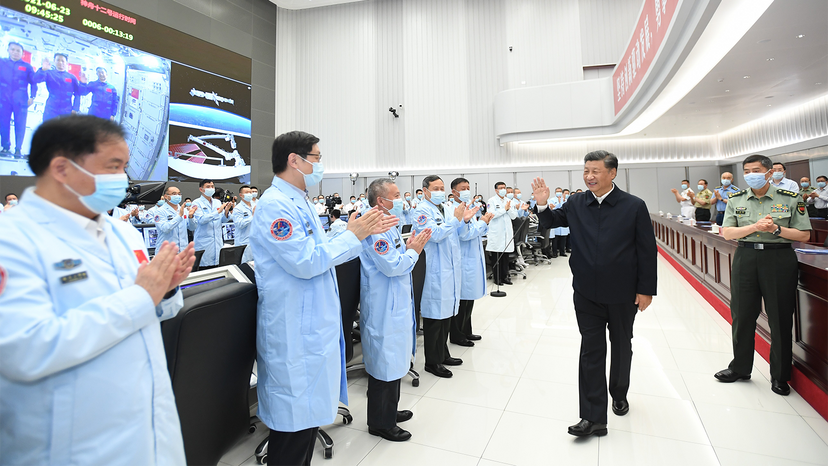
In November 2022, China achieved a historic milestone in its space program as three astronauts arrived at the nation's space station, marking the first in-orbit crew rotation in Chinese space history.
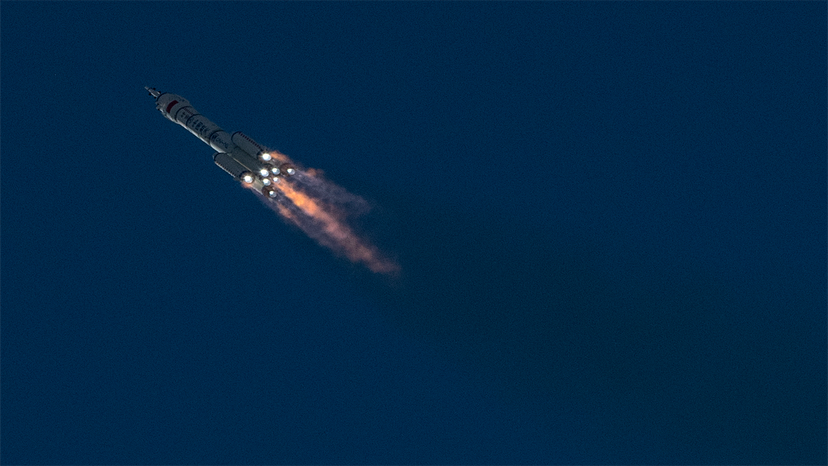
This mission, named Shenzhou-15 or "Divine Vessel," saw the astronauts launch atop a Long March-2F rocket from the Jiuquan Satellite Launch Centre. They embarked on this mission in subfreezing temperatures in the Gobi Desert in northwest China.
Shenzhou-15 was the final mission of a series of 11, including three previous crewed missions, required to assemble the Chinese space station.
The first mission for this ambitious project began in April 2021. After a journey of over six hours, the spacecraft successfully docked with the space station, and the three astronauts were welcomed by the previous Shenzhou crew. This handover period established the station's capability to support six astronauts temporarily, setting another record for China's space program.
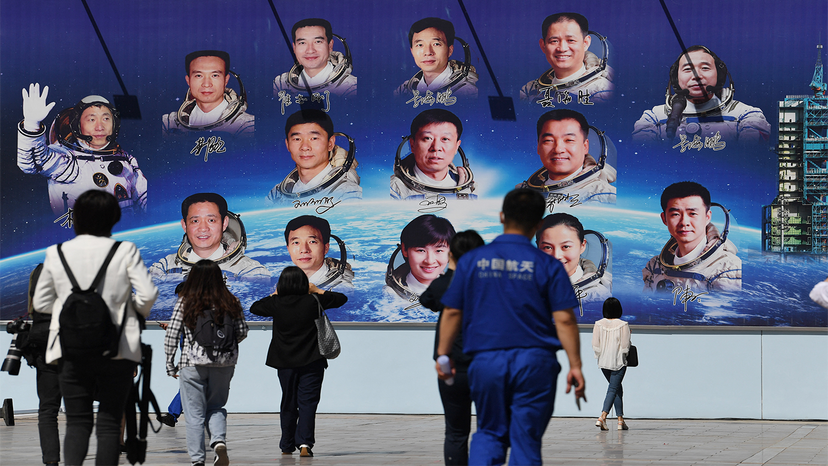
Leading the Shenzhou-15 mission was Fei Junlong, a seasoned astronaut from China's first batch of trainees in the late 1990s, who had previously visited space 17 years ago. He was accompanied by Deng Qingming, a 24-year astronaut trainee making his space debut, and Zhang Lu, a former air force pilot experiencing space for the first time.
After inhabiting and working on the T-shaped space station for six months, the astronauts safely returned to Earth in early June 2023. Future missions will involve a new generation of astronauts with scientific backgrounds, expanding beyond the initial group of former air force pilots.
Tianzhou 5 Meets Its Fate
China's Tianzhou 5 cargo spacecraft, launched in November 2022, has successfully completed its mission and met its fiery end. It achieved a world record for the fastest rendezvous and docking with a space station, connecting with China's Tiangong station just over two hours after launch.
This 29,760-pound spacecraft was tasked with delivering supplies for the Shenzhou 15 mission's three astronauts, as well as experiments, materials, and propellant to maintain Tiangong's orbit. After accomplishing its objectives, Tianzhou 5 was undocked from Tiangong and intentionally deorbited over the remote South Pacific. It reentered Earth's atmosphere on Sept. 12, with most of it likely burning up during the high-speed reentry, while some components fell into the ocean.
Tianzhou 5 marked the fourth supply mission to Tiangong. It had previously operated independently for 33 days after separating from the space station in May, before redocking once the Shenzhou 15 mission departed for Earth. China's plan is to launch Tianzhou spacecraft every eight months, ensuring Tiangong remains continuously occupied for at least a decade, solidifying China's presence in space.