Seven has long been considered a magical number, and that made July 7, 2007 (7/07/07) a pretty special day. Couples raced to the altar to tie the knot; Live Earth concerts streamed across television, radio and the Internet for 24 straight hours to seven continents; and the new seven wonders of the world were announced in Lisbon, Portugal. These new seven wonders were chosen democratically by more than 100 million voters [source: New7Wonders].Lisbon, PortugalLisbon, Portugal
Was it just the lucky date that inspired the selection of new wonders? Not exactly. People have been making lists of spectacular sites for seemingly each epoch of history and stratum of the Earth. There are the seven wonders of the medieval world and the modern world, as well as the seven wonders of the natural world and underwater world -- not to mention the various lists compiled by travel agencies and the media.
Advertisement
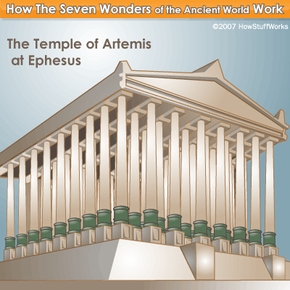
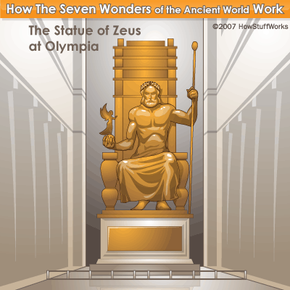
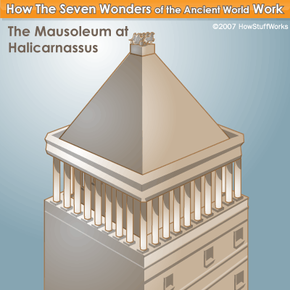
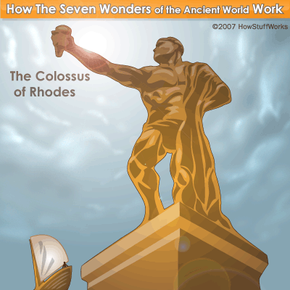
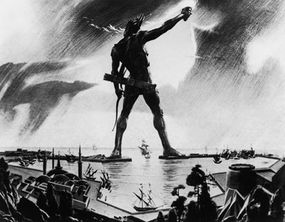
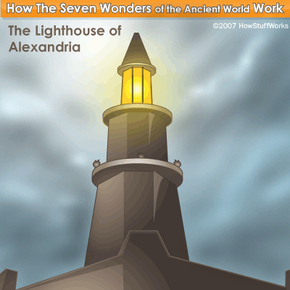
But what about the original Zeus at Olympia (Greece), the Mausoleum at Halicarnassus (Turkey), the Colossus of Rhodes (Greece) and the Lighthouse of Alexandria (Egypt).
Scholars debate over whom compiled this list of wonders -- or as the Greeks called them, theamata, which translates as "things to be seen" [source: Smithsonian]. It might have been Callimachus of Cyrene who drafted the list in the third century B.C. or Herodotus, who lived from around 484 to 425 B.C. [source: Smithsonian]. There are accounts that attribute the list to Philo of Byzantium in 130 B.C. but others that discredit this theory -- as an engineer, he wrote primarily about war, weapons and the military. [source: Princeton].
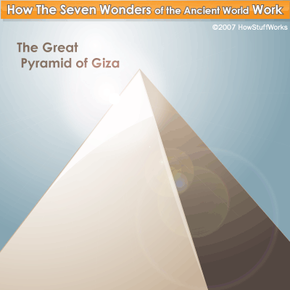
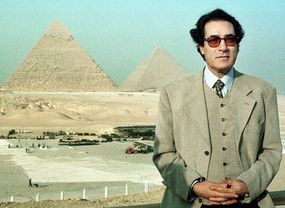
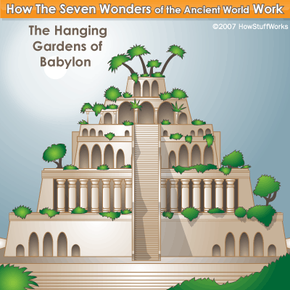
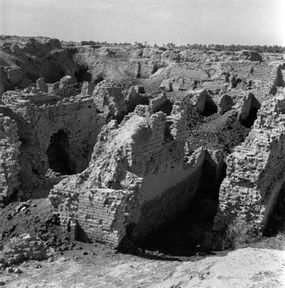
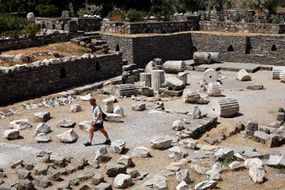
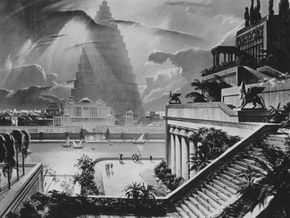
Of the seven wonders, only the Great Pyramid still exists. The others are in unrecognizable ruins, and the Hanging Gardens might never have existed at all. What we know about the wonders comes from written accounts of ancient tourists and modern archaeological research. Much of our information about the monuments is conjecture or questionable secondhand accounts -- that makes this an article about how the wonders probably worked.
These monuments may not have physically stood the test of time, but they thrive in our imaginations as some of the most magnificent manmade structures of the ancient world. In this article, we'll look at each of them in turn, starting with the Great Pyramid of Giza.
Advertisement