Introduction to How DNA Evidence Works

Take the Quiz
Think you're an expert on DNA evidence? Test your knowledge with these quizzes from Investigation Discovery:

DNA evidence quiz
OJ Simpson quiz
JonBenet Ramsay quiz

In t­he last few years, DNA evidence has started to play a big part in many nations' criminal justice systems. It has been used to prove that suspects were involved in crimes and to free people who were wrongly convicted. In the United States, it has been integral to several high-profile criminal cases, including the trial of Orenthal James (O.J.) Simpson and the investigation of the 1996 murder of JonBenet Ramsey.

­­Most people have a basic ­i­dea ­of ­­wh­at ­DNA is.­ ­

­­
Courtesy Genelex

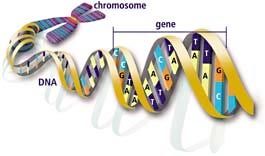
It's essentially an instruction manual and blueprint for everything in your body (see How Cells Work for details). ­­­A DNA molecule is a long, twisting chain known as a double helix. DNA looks pretty complex, but it's really made of only four nucleotides: ­­

  • Adenine
  • Cytosine
  • Guanine
  • Thymine
These nucleotides exist as base pairs that link together like the rungs in a ladder. Adenine and thymine always bond together as a pair, and cytosine and guanine bond together as a pair. While the majority of DNA doesn't differ from human to human, some 3 million base pairs of DNA (about 0.10 percent of your entire genome) vary from person to person.

In human cells, DNA is tightly wrapped into 23 pairs of chromosomes. One member of each chromosomal pair comes from your mother, and the other comes from your father. In other words, your DNA is a combination of your mother's and your father's. Unless you have an identical twin, your DNA is unique to you. This is what makes DNA evidence so valuable in investigations -- it's almost impossible for someone else to have DNA that is identical to yours.


Image courtesy U.S. Department of Energy Human Genome Program
A DNA double helix

The key to DNA evidence lies in comparing the DNA from the scene of a crime with a suspect's DNA. To do this, investigators have to do three things:

  • Collect DNA at the crime scene and from the suspect (see How CSI Works)
  • Analyze the DNA to create a DNA profile
  • Compare the profiles to each other
Authorities can extract DNA from almost any tissue, including hair, fingernails, bones, teeth and bodily fluids. Sometimes, investigators have DNA evidence but no suspects. In that case, law enforcement officials can compare crime scene DNA to profiles stored in a database. The most commonly used database in the United States is called CODIS, which stands for Combined DNA Index System. CODIS is maintained by the FBI. By law, authorities in all 50 states must collect DNA samples from convicted sex offenders for inclusion in CODIS. Some states also require all convicted felons to submit DNA.

­­­­­­

Matching DNA

Law enforcement officials have used a variety of methods to examine DNA. The exact steps in preparing and analyzing the DNA can vary based on which method the investigators use. But, in general, the tests examine non-coding portions of DNA strands. Genes, which serve as templates for making proteins in your cells, make up only five percent of a DNA strand. The remainder of your DNA is non-coding and includes lots of repeating base pairs. Different types of tests look for and analyze different base pair repetition patterns.

Mitochondrial DNA Analysis
Most forensic DNA tests use material from the nucleus of a cell. Sometimes, especially in older samples of tissue like hair and teeth, there is no nucleus remaining in the sample. In these cases, investigators often use mitochondrial DNA analysis, which uses DNA from a cell's mitochondria.
Restriction Fragment Length Polymorphism (RFLP) analysis was one of the first forensic methods used to analyze DNA. It analyzes the length of strands of DNA that include repeating base pairs. These repetitions are known as variable number tandem repeats (VNTRs) because they can repeat themselves anywhere from one to thirty times.

RFLP analysis requires investigators to dissolve DNA in an enzyme that breaks the strand at specific points. The number of repeats affects the length of each resulting strand of DNA. Investigators compare samples by comparing the lengths of the strands. RFLP analysis requires a fairly large sample of DNA that hasn't been contaminated with dirt.

Polymerase Chain Reaction (PCR) analysis is a newer technique that can amplify the DNA in a much smaller sample. It does this by making lots of identical copies of a small amount of DNA. It's often used as a preliminary step in Short Tandem Repeat (STR) analysis, which is the most commonly-used type of forensic analysis today.

STR analysis examines how often base pairs repeat in specific loci, or locations, on a DNA strand. These can be dinucleotide, trinucleotide, tetranucleotide or pentanucleotide repeats -- that is, repetitions of two, three, four or five base pairs. Investigators often look for tetranucleotide or pentanucleotide repeats in samples that have been through PCR amplification since these are the most likely to be accurate.

In STR Analysis, examiners have to:

  • Extract the DNA from the cells in the sample
  • Quantify the DNA
  • Amplify the DNA using PCR
  • Use capillary electrophoresis to extract the amplified DNA
Several of these steps are fairly labor-intensive, but many of them can now be performed by robots and machines.

The FBI's CODIS database uses samples that have undergone STR analysis examining 13 loci. The odds of two people having identical 13-loci STR profiles are about one in a billion.

Advances in DNA Evidence

In 1985, DNA entered the courtroom for the first time as evidence in a trial, but it wasn't until 1988 that DNA evidence actually sent someone to jail. This is a complex area of forensic science that relies heavily on statistical predictions; in early cases where jurors were hit with reams of evidence heavily laden with mathematical formulas, it was easy for defense attorneys to create doubt in jurors' minds. Since then, a number of advances have allowed criminal investigators to perfect the techniques involved and face down legal challenges to DNA fingerprinting. Improvements include:

  • New testing procedures - RFLP analysis required large amounts of relatively high-quality DNA. Newer procedures require far less DNA and can be completed faster.

  • Source of DNA - Science has devised ingenious ways of extracting DNA from sources that used to be too difficult or too contaminated to use.

  • Expanded DNA databases - Several countries, including the United States and Britain, have built elaborate databases with hundreds of thousands of unique individual DNA profiles. However, these databases also raise questions about privacy. DNA holds a lot more information about a person than fingerprints do. For example, a person's DNA includes information about everything from eye color to genetic defects. Some people fear that the widespread use of DNA databases could encourage governments to discriminate against people because of information encoded in their DNA. However, the DNA used for the FBI's CODIS database is not currently thought to correlate to a person's actual traits.

  • Training - Crime labs have developed formal protocols for handling and processing evidence, reducing the likelihood of contamination of samples. On the courtroom side, prosecutors have become more savvy at presenting genetic evidence, and many states have come up with specific rules governing its admissibility in court cases. See How CSI Works for more details.

  • Science education - In recent years, a number of debates have erupted around the world over issues like using DNA evidence, cloning animals or selling genetically modified crops. Since that time, classroom study of DNA and its properties has in many places become more in-depth and widespread.

Using DNA Evidence

Given the high profile of DNA evidence during the O.J. Simpson trial, most people know that DNA profiles are used by criminal investigators to:

  • Prove guilt - Matching DNA profiles can link a suspect to a crime or crime scene.

  • Exonerate an innocent person - Innocent people have been freed from death row in the United States based on DNA evidence. So far, DNA evidence has been almost as useful in excluding suspects as in fingering and convicting them; about 30 percent of DNA profile comparisons done by the FBI result in excluding someone as a suspect.
DNA evidence is also useful beyond the criminal courtroom in:
  • Paternity testing and other cases where authorities need to prove whether or not individuals are related - One of the more infamous paternity cases of late revolved around a 1998 paper in the journal "Nature" that studied whether or not Thomas Jefferson, the third president of the United States, fathered children with one of his slaves.


    Photo courtesy Genelex, Inc
    DNA evidence can pinpoint whether or not someone
    is a parent.

  • Identification of John or Jane Does - Police investigators often face the unpleasant task of trying to identify a body or skeletal remains. DNA is a fairly resilient molecule, and samples can be easily extracted from hair or bone tissue; once a DNA profile has been created, it can be compared to samples from families of missing persons to see if a match can be made. The military even uses DNA profiles in place of the old-school dog tag. Each new recruit must provide blood and saliva samples, and the stored samples can subsequently be used as a positive ID for soldiers killed in the line of duty. Even without a DNA match to conclusively identify a body, a profile is useful because it can provide important clues about the victim, such as his or her sex and race.

  • Studying the evolution of human populations - Scientists are trying to use samples extracted from skeletons and from living people around the world to show how early human populations might have migrated across the globe and diversified into so many different races.

  • Studying inherited disorders - Scientist also study the DNA fingerprints of families with members who have inherited diseases like Alzheimer's Disease to try and ferret out chromosomal differences between those without the disease and who are have it, in the hopes that these changes might be linked to getting the disease.

For more information about DNA evidence, check out the links on the next page.

Lots More Information

Related HowStuffWorks Articles

More Great Links

Sources

  • DNA.gov: DNA and Forensic Identification
    http://dna.gov/basics/
  • FBI: Automating the Forensic Analysis of Nuclear DNA: The FBI's Research and Development Initiative.
    http://www.fbi.gov/hq/lab/fsc/backissu/oct2004/research/2004_10_research04.htm
  • Human Genome Project: DNA Forensics
    http://www.ornl.gov/sci/techresources/Human_Genome/elsi/forensics.shtml
  • Short Tandem Repeat DNA Internet Database
    http://www.cstl.nist.gov/div831/strbase/
  • National Institute of Science and Technology: Brief Introduction to STRs
    http://www.cstl.nist.gov/div831/strbase/intro.htm