
Electrolyte is a "medical/scientific" term for salts, specifically ions. The term electrolyte means that this ion is electrically-charged and moves to either a negative (cathode) or positive (anode) electrode:
- ions that move to the cathode (cations) are positively charged
- ions that move to the anode (anions) are negatively charged
For example, your body fluids -- blood, plasma, interstitial fluid (fluid between cells) -- are like seawater and have a high concentration of sodium chloride (table salt, or NaCl). The electrolytes in sodium chloride are:
Advertisement
- sodium ion (Na+) - cation
- chloride ion (Cl-) - anion
As for your body, the major electrolytes are as follows:
- sodium (Na+)
- potassium (K+)
- chloride (Cl-)
- calcium (Ca2+)
- magnesium (Mg2+)
- bicarbonate (HCO3-)
- phosphate (PO42-)
- sulfate (SO42-)
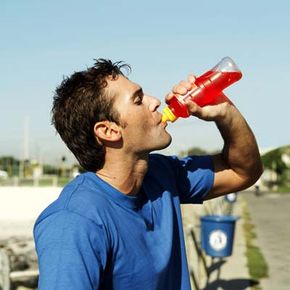
Electrolytes are important because they are what your cells (especially nerve, heart, muscle) use to maintain voltages across their cell membranes and to carry electrical impulses (nerve impulses, muscle contractions) across themselves and to other cells. Your kidneys work to keep the electrolyte concentrations in your blood constant despite changes in your body. For example, when you exercise heavily, you lose electrolytes in your sweat, particularly sodium and potassium. These electrolytes must be replaced to keep the electrolyte concentrations of your body fluids constant. So, many sports drinks have sodium chloride or potassium chloride added to them. They also have sugar and flavorings to provide your body with extra energy and to make the drink taste better.
Another example where electrolyte drinks are important is when infants/children have chronic vomiting or diarrhea, perhaps due to intestinal flu viruses. When children vomit or have diarrhea, they lose electrolytes. Again, these electrolytes and the fluids must be replaced to prevent dehydration and seizures. Therefore, drinks such as Pedialyte have sodium and potassium in them like the sports drinks do. However, pediatricians do not recommend giving sports drinks to a sick child! Sports drinks have much higher sugar concentrations than Pedialyte and the high sugar is not a proper treatment.
Advertisement