
The Moon
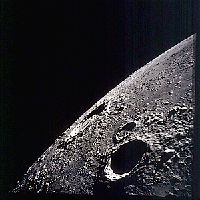
The moon is the most prominent object in the night sky. It is big, bright, and easy to find. Because the lighting of the moon changes everyday with the changing moon phases, you get a different view of its features everyday. The moon offers much to see and you don't need a huge telescope to reveal its features. With binoculars or a small telescope (2-inch or 50-mm refractor, 4-inch or 100-mm reflector), you can observe:
- mountains
- craters
- maria, or "seas"
- terminator - the line between dark and light, where you can see the greatest contrast
The moon is well known, so you can readily find maps or images of the moon, whether online or in periodicals or textbooks, to help you identify features that you observe. A large aperture telescope (6- to 10-inch / 15- to 25-cm) will reveal close-up images of these features. It is even possible, using your own observations or other images, to measure the heights of lunar mountains.
Advertisement
Contrary to popular belief, the best time to observe the moon is not during a full moon, but rather when the moon is between the last quarter and first quarter, because the sun shines at an angle to the lunar features and provides good relief. Sometimes, it is helpful to use a moon filter to enhance the contrast of the views and bring out details. Also, if the light is too bright and you have a reflecting telescope, you can reduce the amount of light and enhance the contrast by placing your hand, with your fingers spread apart, in front of the telescope's tube.
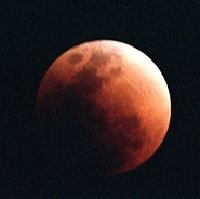
It is often rewarding to view the moon during a lunar eclipse, when you can see the Earth's shadow slowly creep across the lunar features. You can find out when lunar eclipses will occur using the U.S. Naval Observatory's Lunar Eclipse Computer.
Finally, the moon is a great target for astrophotography. You can photograph the moon using a telephoto lens or by hooking a camera to your telescope.