
Preservation of Wetlands
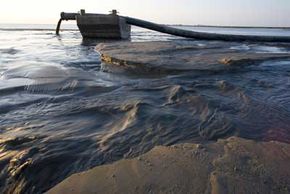
Many programs are in place not only to preserve wetlands, but to rehabilitate destroyed wetlands. In addition to U.S. federal regulations, individual states are encouraged to implement their own water-quality standards and wetlands protection programs.
The U.S. Environmental Protection Agency (EPA) estimates that 75 percent of wetlands are privately owned. So, the EPA and United States Fish and Wildlife Service (USFWS) offer financial assistance and expertise to landowners who would like to restore or protect wetlands on their own property. In addition, the EPA's "5 Star Restoration Program" provides grants to community organizations, students, landowners and local government groups for wetland and stream restoration projects. Since 1999, it has kicked off over 250 projects [source: EPA].
Advertisement
The rehabilitation of destroyed wetlands also is essential. It can take a long time for a wetland to form again naturally, but we can boost it in that direction. The EPA defines three types of rehabilitation: restoration, creation and enhancement.
Restoration returns a degraded or former wetland to its original state. A simple example of this is filling a previously drained ditch with water and letting nature take its course. Restoration can happen on small or very large scales. Wetland creation, or creating a wetland where one didn't exist before, is done by flooding an area or diverting a water source (like a stream, for example) to a dry area. Wetland creation can be difficult, as there are many factors at play, including recreating a viable and natural ecosystem. Taking an existing wetland and increasing its function is called wetland enhancement. If a wetland doesn't have a suitable amount of fish, for example, we can add water. Or if it doesn't have enough birds, we can decrease water. However, wetland enhancement usually comes with a tradeoff -- adding that water will indeed result in more fish, but it will also decrease the wetland's ability to hold back floodwater [source: EPA].
For more information on wetlands and other natural phenomena, take a look at the links below.
Related HowStuffWorks Articles
More Great Links
Sources
- Center for Disease Control. "Harmful Algal Blooms (HABs)." 2008. (June 18, 2008) http://www.cdc.gov/hab/redtide/about.htm
- Conservation Technology Information Center. "Wetlands: A Key Link in Watershed Management." 2008. (June 4, 2008) http://www2.ctic.purdue.edu/KYW/Brochures/Wetlands.html
- Encyclopedia Brittanica Online. "Jimmy Hoffa." 2008. (June 6, 2008) http://www.britannica.com/ebc/article-9367187
- Greenhouse, Linda. "Justices Divided on Protection Over Wetlands." June 20, 2006. (June 18, 2008) http://www.nytimes.com/2006/06/20/washington/20wetlands.html
- Markstein, Don. "Swamp Thing." Toonpedia. 2008. (June 12, 2008) http://www.toonopedia.com/swamp_th.htm
- Merriam-Webster Online Dictionary. "hydrology." 2008. (June 10, 2008) http://www.merriam-webster.com/dictionary/hydrology
- New York Rock. "NYC's Legendary Wetlands Preserve Rock Club Forced to Close Its Doors After Almost 13 Years." July 30, 2001. (June 12, 2008) http://www.nyrock.com/worldbeat/07_2001/073001b.asp
- O'Connor, Anahad. "South Florida Freezes are Linked to Draining of Wetlands." New York Times. Nov. 25, 2003. (June 4, 2008) http://query.nytimes.com/gst/fullpageHO.html?res=9B07E6DF1E3BF936A15752C1A9659C8B63&sec=&spon=
- Poff, N. LeRoy; Brinson, Mark M. and Day, John W. Jr. "Aquatic ecosystems and Global climate change: Potential impacts on Inland Freshwater and Coastland Wetland Ecosystems in the United States." Jan. 2002. (June 10, 2008) http://www.pewclimate.org/docUploads/aquatic.pdf
- State of New Jersey. "New Jersey Devil." Hangout NJ. Feb. 2002. (June 12, 2008) http://www.state.nj.us/hangout_nj/200202_jersey_devil_p1.html
- Water Encyclopedia. "Clean Water Act." 2007. (June 2, 2008) http://www.waterencyclopedia.com/Ce-Cr/Clean-Water-Act.html
- Worldwide Fund for Nature. "Threats to Wetlands." Jan. 15, 2008. (June 2, 2008) http://www.panda.org/about_wwf/what_we_do/freshwater/about_freshwater/intro/threats/index.cfm
- United States Environmental Protection Agency. "An Introduction and User's Guide to Wetland Restoration, Creation and Enhancement." 2003. (June 12, 2008) http://www.epa.gov/owow/wetlands/pdf/restdocfinal.pdf
- United States Environmental Protection Agency. "Wetland Regulatory Authority." June 22, 2007. (June 18, 2008) http://www.epa.gov/owow/wetlands/pdf/reg_authority_pr.pdf
- United States Fish & Wildlife Service Midwest. "Endangered Species - What Is a Fen?" 2008. (June 6, 2008). http://www.fws.gov/midwest/endangered/permits/hcp/mitchellsatyr/fen.html
- United States Environmental Protection Agency. "River Corridor and Wetland Restoration - Five-Star Restoration Program." Aug. 14, 2007. (June 12, 2008)http://www.epa.gov/owow/wetlands/restore/5star/02factsheet.html
- United States Environmental Protection Agency. "Threats to Wetlands." Sept. 2001. (June 10, 2008) http://www.epa.gov/owow/wetlands/pdf/threats.pdf
- United States Environmental Protection Agency. "Water Quality Criteria for Nitrogen and Phosphorous Pollution." April 28, 2008. (June 4, 2008) http://www.epa.gov/waterscience/criteria/nutrient/
- United States Environmental Protection Agency. "Watershed Academy Web - Introduction to the Clean Water Act." Oct. 28, 2002. (June 12, 2008) http://www.epa.gov/watertrain/cwa/cwa2.htm
- United States Environmental Protection Agency. "Wetlands Definitions." Feb. 22, 2006. (June 2, 2008) http://www.epa.gov/owow/wetlands/what/definitions.html
- United States Environmental Protection Agency. "Wetlands - Fish and Wildlife Habitat." Feb. 22, 2006. (June 4, 2008) http://www.epa.gov/owow/wetlands/fish.html
- United States Environmental Protection Agency. "Wetlands - Flood Protection." May 9, 2006. (June 4, 2008) http://www.epa.gov/owow/wetlands/flood.html
- United States Environmental Protection Agency. "Wetland Restoration." September 2001. (June 2, 2008) http://www.epa.gov/owow/wetlands/pdf/restoration.pdf
- United States Environmental Protection Agency. "Wetlands - Wetland Types." Feb. 22, 2006. (June 6, 2008) http://www.epa.gov/owow/wetlands/types/
- Zinn, Jeffrey A. and Copeland, Claudia. "CRS Issue Brief for Congress - Wetland Issues." July 18, 2003. (June 2, 2008) http://www.ncseonline.org/NLE/CRSreports/03Aug/IB97014.pdf