
World War II Planes
World War II was fought in the air as much as it was on the ground, with entire squadrons of fighter planes and bombers engaging in combat. Explore some of the most famous types of World War II airplanes and learn how they were used in combat operations.
Learn More
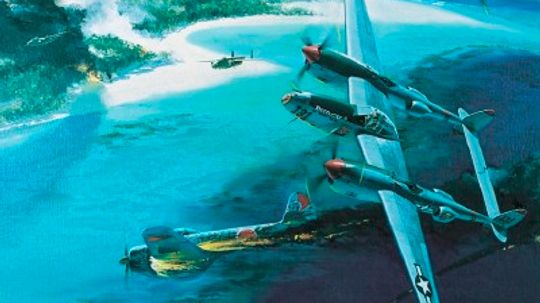
The Lockheed P-38 Lightning was considered the most sophisticated aircraft Lockheed had ever built. The distinctive sight and sound of the P-38 would make it one of the best-known aircraft of the war. Learn more about the unique P-38 Lightning plane.
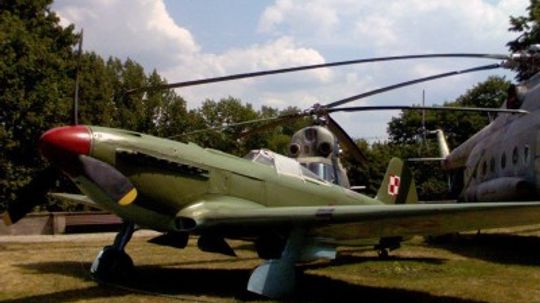
The Russian Yakovlev Yak-9 was faster and more maneuverable than many other planes. The Yak-9 model also featured more metal in the structure, so it was lighter and more maneuverable than earlier iterations. Read more specs for the Yak-9 airplane.

The film "Pearl Harbor" is now playing. Look at the aircraft involved in that battle, technological marvels for their time.
By Jeff Tyson
Advertisement
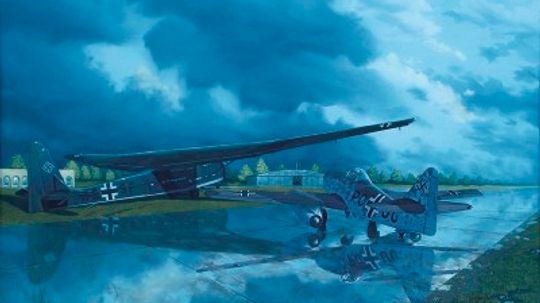
The great legacy of the Messerschmitt Me 262 is that it inspired other air forces to adopt the jet fighter as standard, and moved engineers to utilize its layout for fighters and airliners. Learn more about this top World War II fighter plane.
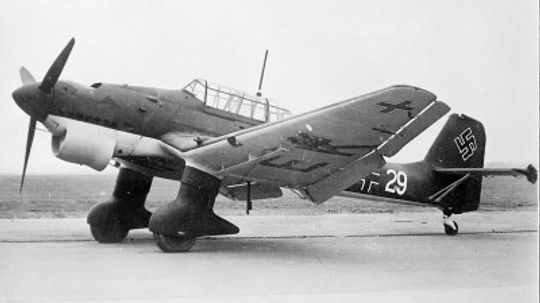
The name for the Junkers Ju 87 Stuka derived from Sturzkampfflugzeug, the generic German word for dive-bomber. So famous was the Junkers Ju 87 that the term Stuka came to be identified with it in Western eyes. Read the specs and uses for the Stuka.
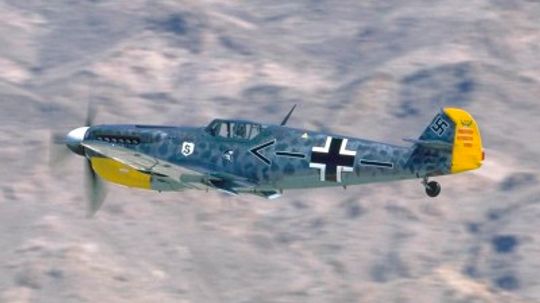
The Messerschmitt Bf 109 is one of few fighters ever to be developed from a light-plane design. Willy Messerschmitt's angular little plane was built in greater numbers than any other fighter. Read how the Bf 109 has been so successful and long-lived.
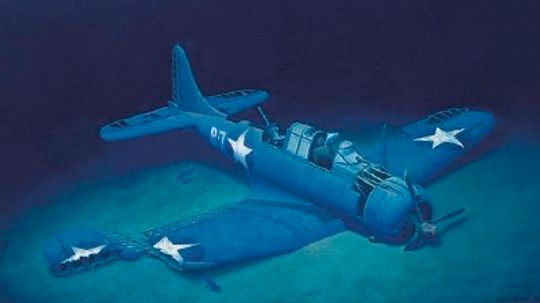
The Douglas SBD Dauntless was a carrier-based dive bomber, a compact scrapper with a gift for sinking Japanese carriers and other large ships. Learn the specifications and how the Dauntless proved to be the supreme dive-bomber of the Pacific War.
Advertisement
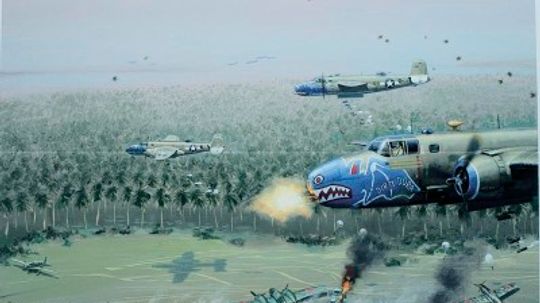
The North American B-25 Mitchell was efficient, easy to manufacture and repair, and able to do any job assigned to it. No other twin-engine bomber of World War II saw greater production. Learn the specifications and uses for this handsome bomber.
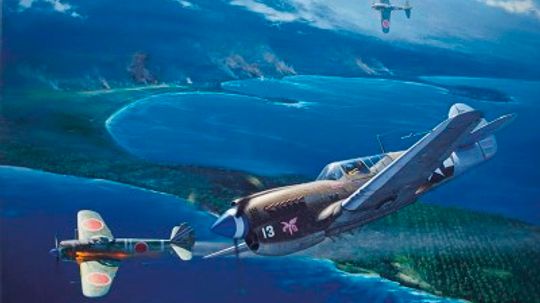
The Curtiss P-40 Warhawk is one of the best-liked airplanes of World War II, tough and virtually trouble-free, though its performance was never quite up to that of its opponents. Read about this most important American fighter plane of 1942-1943.
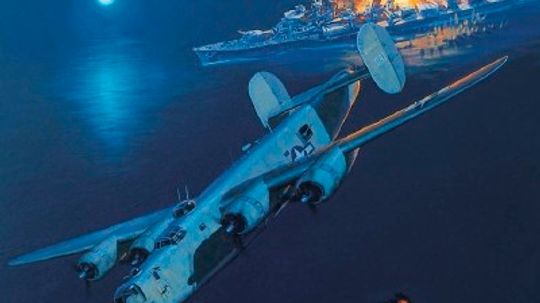
The Consolidated B-24 Liberator was the most prolific American plane of World War II. But the B-24 was not as attractive as the B-17 bomber, nor did it win the same popular regard from the public. Read the story and specifications of the B-24 bomber.
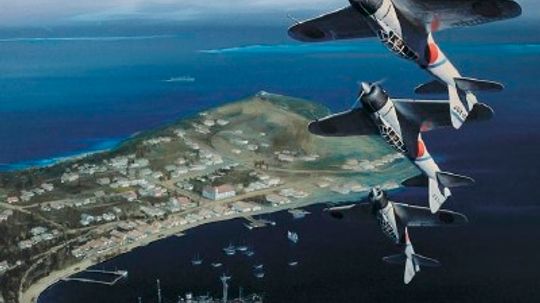
The successes of the Mitsubishi A6M Zero during the first six months of World War II stunned Western observers. Its dominance was frightening, but soon surpassed. Learn about the rise and fall of the A6M Zero, and its unique design specifications.
Advertisement
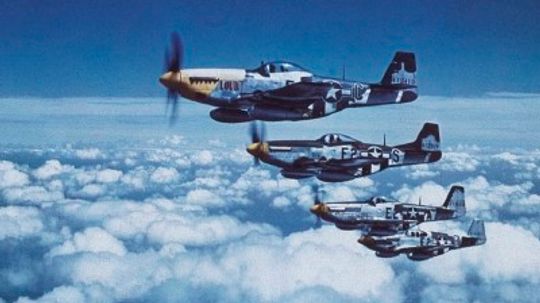
The North American P-51 Mustang spelled doom for the Luftwaffe. It was not only able to escort bombers on long-range missions and engage in dogfights, it could also drop and destroy the German Air Force on the ground. Read more on this pivotal plane.
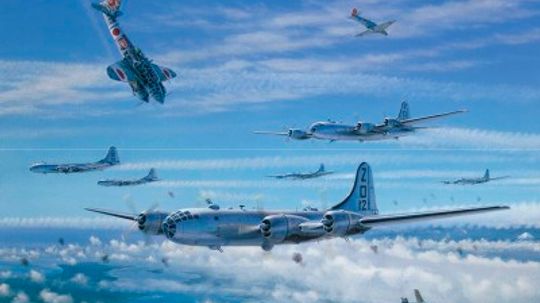
The Boeing B-29 Superfortress was the biggest, most expensive gamble by the United States during World War II, built with incredibly high expectations on a tight deadline. Read about the big advances in aviation technology brought about by the B-29.
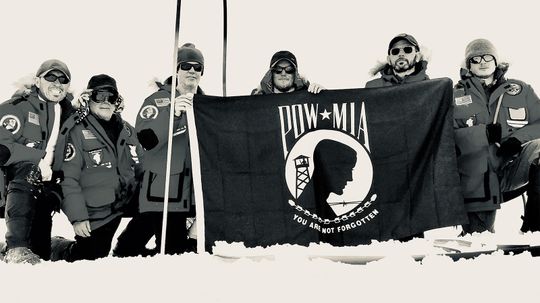
The search team used a radar-equipped drone to locate a P-38 from the so-called "Lost Squadron" that crash-landed in Greenland in 1942. But the story doesn't end there.