

The world is full of oddities. Some are delightful; others are just plain strange.
But every single one reminds us how much there still is to learn.
Advertisement
Here are 29 weird facts that'll make you do a double-take.
The world is full of oddities. Some are delightful; others are just plain strange.
But every single one reminds us how much there still is to learn.
Advertisement
Here are 29 weird facts that'll make you do a double-take.
Like fingerprints, everyone's tongue has a unique pattern. No two are alike. Scientists have even explored using tongue prints for biometric identification.
Advertisement
You read that right. Female platypuses don't have nipples. Instead, they secrete milk through pores in their skin. The milk pools on their abdomen and the babies lap it up.
Platypuses are also among the only mammals that lay eggs. Stay weird, platypus.
Advertisement
In 1896, the Anglo-Zanzibar War became the shortest conflict in history. The British bombarded the Sultan's palace, and within 38 minutes, the war was over. Some arguments last longer than that.
Advertisement

The human body surprises us constantly. One of its unsung heroes is the nose, which can detect a huge number of odors (some say more than a trillion different scents, but that's been disputed).
Even though you can't always name what you smell, your nose is working overtime.
Advertisement
If you're afraid of long words, brace yourself: hippopotomonstrosesquippedaliophobia is the actual term. It's a bit of linguistic irony that's hard to forget.
Advertisement
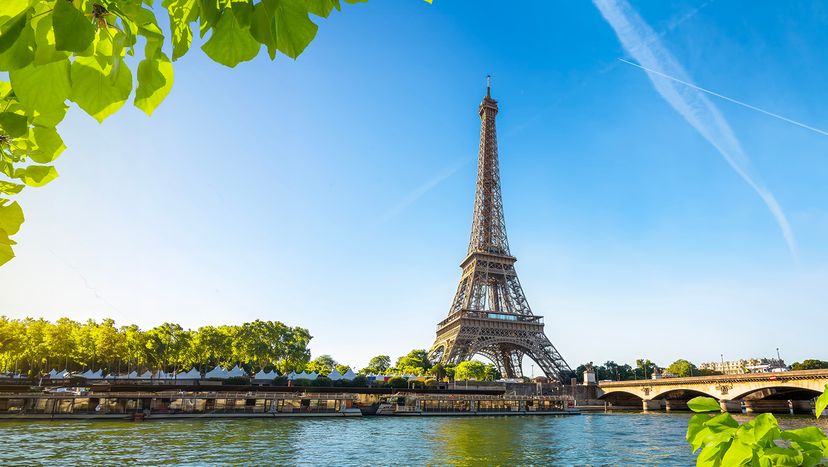
Metal expands in heat. As temperatures rise, the Eiffel Tower can grow a few millimeters. It's one of the many fun facts that blend science and architecture.
Advertisement
Comets might look beautiful, but they smell terrible. Thanks to hydrogen sulfide and ammonia, their scent resembles rotten eggs and urine. The perfume of the cosmos is not likely to be bottled and sold on Earth shelves any time soon.
Advertisement
The blue whale—the largest animal on Earth—has a tongue that can weigh up to 6,000 lb (2,700 kg). That's roughly the same as a fully grown elephant.
Advertisement
Saliva is essential to taste. Without it, food molecules can’t dissolve properly, making it impossible for your taste buds to detect flavor. Your mouth isn’t just wet; it’s working.
Advertisement
Despite being a U.S. state, it covers less area than some individual urban regions. In fact, the entire state of Rhode Island is smaller than Los Angeles County.
At the North Pole, all lines of longitude converge, making it technically every time zone at once. That’s one reason why no official time zone exists there.
With just about 800 residents and an area of 0.49 square kilometers (0.19 square miles), Vatican City is the world’s smallest country. Yet it holds enormous cultural and religious influence.

Many countries have versions of their national anthems in sign language. These versions aren't just translations; they visually express emotion, rhythm, and national pride.
In 1947, fruit flies became the first animals launched into space. Scientists studied their reaction to radiation exposure beyond Earth’s atmosphere. Space bugs paved the way for astronauts.
Skin isn't just for keeping everything in place. It's your largest organ, regulating body temperature, protecting against infection, and helping you feel the world around you.
It may sound silly, but the word "only" adds just one letter to the word "one." It’s a fun little coincidence that delights word nerds.
The Pacific Ocean spans more than 64 million square miles (165 million square km). That’s larger than the total land area of Earth’s continents.
Due to tectonic activity, the Atlantic Ocean expands by a few centimeters each year. Meanwhile, the Pacific is slowly shrinking.

Japan alone has vending machines that dispense umbrellas, fresh eggs, and even used books. There's one vending machine for about every 23 people in the country.
Scientists estimate there are billions of solar systems in our galaxy alone. Ours isn't special; it's just the one we happen to call home.
From 1912 to 1948, the Olympics included competitions in painting, sculpture, music, and literature. Yes, art used to be an Olympic sport.
The upper jaw, or maxilla, is a fixed part of your skull. Unlike the lower jaw, it doesn’t move—but it holds your upper teeth and shapes your face.
Vultures can eat disease-laden bone and rotten meat with little issue. Their stomach acid is strong enough to kill dangerous bacteria.
Place two mirrors facing each other, and you’ll create infinite reflections. It’s a simple trick with complex physics, thanks to light bouncing endlessly.
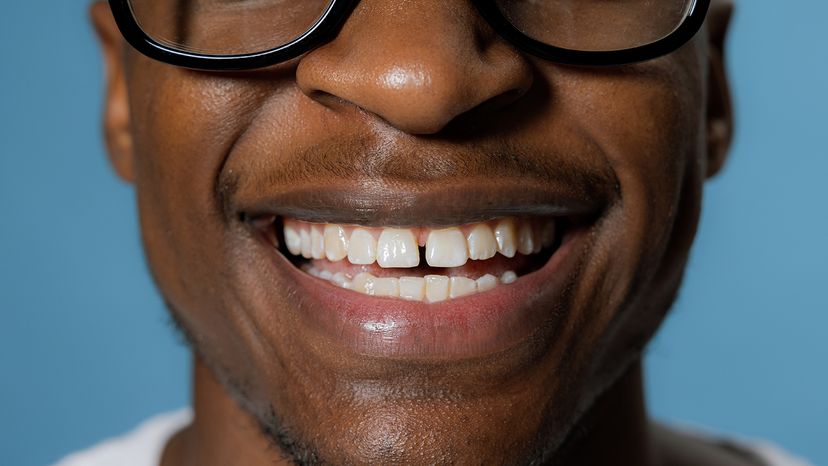
Your enamel, the outer coating of your teeth, is the hardest substance in the human body. It rivals the durability of shark teeth when it comes to biting down.
About 90 percent of the world's population lives north of the equator. That includes most major cities and economic centers.
Plate tectonics help recycle carbon and regulate climate. As far as we know, Earth is the only planet with active tectonic plates.
Antarctica has no native human population. It hosts researchers and scientists—temporarily.
Believe it or not, Scotland chose the unicorn as its national animal. It symbolizes purity, power, and independence. Plus, it’s got serious mythological flair.
We created this article in conjunction with AI technology, then made sure it was fact-checked and edited by a HowStuffWorks editor.
Please copy/paste the following text to properly cite this HowStuffWorks.com article:
Advertisement