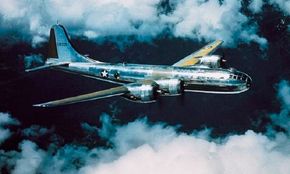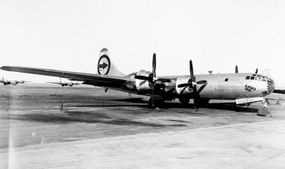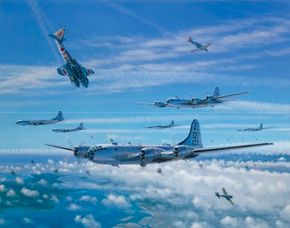
The Boeing B-29 Superfortress was the biggest, most expensive gamble undertaken by the United States during World War II, exceeding even the fabled Manhattan (atomic bomb) Project in both of these categories.
Advertisement
Never before had so many new ideas been put together so rapidly in a single aircraft. The advances were startling and included the following: a huge new airframe that was a total departure from previous Boeing practice; new engines that had to go through a long and costly development process before they became even remotely reliable; new propellers that gave almost as much difficulty as the engines; a new pressurization system, larger than any previously attempted; a new high-lift, high-wing loading-wing design that promised range but at the cost of high landing speeds and tricky handling; a new and totally untried central fire control system; and many other less critical, but still untried, items.
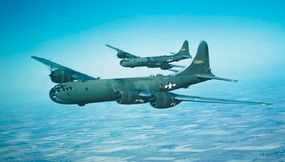
Further, the press of the war effort required that this amazing new airplane be built in a brand-new factory, staffed largely by untrained personnel, many of whom had never touched an airplane before.
The aircraft was also intended to be deployed from remote fields in China and from tiny Pacific islands, where fuel, supplies, and maintenance would be difficult to assemble. President Franklin Delano Roosevelt's pledge that the aircraft would go into action from Chinese bases by April 1944 placed an almost intolerable deadline on the program.
Finally, all of the money, intellectual effort, and priorities invested to create a nuclear weapon in the Manhattan Project would have been utterly wasted had the Boeing B-29 Superfortress failed, for it was the only aircraft capable of carrying and delivering the atomic bomb.
Read more about the Boeing B-29 Superfortress, and find specifications for this classic airplane, in the next section.
For more information on airplanes, check out:
Advertisement