What Country Has the Most Nuclear Weapons? Ranking All 9

By: Grant Virellan  | 
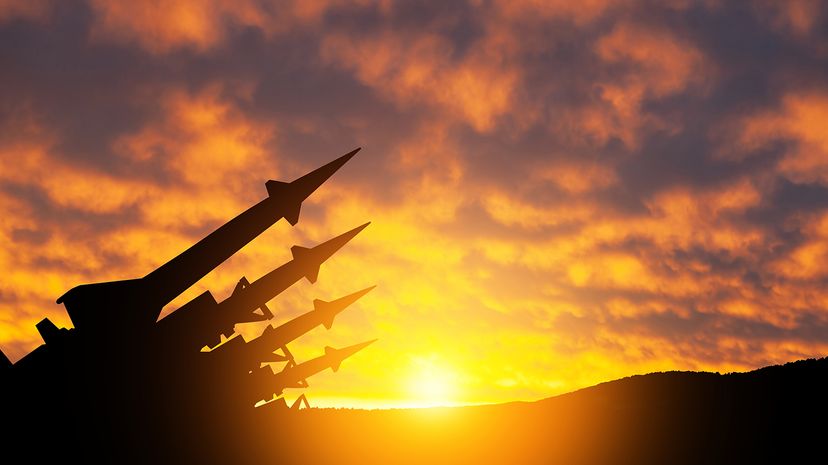
Nobody wins at the end of this race. Hamara / Shutterstock

Nuclear arsenals remain central to global security debates, leading people to wonder: What country has the most nuclear weapons? Since the dawn of the nuclear age after World War II, countries have built nuclear weapons to deter rivals and protect national security.

Today, nine countries possess nuclear weapons, and the size of their nuclear stockpiles varies widely. According to best estimates from organizations such as the Federation of American Scientists and the Stockholm International Peace Research Institute, Russia currently maintains the largest nuclear arsenal in the world.

Advertisement

Understanding how these arsenals developed requires a look at the countries that possess nuclear weapons and how their nuclear forces evolved.

1. Russia: 5,580

Russia has the largest nuclear arsenal in the world. As of 2024, analysts estimate that Russia possessed about 5,580 nuclear warheads across its military stockpiles and retired warheads awaiting dismantlement.

Russia inherited much of its nuclear arsenal from the Soviet Union after the Cold War ended. Today the country maintains a nuclear triad consisting of land-based intercontinental ballistic missiles, submarine launched ballistic missiles, and long-range strategic bombers.

Advertisement

Russia and the United States together possess roughly 90 percent of all nuclear weapons in the world. Russia also suspended participation in the New START arms control treaty in 2023, although it said it would continue observing the treaty’s central limits.

2. United States: 5,044

The United States developed the first nuclear weapons during World War II and used two atomic bombs in 1945. That event launched the modern nuclear arms race between global powers.

As of 2024, the U.S. nuclear arsenal contained an estimated 5,044 nuclear warheads. The United States maintains a nuclear triad of intercontinental ballistic missiles, submarine launched ballistic missiles, and strategic bombers.

Advertisement

American nuclear forces remain central to the country's national security strategy and alliances with European countries and partners in East Asia.

3. China: 600+

China tested its first nuclear weapon in 1964 and has maintained nuclear forces ever since. The country also states that it follows a "no first use" policy regarding nuclear weapons.

China's nuclear arsenal has expanded rapidly in recent years. By January 2025, analysts estimate that China possessed at least 600 nuclear warheads, with the number increasing by roughly 100 new warheads per year since 2023.

Advertisement

This rapid growth has raised concerns among nuclear policy experts that a new nuclear arms race may be emerging in the coming decade.

4. France: 290

France developed nuclear weapons in 1960 following geopolitical tensions such as the Suez Crisis. French leaders believed an independent nuclear deterrent was necessary to maintain national independence and global influence.

Today France maintains one of the largest nuclear arsenals among European countries. Its nuclear forces rely primarily on submarine launched ballistic missiles and air launched cruise missiles.

Advertisement

5. United Kingdom: 225

The United Kingdom tested its first nuclear weapon in 1952 and became the third country to develop nuclear weapons.

Britain maintains a relatively small but technologically advanced nuclear deterrent. Its nuclear program is centered on submarine launched ballistic missiles carried aboard a fleet of nuclear armed submarines.

Advertisement

6. India: 180

India first tested a nuclear explosive device in 1974 and declared itself a nuclear weapon state after a series of tests in 1998.

India's nuclear arsenal is estimated to include about 180 nuclear warheads. Like Pakistan, India continues modernizing its nuclear forces with new missile technologies and delivery systems.

Advertisement

7. Pakistan: 170

Pakistan conducted its first nuclear tests in 1998 during a period of intense rivalry with India. The country's nuclear program developed rapidly in response to India's own nuclear weapons program.

Today Pakistan is estimated to possess around 170 nuclear warheads and continues developing new ballistic missile delivery systems.

Advertisement

8. Israel: 90

Israel is widely believed to possess nuclear weapons but does not officially acknowledge its nuclear arsenal. Analysts estimate the country may possess about 90 nuclear warheads.

Israel's nuclear program has remained deliberately ambiguous for decades, making precise estimates difficult.

Advertisement

9. North Korea: 50

North Korea announced its withdrawal from the Nuclear Non-Proliferation Treaty in 2003 and has conducted multiple nuclear tests since then.

Analysts estimate that North Korea may have assembled around 50 nuclear warheads. The country's leadership continues to prioritize its nuclear program as a core part of its national security strategy.

Advertisement

How Many Nuclear Weapons Exist Today

Across all nuclear armed states, the global inventory of nuclear weapons was estimated to be about 12,241 warheads as of 2025. Roughly 9,614 of those are in military stockpiles and could potentially be used in conflict.

For decades after the Cold War, the total number of nuclear weapons declined as the United States and Russia dismantled thousands of retired warheads. However, the pace of nuclear disarmament has slowed.

Many experts warn that reductions in nuclear weapons may be ending as new nuclear weapons programs expand in several countries.

Why Nuclear Arsenals Still Matter

Nuclear weapons remain the most destructive weapons ever created. Their power to cause mass destruction means that even a limited nuclear war could have catastrophic global consequences.

Arms control agreements such as the Nuclear Non-Proliferation Treaty aim to prevent more countries from developing nuclear weapons and encourage nuclear disarmament among existing nuclear weapon states.

Yet many experts believe the world may be entering a new nuclear arms race. Rapid technological changes, geopolitical conflicts and weakening arms control agreements are increasing uncertainty about the future of global nuclear forces.

We created this article in conjunction with AI technology, then made sure it was fact-checked and edited by a HowStuffWorks editor.

Advertisement

Loading...