

Robert Decelis/Digital Vision/Getty Images
Cotton candy goes by many different names.
See more pictures of candy.
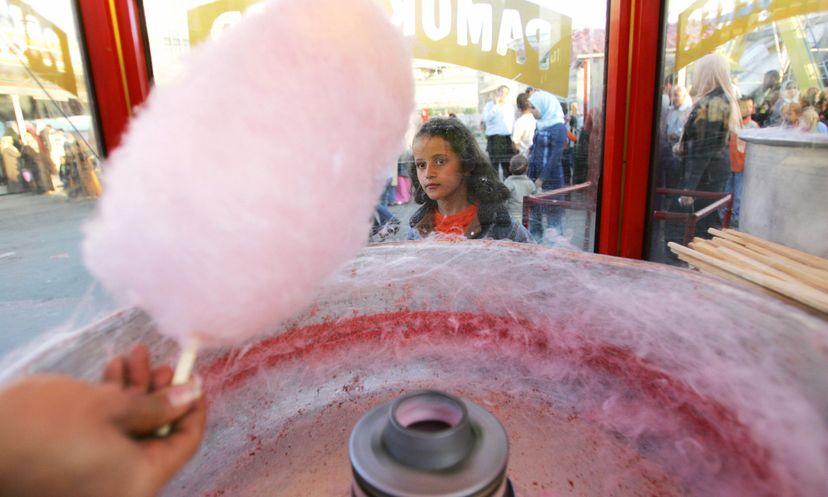
If you want to feel like a kid again, go to a carnival. You can ride the Ferris wheel, gape wide-eyed at the sword swallowers and gasp with amazement as the magician correctly discerns the card in your pocket. You can even watch spellbound as the cotton candy maker spins a confection that looks like pillows of wool but melts in your mouth like a snowflake.
OK, cotton candy may lack the "wow" factor of many other carnival sights, but it does have its own kind of magic: the magic of food science. Cotton candy wasn't always kids' stuff. In fact, its roots go back to the banquet tables of the European aristocracy and a time when sugar was so rare that it was kept under lock and key.
Sugar, Sugar |
Since then, cotton candy has traveled the world under a variety of aliases. It's candy floss in Great Britain, fairy floss to the mates in Australia, la barbe à papa, or Papa's beard, to the French, and zucchero filato, or sugar thread, in Italy.
This article will take you on that journey through time and space, following cotton candy from its origins as common table sugar to a fluffy mass of sheer sugary delight. And it all boils down, literally, to a trick called caramelization. Read on to learn more.
Advertisement
