The Arctic Ocean and Why You Literally Can't Live Without It

By: Grant Virellan  | 
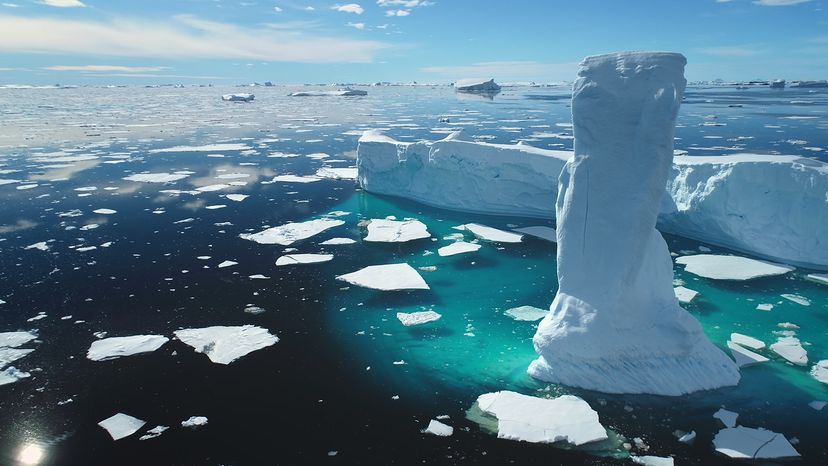
The world's smallest ocean plays a big role in keeping the planet cool. Mozgova / Shutterstock

The Arctic Ocean sits at the top of the planet, wrapped around the geographic North Pole and within by the Arctic Circle.

Though it is the smallest of the world’s oceans, the Arctic Ocean covers about 5.4 million square miles (14 million square km) This frozen ocean plays an outsized role in Earth’s climate and the entire Arctic region.

Advertisement

Ocean lies between North America and Eurasia, linked to the Pacific Ocean through the Bering Strait and to the Atlantic Ocean through the Fram Strait between Greenland and Svalbard. What happens here does not stay here. It influences air temperatures and ocean currents.

Where the Arctic Ocean Sits and What It Consists Of

The Arctic Ocean consists of deep basins and broad continental shelf seas. The two main deep basins are the Eurasian Basin and the Amerasia Basin, separated by underwater ridges on the ocean floor.

Around these basins sit marginal seas such as the Barents Sea, Kara Sea, Laptev Sea, East Siberian Sea, Chukchi Sea, and Beaufort Sea. To the south and east, the Greenland Sea and Norwegian Sea connect it to the wider Atlantic water system.

Advertisement

Ocean water also flows in from the Pacific Ocean, so the Arctic links the Pacific and Atlantic Oceans.

Scientists sometimes refer to this connected system as the Arctic Mediterranean Sea because it behaves like a semi-enclosed extension of the Atlantic Ocean.

Advertisement

Sea Ice, Fresh Water, and a Frozen Surface Layer

Much of the Arctic Ocean shows a shifting cap of sea ice. Arctic sea ice expands in winter and retreats in summer, creating seasonal sea ice cover that once defined this frozen ocean.

Melting sea ice and river runoff from North America and Siberia add large amounts of fresh water to the ocean surface. This creates a low-salinity sea ice environment and a fresh surface layer that floats above denser deep waters.

Advertisement

The surface layer insulates the deep sea from cold Arctic air, helping regulate water temperature and Arctic Ocean circulation.

Wind and ocean currents drive ice drift across the central Arctic Ocean. Some of that ice moves toward Fram Strait, where ice export carries it into the Greenland Sea.

Sea ice loss in recent decades has thinned this cover, exposing more open ocean surface to warming temperatures and increasing air temperatures across the Arctic region.

Advertisement

Circulation, Currents and Global Climate

Arctic Ocean circulation depends on the balance between Pacific water entering through the Bering Strait and Atlantic water entering from the Norwegian Sea and Barents Sea. These flows mix within the Arctic Basin and move through the western Arctic Ocean and eastern Arctic seas.

Cold Arctic air cools surface waters, helping form dense waters that can influence circulation in the Atlantic Ocean. In this way, the Arctic climate system connects to southern polar regions and the rest of the planet.

Advertisement

Changes in water temperature, sea ice cover, and ocean currents alter how heat moves around Earth’s climate system. That may influence weather patterns and storm tracks.

Life in the Arctic Ocean

Despite harsh conditions, the Arctic Ocean supports marine mammals such as seals and whales, along with fish, seabirds, and endangered marine species. Polar bears rely on Arctic sea ice as a platform to hunt, linking their survival directly to sea ice cover.

Productive continental shelf areas in the western Arctic and eastern Arctic provide nutrients that support food webs. As sea ice loss accelerates, shipping routes like the Northern Sea Route and the Northwest Passage open more frequently, increasing human activity in the Arctic Mediterranean Sea.

Advertisement

Researchers from the National Snow and Ice Data Center track sea ice records to understand how melting sea ice reshapes the Arctic Basin.

The Arctic Ocean may be the smallest of the world’s oceans, but it's a powerful engine in Earth’s climate and a critical part of our shared future.

We created this article in conjunction with AI technology, then made sure it was fact-checked and edited by a HowStuffWorks editor.

Advertisement

Advertisement

Loading...