Eye Color: Percentage of the World Population With Each Shade

By: Grant Virellan  | 
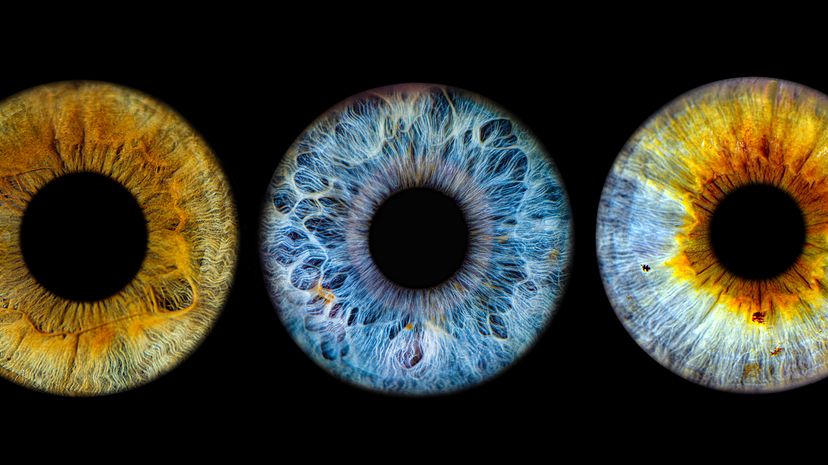
At least 16 genes contribute to eye color in humans. recep kart / Shutterstock

Understanding eye color percentage reveals how human genetics shapes the colors we see in the iris. The iris is the colored part of the eye, and its appearance depends largely on how much melanin pigment it contains.

Melanin is the same pigment responsible for skin color. The more melanin present in the iris, the darker the eye color appears. Lower amounts of melanin create lighter eye colors such as blue or green.

Advertisement

Globally, eye color distribution varies widely depending on ancestry, genetics, and geographic history.

1. Brown Eyes (70 to 80%)

Brown eyes are the most common eye color worldwide. Scientists estimate that roughly 70 to 80 percent of the world's population has brown eyes.

Brown irises contain the highest concentration of melanin pigment. This darker pigmentation helps absorb more light and may offer additional protection from ultraviolet radiation.

Advertisement

Brown eyes are especially common in Asia, Africa, and the Middle East, where darkly pigmented irises dominate the population.

2. Blue Eyes (8 to 10% Worldwide)

Blue eyes are the second-most common eye color globally. Around 8 to 10 percent of people have blue eyes.

Blue eyes contain low levels of melanin in the iris stroma. Instead of blue pigment, the color appears because light scatters through the iris in a phenomenon similar to the way the sky appears blue.

Advertisement

Genetic research suggests most blue-eyed people share a common ancestor who lived about 6,000 to 10,000 years ago and carried a mutation in the HERC2 gene.

3. Hazel Eyes (~5%)

Hazel eyes occur in roughly 5 percent of the global population. They often display a mixture of green, gold, and brown tones.

This eye color results from moderate levels of melanin combined with light scattering in the iris. Hazel eyes may appear to change color depending on lighting conditions.

Advertisement

4. Gray Eyes (1 to 3%)

Gray eyes are one of the rarest natural eye colors.

A gray iris has very little melanin and a unique structure in the iris stroma that scatters light differently than blue eyes. This can create a silvery or smoky appearance.

Advertisement

5. Green Eyes (~2%)

This is among the rarest eye colors in the world. Only about 2 percent of the global population has naturally green eyes.

Green irises contain slightly more melanin than blue eyes but far less than brown. A yellowish pigment combined with light scattering produces the distinctive green shade.

Advertisement

Green and hazel eye colors are most common among people with European ancestry.

6. Amber Eyes (<1%)

Amber eyes are rare and often described as having a golden or copper tone. This eye color may occur when the iris contains higher levels of pheomelanin.

Unlike hazel eyes, amber eyes usually appear as a solid gold hue rather than a mix of colors.

Advertisement

7. Violet or Red Eyes (<0.1%)

Red and violet eye colors are extremely rare and are usually associated with albinism or other genetic conditions that affect melanin production.

In these cases, the iris contains little pigment, allowing underlying blood vessels to influence the visible color.

Advertisement

What Determines Eye Color

Iris color in humans is a polygenic trait, meaning it is influenced by many genes rather than just one. Scientists now estimate that at least 16 genes contribute to eye color.

Two of the most important genes are OCA2 and HERC2, which help regulate melanin production and distribution in the iris.

Advertisement

Earlier theories suggested that two blue-eyed parents could only have blue-eyed children, but modern genetics has shown that eye color inheritance is much more complex.

Eye Color and Health

The amount of melanin in the eyes may influence certain health risks. For example, people with lighter eye colors may have increased sensitivity to light.

Research also suggests individuals with blue, green, or gray eyes may face a slightly higher risk of conditions such as age-related macular degeneration or uveal melanoma. Meanwhile, brown eyes may provide some protection from ultraviolet light because of their higher melanin content.

Advertisement

Understanding eye color percentages highlights how genetics, evolution, and pigmentation work together to create the wide variety of human eye colors seen across the world.

We created this article in conjunction with AI technology, then made sure it was fact-checked and edited by a HowStuffWorks editor.

Advertisement

Advertisement

Loading...