Skeptic or believer, hypnosis is an interesting phenomenon.
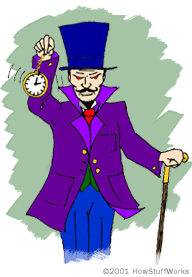
When you hear the word hypnosis, you may picture the mysterious hypnotist figure popularized in movies, comic books and television. This ominous, goateed man waves a pocket watch back and forth, guiding his subject into a semi-sleep, zombie-like state. Once hypnotized, the subject is compelled to obey, no matter how strange or immoral the request. Muttering "Yes, master," the subject does the hypnotist's evil bidding.
This popular representation bears little resemblance to actual hypnotism, of course. In fact, modern understanding of hypnosis contradicts this conception on several key points. Subjects in a hypnotic trance are not slaves to their "masters" -- they have absolute free will. And they're not really in a semi-sleep state -- they're actually hyperattentive.
Advertisement
Our understanding of hypnosis has advanced a great deal in the past century, but the phenomenon is still a mystery of sorts. In this article, we'll look at some popular theories of hypnosis and explore the various ways hypnotists put their art to work.
People have been pondering and arguing over hypnosis for more than 200 years, but science has yet to fully explain how it actually happens. We see what a person does under hypnosis, but it isn't clear why he or she does it. This puzzle is really a small piece in a much bigger puzzle: how the human mind works. It's unlikely that scientists will arrive at a definitive explanation of the mind in the foreseeable future, so it's a good bet hypnosis will remain something of a mystery as well.
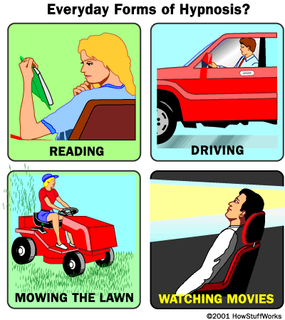
But psychiatrists do understand the general characteristics of hypnosis, and they have some model of how it works. It is a trance state characterized by extreme suggestibility, relaxation and heightened imagination. It's not really like sleep, because the subject is alert the whole time. It is most often compared to daydreaming, or the feeling of "losing yourself" in a book or movie. You are fully conscious, but you tune out most of the stimuli around you. You focus intently on the subject at hand, to the near exclusion of any other thought.
In the everyday trance of a daydream or movie, an imaginary world seems somewhat real to you, in the sense that it fully engages your emotions. Imaginary events can cause real fear, sadness or happiness, and you may even jolt in your seat if you are surprised by something (a monster leaping from the shadows, for example). Some researchers categorize all such trances as forms of self-hypnosis. Milton Erickson, the premier hypnotism expert of the 20th century, contended that people hypnotize themselves on a daily basis. But most psychiatrists focus on the trance state brought on by intentional relaxation and focusing exercises. This deep hypnosis is often compared to the relaxed mental state between wakefulness and sleep.
In conventional hypnosis, you approach the suggestions of the hypnotist, or your own ideas, as if they were reality. If the hypnotist suggests that your tongue has swollen up to twice its size, you'll feel a sensation in your mouth and you may have trouble talking. If the hypnotist suggests that you are drinking a chocolate milkshake, you'll taste the milkshake and feel it cooling your mouth and throat. If the hypnotist suggests that you are afraid, you may feel panicky or start to sweat. But the entire time, you are aware that it's all imaginary. Essentially, you're "playing pretend" on an intense level, as kids do.
In this special mental state, people feel uninhibited and relaxed. Presumably, this is because they tune out the worries and doubts that normally keep their actions in check. You might experience the same feeling while watching a movie: As you get engrossed in the plot, worries about your job, family, etc. fade away, until all you're thinking about is what's up on the screen.
In this state, you are also highly suggestible. That is, when the hypnotist tells you do something, you'll probably embrace the idea completely. This is what makes stage hypnotist shows so entertaining. Normally reserved, sensible adults are suddenly walking around the stage clucking like chickens or singing at the top of their lungs. Fear of embarrassment seems to fly out the window. The subject's sense of safety and morality remain entrenched throughout the experience, however. A hypnotist can't get you to do anything you don't want to do.
But what is it that makes this happen? In the next section, we'll look at the most widely accepted theory of what's going on when you become hypnotized.
Early Hypnohistory
People have been entering hypnotic-type trances for thousands and thousands of years; various forms of meditation play an important role in many cultures' religions. But the scientific conception of hypnotism wasn't born until the late 1700s.
Advertisement
What Lies Beneath
The predominant school of thought on hypnosis is that it is a way to access a person's subconscious mind directly. Normally, you are only aware of the thought processes in your conscious mind. You consciously think over the problems that are right in front of you, consciously choose words as you speak, consciously try to remember where you left your keys.
But in doing all these things, your conscious mind is working hand-in-hand with your subconscious mind, the unconscious part of your mind that does your "behind the scenes" thinking. Your subconscious mind accesses the vast reservoir of information that lets you solve problems, construct sentences or locate your keys. It puts together plans and ideas and runs them by your conscious mind. When a new idea comes to you out of the blue, it's because you already thought through the process unconsciously.
Advertisement
Your subconscious also takes care of all the stuff you do automatically. You don't actively work through the steps of breathing minute to minute -- your subconscious mind does that. You don't think through every little thing you do while driving a car -- a lot of the small stuff is thought out in your subconscious mind. Your subconscious also processes the physical information your body receives.
In short, your subconscious mind is the real brains behind the operation -- it does most of your thinking, and it decides a lot of what you do. When you're awake, your conscious mind works to evaluate a lot of these thoughts, make decisions and put certain ideas into action. It also processes new information and relays it to the subconscious mind. But when you're asleep, the conscious mind gets out of the way, and your subconscious has free reign.
Psychiatrists theorize that the deep relaxation and focusing exercises of hypnotism work to calm and subdue the conscious mind so that it takes a less active role in your thinking process. In this state, you're still aware of what's going on, but your conscious mind takes a backseat to your subconscious mind. Effectively, this allows you and the hypnotist to work directly with the subconscious. It's as if the hypnotism process pops open a control panel inside your brain.
In the next section, we'll see how this theory fits in with the characteristics of hypnosis.
What's in a Name?
James Braid, a 19th-century Scottish surgeon, originated the terms "hypnotism" and "hypnosis" based on the word hypnos, which is Greek for "to sleep." Braid and other scientists of the era, such as Ambroise-Auguste Liebeault, Hippolyte Bernheim and J.M. Charcot, theorized that hypnosis is not a force inflicted by the hypnotist, but a combination of psychologically mediated responses to suggestions.
Advertisement
Suggestion Box
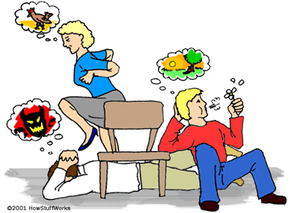
Hypnotists say that subjects under hypnosis are a lot like little kids: playful and imaginative, fully embracing bizarre suggestions.
In the last section, we examined the idea that hypnosis puts your conscious mind in the backseat, so you and the hypnotist can communicate directly with your subconscious. This theory has gained wide acceptance in the psychiatric community, mostly because it explains all the major characteristics of the hypnotic state so nicely.
It provides an especially convincing explanation for the playfulness and uninhibitedness of hypnotic subjects. The conscious mind is the main inhibitive component in your makeup -- it's in charge of putting on the brakes -- while the subconscious mind is the seat of imagination and impulse. When your subconscious mind is in control, you feel much freer and may be more creative. Your conscious mind doesn't have to filter through everything.
Advertisement
Hypnotized people do such bizarre things so willingly, this theory holds, because the conscious mind is not filtering and relaying the information they take in. It seems like the hypnotist's suggestions are coming directly from the subconscious, rather than from another person. You react automatically to these impulses and suggestions, just as you would to your own thoughts. Of course, your subconscious mind does have a conscience, a survival instinct and its own ideas, so there are a lot of things it won't agree to.
The subconscious regulates your bodily sensations, such as taste, touch and sight, as well as your emotional feelings. When the access door is open, and the hypnotist can speak to your subconscious directly, he or she can trigger all these feelings, so you experience the taste of a chocolate milkshake, the satisfaction of contentment and any number of other feelings.
Additionally, the subconscious is the storehouse for all your memories. While under hypnosis, subjects may be able to access past events that they have completely forgotten. Psychiatrists may use hypnotism to bring up these memories so that a related personal problem can finally be resolved. Since the subject's mind is in such a suggestible state, it is also possible to create false memories. For this reason, psychiatrists must be extremely careful when exploring a hypnotic subject's past.
This theory of hypnosis is based mostly on logical reasoning, but there is some physiological evidence that supports it. In the next section, we'll look at some of the physical data researchers have gathered on hypnosis.
Advertisement
Waves and Hemispheres
In numerous studies, researchers have compared the physical "body signs" of hypnotic subjects with those of unhypnotized people. In most of these studies, the researchers found no significant physical change associated with the trance state of hypnosis. The subject's heart rate and respiration may slow down, but this is due to the relaxation involved in the hypnotism process, not the hypnotic state itself.
There does seem to be changed activity in the brain, however. The most notable data comes from electroencephalographs (EEGs), measurements of the electrical activity of the brain. Extensive EEG research has demonstrated that brains produce different brain waves, rhythms of electrical voltage, depending on their mental state. Deep sleep has a different rhythm than dreaming, for example, and full alertness has a different rhythm than relaxation.
Advertisement
In some studies, EEGs from subjects under hypnosis showed a boost in the lower frequency waves associated with dreaming and sleep, and a drop in the higher frequency waves associated with full wakefulness. Brain-wave information is not a definitive indicator of how the mind is operating, but this pattern does fit the hypothesis that the conscious mind backs off during hypnosis and the subconscious mind takes a more active role.
Researchers have also studied patterns in the brain's cerebral cortex that occur during hypnosis. In these studies, hypnotic subjects showed reduced activity in the left hemisphere of the cerebral cortex, while activity in the right hemisphere often increased. Neurologists believe that the left hemisphere of the cortex is the logical control center of the brain; it operates on deduction, reasoning and convention. The right hemisphere, in contrast, controls imagination and creativity. A decrease in left-hemisphere activity fits with the hypothesis that hypnosis subdues the conscious mind's inhibitory influence. Conversely, an increase in right-brain activity supports the idea that the creative, impulsive subconscious mind takes the reigns. This is by no means conclusive evidence, but it does lend credence to the idea that hypnotism opens up the subconscious mind.
Whether or not hypnosis is actually a physiological phenomenon, millions of people do practice hypnotism regularly, and millions of subjects report that it has worked on them. In the next section, we'll look at the most common methods of inducing a hypnotic trance.
Do It Yourself!
You don't necessarily need a highly-trained hypnotist to induce hypnosis. With the proper relaxation and focusing techniques, almost everyone can enter a hypnotic state themselves and make their own suggestions to the unconscious mind.
Advertisement
You're Getting Sleepy
Hypnotists' methods vary, but they all depend on a few basic prerequisites:
The subject must want to be hypnotized.
The subject must believe he or she can be hypnotized.
The subject must eventually feel comfortable and relaxed.
If these criteria are met, the hypnotist can guide the subject into a hypnotic trance using a variety of methods. The most common hypnotic techniques are:
Advertisement
Fixed-gaze induction or eye fixation - This is the method you often see in movies, when the hypnotist waves a pocket watch in front of the subject. The basic idea is to get the subject to focus on an object so intently that he or she tunes out any other stimuli. As the subject focuses, the hypnotist talks to him or her in a low tone, lulling the subject into relaxation. This method was very popular in the early days of hypnotism, but it isn't used much today because it doesn't work on a large proportion of the population.
Rapid - The idea of this method is to overload the mind with sudden, firm commands. If the commands are forceful, and the hypnotist is convincing enough, the subject will surrender his or her conscious control over the situation. This method works well for a stage hypnotist because the novel circumstance of being up in front of an audience puts subjects on edge, making them more susceptible to the hypnotist's commands.
Progressive relaxation and imagery - This is the hypnosis method most commonly employed by psychiatrists. By speaking to the subject in a slow, soothing voice, the hypnotist gradually brings on complete relaxation and focus, easing the subject into full hypnosis. Typically, self-hypnosis training, as well as relaxation and meditation audio tapes, use the progressive relaxation method.
Loss of balance - This method creates a loss of equilibrium using slow, rhythmic rocking. Parents have been putting babies to sleep with this method for thousands of years.
Before hypnotists bring a subject into a full trance, they generally test his or her willingness and capacity to be hypnotized. The typical testing method is to make several simple suggestions, such as "Relax your arms completely," and work up to suggestions that ask the subject to suspend disbelief or distort normal thoughts, such as "Pretend you are weightless."
Depending on the person's mental state and personality, the entire hypnotism process can take anywhere from a few minutes to more than a half hour. Hypnotists and hypnotism proponents see the peculiar mental state as a powerful tool with a wide range of applications. In the next section, we'll look at some of the more common uses of hypnotism.
Advertisement
For Fun and Profit
In the hypnotism shows of Las Vegas, as well as the traveling hypnotism demonstrations on the college circuit, hypnotism is used primarily for entertainment purposes. It's an amazing experience watching somebody turn ordinary people, perhaps your friends or family, into outrageous performers. The power of suggestion and imagination, and the lowering of inhibition, does make for a fantastic show.
But these demonstrations only scratch the surface of what hypnotism can do -- all the suggestions are intentionally frivolous, to ensure that nobody gets hurt. The hypnotist uses his or her access to the unconscious mind only to play with the subject. More involved hypnotism uses this access to affect long-term changes in the subject.
Advertisement
The most widespread example of this hypnotic behavioral modification is habit-control hypnotic treatment. In this application, a hypnotist focuses on one particular habit that is embedded in your unconscious (smoking or overeating, for example). With the "control panel" to your mind open, the hypnotist may be able to reprogram your subconscious to reverse the behavior. Some hypnotists do this by connecting a negative response with the bad habit. For example, the hypnotist might suggest to your subconscious that smoking will cause nausea. If this association is programmed effectively, you will feel sick every time you think about smoking a cigarette. Alternatively, the hypnotist may build up your willpower, suggesting to your subconscious that you don't need cigarettes, and you don't want them.
Habit-control hypnotism is commonly practiced on a mass scale, in day-long seminars held in hotel suites, or through audio tapes or CDs. Since the treatment is not specifically tailored to each subject, and the treatment is rapid, these programs are often ineffective. Even if the treatment does yield positive results in the short term, there's a good chance that the subject will relapse eventually.
Directed, one-on-one hypnotism sessions tend to yield better results. In the next section, we'll explore this therapeutic form of hypnotism.
Certifiable
In ads for hypnotism weight-loss treatments, you often see the words "Certified Hypnotist!" in big, bold letters. What does this actually mean?
As it turns out, there is no single, official certification process and no regulating body for hypnotists. If you take a two-day course on hypnotism, that's enough to claim you are a certified hypnotist. Some certification programs, the one run by the National Guild of Hypnotists for example, hold their students to strict standards, but many do not. Doctors and psychiatrists who are members of professional organizations are well-regulated, however. The American Psychiatric Association (APA) and the American Medical Association (AMA) both have strict standards for the professional practice of hypnotherapy.
Advertisement
I'm Healed!
In the last section, we looked at hypnosis as a means of reversing bad habits. A related application of hypnotism is psychiatric hypnotherapy. In a therapy session, a psychiatrist may hypnotize his or her subject in order to work with deep, entrenched personal problems. The therapy may take the form of breaking negative patterns of behavior, as with mass habit-control programs. This can be particularly effective in addressing phobias, unreasonable fears of particular objects or situations. Another form of psychiatric hypnotherapy involves bringing underlying psychiatric problems up to the conscious level. Accessing fears, memories and repressed emotions can help to clarify difficult issues and bring resolution to persistent problems.
Hypnotists may also tap dormant memories to aid in law enforcement. In this practice, called forensic hypnotism, investigators access a subject's deep, repressed memories of a past crime to help identify a suspect or fill in details of the case. Since hypnotists may lead subjects to form false memories, this technique is still very controversial in the forensics world.
Advertisement
Another controversial form of hypnotism is medical hypnotherapy. Doctors and spiritual leaders all over the world claim that hypnotic suggestion can ease pain and even cure illness in some patients. The underlying idea behind this is that the mind and body are inextricably intertwined. When you suggest to the subconscious that the body does not feel pain, or that the body is free of disease, the subconscious may actually bring about the change.
There is a great deal of anecdotal evidence to support this idea. Using only hypnotic suggestion as an anesthetic, thousands of women have made it through childbirth with minimal pain and discomfort. Countless cancer patients swear by hypnosis, claiming that it helps to manage the pain of chemotherapy, and some former patients credit their recovery to hypnotherapy.
The success of hypnotherapy is undeniable, but many doctors argue that the hypnotic trance is not actually responsible for the positive results. In the next section, we'll see how many skeptics explain hypnotic phenomena.
Advertisement
The Magic Feather
In the relatively short history of modern hypnotism, there have been dozens of hypnotic techniques and a wide range of explanations of the phenomenon. The only constant through all of this has been the hypnotic subjects themselves. No matter how you view the art of the hypnotist, it is undeniable that people do enter a special state in which they are abnormally suggestible and uninhibited.
Modern skeptics have a sound and convincing explanation of this unusual state. Hypnotic subjects aren't actually in a trance state, they argue, they only think they are. Social pressure and the influence of the hypnotist are often enough to convince people that they should act a certain way. When they find themselves heeding the suggestions, they think they must be in a hypnotic trance. Proponents of this theory contend that this belief alone may be powerful enough to bring about remarkable changes in a person. If you think someone is compelling you to act a certain way, you will act that way. If you think hypnotic suggestion will ease your pain, your mind will bring about this feeling.
Advertisement
In this view, an effective hypnotist isn't one that can probe the hidden reaches of your mind, but one with strong enough authority and charisma to convince you to go along.
In the general sense, this phenomenon is known as the placebo effect. In numerous studies, people who were given ordinary sugar pills behaved and felt differently only because they thought they should. It's clear that the mind can influence all aspects of the physical body, so it makes sense that a firmly held belief can reduce pain or even help treat a disease.
But in the end, this explanation of hypnosis amounts to pretty much the same thing as the trance theory. When you absolutely convince somebody that you've brought about a change in their subconscious, they register this information as a fact. Like any fact, this information will take root in the subconscious mind. So, even if the hypnotic state is nothing more than a figment of the subject's imagination, hypnotic suggestions can still reform their deeply held beliefs. The end result is the same!
To find out more about hypnosis, and to explore the various uses of hypnotism, check out the links on the next page.