For sheer volume of ammunition, the belt system is usually the best option. Ammunition belts consist of a long string of cartridges fastened together with pieces of canvas or, more often, attached by small metal links. Guns that use this sort of ammo have a feed mechanism driven by the recoil motion of the bolt.
Mechanics of the Belt Feed System
The bolt in a belt-fed gun has a small cam roller on top of it. As the bolt moves, the cam roller slides back and forth in a long, grooved feed cam piece.
When the cam roller slides forward, it pushes the feed cam to the right against a return spring. When the cam roller slides backward, the spring pushes the cam back to the left. The feed cam lever is attached to a spring-loaded pawl, a curved gripper that rests on top of the ammunition belt.
As the cam and lever move, the pawl moves out, grabs onto a cartridge and pulls the belt through the gun. When the bolt moves forward, it pushes the next cartridge into the chamber.
The feed system drives the ammunition belt through cartridge guides just above the breech. As the bolt slides forward, the top of it pushes on the next cartridge in line. This drives the cartridge out of the belt, against the chambering ramp.
The chambering ramp forces the cartridge down in front of the bolt. The bolt has a small extractor, which grips the base of the cartridge shell when the cartridge slides into place. As the cartridge slides in front of the bolt, it depresses the spring-loaded ejector.
When the firing pin hits the primer, propelling the bullet down the barrel, the explosive force drives the operating rod and attached bolt backward. When the shell clears the chamber wall, the ejector springs forward, popping the shell out of the gun through the ejection port. This system lets you fire continuously without reloading.
Evolution and Impact of Machine Guns
The basic mechanism of the machine gun has remained the same for more than a hundred years, but gun manufacturers are continually adding new modifications. One modern design transforms from a box to a gun with the single push of a button [source: Sofge]. In addition, new lightweight small arms technologies (LSAT) are made of lighter materials that could reduce the weight of machine guns and their ammunition by 40 percent.
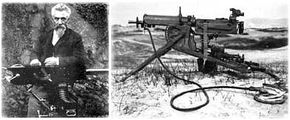
Whether or not you've ever held a machine gun or even seen one, this powerful device has had a profound effect on your life. Machine guns have had a hand in dissolving nations, repressing revolutions, overthrowing governments and ending wars (and, in the hands of certain individuals, resulted in immense tragedies). In no uncertain terms, the machine gun is one of the most important military developments in the history of man.