You know the price of gas is high when you settle for the closest station because it's not worth wasting precious gas to drive around looking for a better price. Or when people start trading in their gas-guzzling lawn mowers for an old-fashioned push mower [source: AP].
Rising prices and the fear of reaching peak oil cause people to question whether we're entering -- or are in the midst of -- an oil crisis. Environmental activists, who want to reduce the output of greenhouse gases from fossil-fueled power plants, see an upside to this situation, however. As more people call on companies and governments to solve or prevent an impending crisis, environmentalists get a chance to promote and fund clean, renewable energy.
Advertisement
A similar scenario played out in the 1970s, when an oil crisis stirred business and government leaders to invest in energy alternatives. The Organization of the Petroleum Exporting Countries (OPEC) as well as Egypt and Syria agreed to stop shipping their oil to countries that supported Israel in the Yom Kippur War, which included the U.S., among other countries [source: Halber].
Stephen Salter, a professor at the University of Edinburgh in the U.K. who was working with robotics, saw a solution in the sea. He began working with a group to develop a device that would efficiently convert the power of ocean waves into usable electricity. Waves occur when water absorbs the energy of winds and condenses that energy into an extremely powerful, reliable force. The difficulty comes with trying to harness this immense energy.
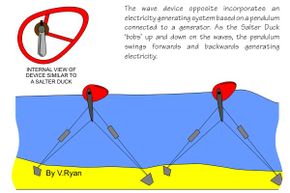
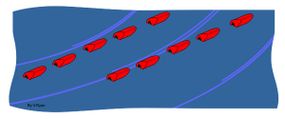
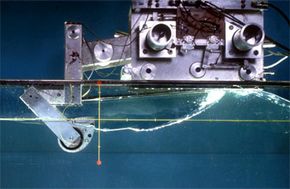
The group came up with a mechanism known as Salter's Duck (or the Edinburgh Duck), which they thought could reduce the country's dependence on oil. Certainly, the idea behind Salter's Duck achieved everyone's highest expectations about the potential of using wave energy. But did it ever came into fruition?
Keep reading to find out.
Advertisement