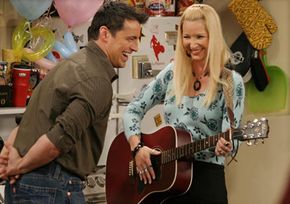
In an episode of the TV sitcom "Friends," entitled "The One Where Phoebe Hates PBS," two characters -- Phoebe and Joey -- engage in a contest based on the theories of philosopher Immanuel Kant.
Is there such a thing as a truly unselfish act, they wonder, one in which someone benefits while the person performing the act receives nothing in return? Joey believes not; Phoebe sets out to prove him wrong. After several failed attempts, Phoebe lets a bee sting her "so it can look cool in front of its bee friends." Surely, she believes, this is a selfless act: Phoebe allowed herself to be hurt so that the bee could benefit. Nope, Joey points out -- the bee likely died soon after losing its stinger in Phoebe's arm.
Advertisement
More resolute than ever, and with the end of the show looming near, Phoebe tries one last-ditch effort. Despite having a deep dislike for the Public Broadcasting Service (PBS), she makes a $200 pledge to the local station during a fund drive in which Joey is taking calls. This act would seem to have all of the hallmarks of selflessness: Phoebe wants to spend her money elsewhere, but instead gives it to an organization she dislikes. Even better, her phone call lands Joey, a struggling actor, on camera. But Phoebe's act has an unintended benefit. She feels good that her benevolence inadvertently helped her friend. In other words, Phoebe got something out of it (a good feeling), and her selfless act is ruined.
Ultimately, Phoebe finds what philosophers, social scientists and neurologists have all discovered: It's difficult to prove the existence of a truly selfless act. But why would we humans possess a sense of selflessness -- or altruism -- in the first place? Is there a biological basis for your good deeds? Find out on the next page.
Advertisement