Polar Vortex: Everything You Need to Know About Falling Temperatures

By: Grant Virellan  | 
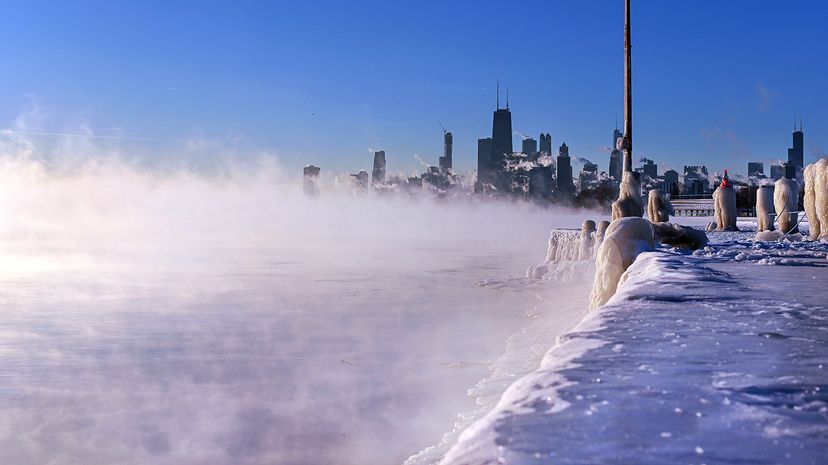
This is what the Chicago skyline looked like during extreme weather storming across Lake Michigan as a result of a polar vortex. Jake Hukee / Shutterstock

The polar vortex is a large mass of cold air that spins around the North Pole every winter. It is not a single storm but a broad circulation pattern in the atmosphere that helps contain Arctic air in the polar regions.

When the system weakens or shifts, cold Arctic air moves south into North America, Europe, and Asia. That is when headlines warn of extremely cold temperatures and dangerous winter weather.

Advertisement

What Is the Polar Vortex?

The polar vortex is a circular shape of low pressure and strong winds that forms high above the Earth's surface. It develops in the stratosphere, a layer of the atmosphere that sits above the troposphere where everyday weather occurs.

Meteorologists often refer specifically to the stratospheric polar vortex, which spins in the upper stratosphere and mid stratosphere during winter in the Northern Hemisphere. The strong polar vortex acts like a fence, keeping cold polar air locked near the Arctic.

Advertisement

In the mid to upper troposphere, a related feature called the polar jet stream flows around the mid latitudes. The jet stream separates cold air to the north from milder air to the south.

How Does Arctic Air Move South?

When the vortex is stable, wind speed remains high and the circular flow stays tight around the North Pole. But if it becomes a disrupted polar vortex, its shape stretches or splits.

That disruption can send cold air southward into the eastern United States, southern Canada, and even central North America. Arctic air moves in large waves along the jet stream, creating low pressure areas that trigger snow, freezing temperatures and extreme weather.

Advertisement

A strong, high-pressure system in the Arctic can also shift weather patterns. Instead of staying confined to higher latitudes, cold polar air spills into regions that normally experience milder winter conditions.

What Is Sudden Stratospheric Warming?

One of the biggest drivers of a disrupted polar vortex is sudden stratospheric warming. This event occurs when rapid warming develops in the stratosphere over the Arctic.

Temperatures in that layer can rise dramatically in just a few days. As warming spreads, the polar vortex weakens, and wind patterns can change direction.

Advertisement

Scientists monitor these changes closely. According to the NOAA, stratospheric warming events can influence winter weather weeks later across the mid latitudes, including parts of Europe and the eastern United States.

These events often happen in January or February, though they can occur earlier or later in the season. Forecasters watch for signs of instability.

Advertisement

How Does a Polar Vortex Impact the Weather?

When cold Arctic air pushes south, the surface feels it immediately. Temperatures plunge below normal, and strong winds create dangerous wind chill.

The National Weather Service tracks these outbreaks and issues alerts for cold weather hazards. Snow, icy roads and power outages can occur as low pressure systems form along the polar jet stream.

Advertisement

In the North Atlantic, shifts in pressure patterns can alter storm tracks. Parts of Europe and Asia may experience unusual cold spells, while other regions stay relatively mild.

Is the Polar Vortex a Recent Phenomenon?

The polar vortex itself is not new. It forms every winter in the Northern Hemisphere. What makes headlines is when its structure changes and allows cold air to escape the Arctic.

Understanding how the vortex interacts with the stratosphere, jet stream and lower atmosphere helps scientists predict winter conditions more accurately.

Advertisement

It also reminds us that extreme cold in January does not mean global temperatures are falling. It means air that usually stays near the pole has shifted south.

We created this article in conjunction with AI technology, then made sure it was fact-checked and edited by a HowStuffWorks editor.

Advertisement

Advertisement

Loading...