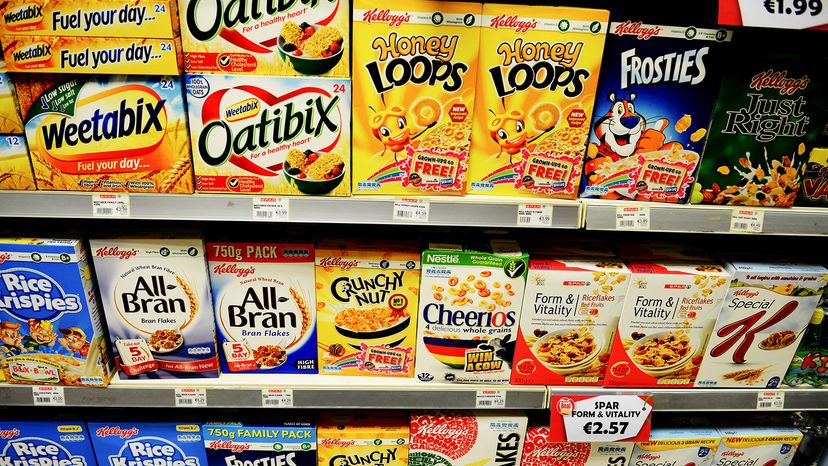
Cornflakes cereal was originally invented as an aid to digestion. Newscast/Universal Images Group via Getty Images
We tend to hold inventors in high esteem, but often their discoveries were the result of an accident or a twist of fate. This is true of many everyday items, including the following surprise breakthroughs. From the microwave oven to the Slinky, many products are an accidental invention. Let's take a look at the unusual stories behind these accidental inventions that changed our everyday lives.
In the realm of accidental inventions, the matchstick stands as a testament to serendipity's role in scientific advancement. It was in 1826 when English chemist John Walker stumbled upon the idea for the modern match. While working in his laboratory, Walker accidentally scraped a mixture-coated stick against the hearth, resulting in an unexpected burst of flame. Intrigued by this sudden ignition, he tried a few experiments with the stick's composition to refine its flammability.
This further investigation led to the first prototype of what he called "Friction Lights." These early matches were made by attaching a small piece of paper coated with chemicals to the end of a wooden stick. When the coated end was drawn through a folded piece of sandpaper, it would ignite. Over the following decades, advancements were made to the original design, improving safety and efficacy. The discovery of the matchstick underscores the often unexpected path of innovation, reminding us that sometimes, groundbreaking inventions can emerge from simple accidents.
Advertisement
10. Chocolate Chip Cookies at Toll House Inn
Chocolate chip cookies, a staple in many households, join the ranks of accidental inventions that have had a lasting impact. In the 1930s, Ruth Wakefield wanted to bake a batch of chocolate cookies for her guests at the Toll House Inn in Whitman, Massachusetts. As the story goes, she ran out of baker's chocolate and improvised with pieces of a Nestle chocolate bar. Unlike baker's chocolate, these Nestle chocolate pieces didn't melt and disperse throughout the cookie. They held their shape.
This serendipitous outcome quickly gained favor among her guests. Although the birth of the chocolate chip cookie is often framed as an accident, there are those who posit that Wakefield, an experienced baker, might have intended to experiment with her recipe, aiming to create something distinct. While the degree of intentionality behind her creation remains a topic of debate, what's clear is that she likely did not anticipate the enduring popularity and impact of her innovative treat.
Advertisement
9. Corn Flakes Are Another Accidental Invention
In the late 19th century, Dr. John Harvey Kellogg was the superintendent of Michigan's Battle Creek Sanitarium, a world-famous medical spa and grand hotel. He and his brother, W.K. (Will Keith) Kellogg, were also Seventh-day Adventists who believed in vegetarianism. The two were searching for wholesome foods to feed their clients, especially ones that encouraged a healthy digestive system, as Dr. Kellogg saw a lot of patients with intestinal distress.
Although exact details of the cereal's invention remain disputed, we do know this: One day a batch of wheat-based cereal dough was left out and fermented. Rather than throw it away, the brothers sent it through rollers, hoping to make long sheets of dough. These sheets produced perfect flakes, which they toasted and served to their clients. The toasted flakes were a big hit, so the brothers patented them under the name Granose.
Advertisement
Over the years, W.K. experimented with other grains for use in the cereal, settling on corn, which produced crispier flakes. Eventually, W.K. bought the rights to the cereal recipe and founded the Battle Creek Toasted Corn Flake Company, which began producing Kellogg's Corn Flakes. When W.K.'s company became wildly successful, John got jealous and began making his own competing cereal. The two ended up suing one another. W.K. won in the end, but the brothers remained estranged until their deaths.
8. A Candy Bar Helped Invent Microwave Ovens
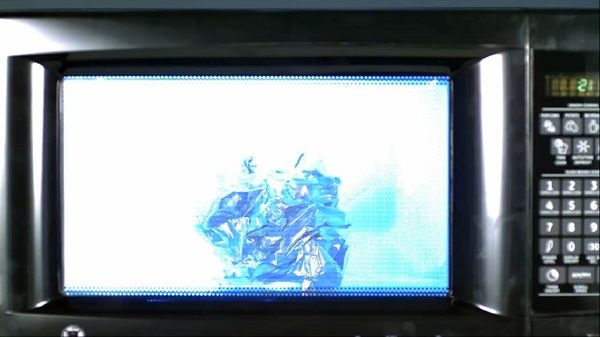
In 1945, Percy Spencer was experimenting with a new, high-powered vacuum tube called a magnetron while doing research for the Raytheon Corporation. One day, the American engineer noticed that a peanut-cluster candy bar in his pocket began to melt when he was near the magnetrons. Intrigued, he put some popcorn and then an egg near the magnetrons. Both cooked within seconds.
Spencer and Raytheon immediately saw the potential in this revolutionary process, which they patented and installed in a kitchen appliance they dubbed the RadaRange. In 1947, Raytheon put the RadaRange on the market, targeted at the food industry. The bulky appliance weighed 750 pounds, was 5 1/2 feet tall and cost about $5,000 — $69,000 in 2023 dollars.
Advertisement
Not surprisingly, the RadaRange wasn't popular at first, due to its size, price and the fact that it was a strange, new technology. In fact, the RadaRange was considered Raytheon's biggest failure. But by 1975, the product had evolved into a compact, countertop appliance that was much less expensive. This new style of microwave oven figuratively caught fire and began selling. That year, microwaves even surpassed sales of gas ranges.
7. Silly Putty - An Accidental World War II Invention
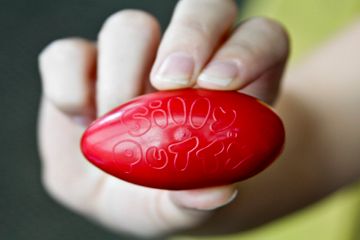
Emily Duncan, 9, plays with Silly Putty she made with the help of University of Northern Colorado chemistry students in 2015. The famous putty was an accidental discovery. David Jennings/Digital First Media/Boulder Daily Camera via Getty Images
It bounces, it stretches, it breaks — it's Silly Putty, the silicone-based plastic clay marketed as a children's toy. In 1943, during World War II, General Electric researcher James Wright dropped boric acid into silicone oil while attempting to create a synthetic rubber substitute. While it wasn't the cheap alternative he set out to make, the result was interesting. It was a polymerized substance that bounced, but it took several years to find a use for the product.
In 1950, marketing expert Peter Hodgson finally saw its potential as a toy. He renamed it Silly Putty and the rest is history. Kids loved the way they could stretch it out, shape it or roll it up in a ball and bounce it. Perhaps more interesting, though, is that people discovered the putty had loads of practical uses beyond the toy box. The clay picks up dirt, lint and pet hair. It can stabilize wobbly furniture. And it's useful in stress reduction, physical therapy, and medical and scientific simulations. It was even used by the crew of Apollo 8 to secure tools in zero gravity.
Advertisement
6. Thank Choir Practice for the Post-it Note
A Post-it Note is a small piece of paper with a strip of low-tack adhesive on the back that allows it to be temporarily attached to documents, walls, computer monitors and just about anything else. In 1968, 3M scientist Dr. Spencer Silver first discovered the novel adhesive, which sticks to surfaces but can also be easily removed. However, he struggled to figure out a use for it.
Meanwhile, fellow 3M scientist Art Fry was annoyed every week during church choir practice, when the little scraps of paper he used to mark the hymns they were working on kept falling out of his hymnal. He needed something that could stick to a page without damaging it. One day he recalled listening to a talk by Silver about his adhesive and had an idea to solve both of their problems — a sticky note that used Silver's adhesive.
Advertisement
Fry created the notes and passed them around for his colleagues to try. They loved them. 3M initially launched the product as Press 'n Peel, with tepid results. But eventually, they became wildly successful and were renamed Post-it Notes. Although the company was initially skeptical about the product's profitability, it went global in 1980. Today, Post-it Notes are sold in more than 100 countries.
5. A Chance Observation That Led to Velcro
In the 1940s, Swiss engineer George de Mestral observed a simple yet intriguing phenomenon. After taking his dog for a walk in the countryside, he noticed that burs from the burdock plant were stubbornly clinging to his clothes and his dog's fur. Curious about this tenacious grip, de Mestral examined the burs under a microscope and discovered they were covered in tiny hooks. These hooks would catch onto anything with a loop, such as fabric or fur, enabling the bur to hitch a ride and spread its seeds.
Drawing inspiration from this natural mechanism, de Mestral began experimenting with different materials, seeking to replicate the bur's design. After numerous trials, he developed a fastening system that used two strips: one covered with tiny hooks and the other with loops. When pressed together, the hooks would catch onto the loops, creating a secure yet easily removable bond. De Mestral named this new invention Velcro, a portmanteau of the French words "velour" (velvet) and "crochet" (hook).
Advertisement
4. The Sweet Discovery of Saccharin
Saccharin, the first artificial sweetener, was accidentally discovered in 1879 by Russian chemist Constantin Fahlberg, who was working in the laboratory of Professor Ira Remsen at Johns Hopkins University. There's no consensus on exactly how it happened, but one story is that Fahlberg noticed a sweet taste on his hand while working with benzoic sulfimide. Another says he put down his cigarette on a lab bench, and when he picked it up again and took a puff, it left a sweet taste in his mouth. In 1880, Fahlberg and Remsen jointly published the discovery, calling the product saccharin. But in 1884, Fahlberg obtained a patent and began mass-producing saccharin in Germany without Remsen.
While there were health concerns about saccharin as early as 1906, it became popular as a sugar substitute during World War I, when sugar was rationed. Its popularity increased during the 1960s and 1970s when it was promoted as a weight-loss aid, manufactured under the Sweet'N Low name and used in diet soft drinks. In the 1970s, food scientists discovered saccharin caused bladder cancer in rats and a warning label was added to the product. However, it was later found that rats and humans metabolize saccharin differently so the warning was removed. Despite the plethora of newer artificial sweeteners, saccharin (and its funny aftertaste) lives on.
Advertisement
3. Slinky - An Unexpected Invention That Changed Toy History
Colorful Slinky toys hang from the ceiling of a shop in Chongqing, China, that specializes in Slinkys. VCG/VCG via Getty Images
In 1943, Naval engineer Richard James was trying to develop a spring that would support and stabilize sensitive equipment on ships, which often rocked and rolled on the sea. When one of the coiled wires he was working on accidentally fell off a shelf, it continued moving end-over-end in a curious fashion.
That night, James went home and told his wife, Betty, about the wire. They both agreed it would make a great toy. Intrigued, Betty pored through a dictionary and landed on the name Slinky, as that word is defined as "sleek and sinuous in movement or outline." In 1945, the couple founded James Industries, and the Slinky was born.
Advertisement
It wasn't a success at first. So the two convinced a Gimbels department store in Philadelphia to allow them to demonstrate their unconventional toy during the Christmas shopping season. The store had stocked 400 Slinkys, and they were snapped up in less than two hours.
But the business almost went bankrupt when Richard joined a religious cult, giving it large sums of money and leaving the family. Betty mortgaged the house and went to a New York toy show in 1963 and promoted the product again. Orders began to pour in and she was able to revive the business.
Today, more than 300 million Slinkys have been sold worldwide. The toy is so beloved that the U.S. Postal Service issued a Slinky stamp in 1999 and Slinky was inducted into the National Toy Hall of Fame in 2000. There is also a National Slinky Day (August 30) and a historical marker commemorating its invention in Clifton Heights, the Philadelphia suburb where it was first produced.
2. Viagra Was Meant To Treat Other Conditions
In the 1990s, researchers at Pfizer pharmaceutical company were working on a new drug to treat high blood pressure and angina pectoris, a form of cardiovascular disease. The drug, Sildenafil, seemed quite promising, so they began testing it on male volunteers in Wales. Unfortunately, the drug had little effect on angina. The patients, however, reported a curious side effect: penile erections, occurring as little as 30 to 60 minutes after taking the drug.
It didn't take Pfizer long to realize the drug's immense potential, so the company quickly patented it in 1996. Just two years later, the drug received Food and Drug Administration approval for use in treating erectile dysfunction, and it was an immediate and massive success. With some 30 million men in the U.S. reporting erectile dysfunction, Viagra remains one of the most popular drugs on the market. The little blue pill now has competition from other medications such as Cialis (tadalafil) and Levitra (vardnafil).
1. The Beat Generation Helped Inspire Bubble Wrap
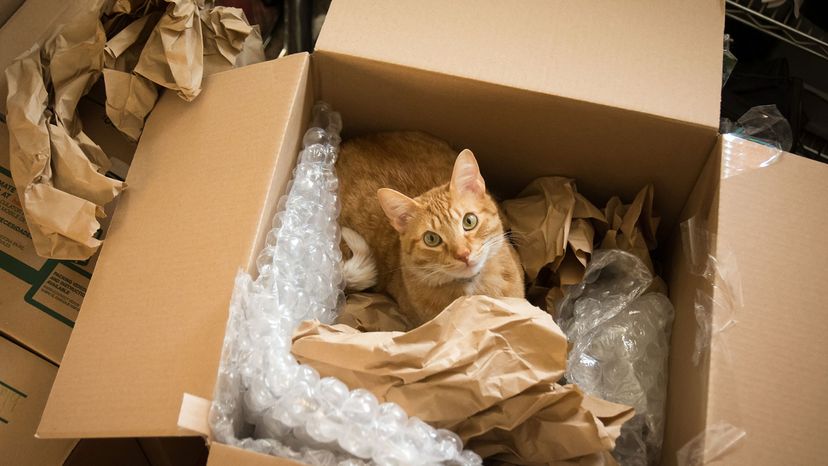
People love bubble wrap for the way it cushions breakables being shipped. Cats love it, too. harpazo_hope/Getty Images
In 1957, engineers Alfred Fielding and March Chavannes partnered to create an innovative, textured wallpaper. Their hoped-for consumers were members of the Beat Generation — people who eschewed conventional society and embraced Buddhism, free sex, drugs and jazz. The men ran two plastic shower curtains through a heat-sealing machine and ended up with a clear, bubbly sheet that looked intriguing but bombed as wallpaper.
Undeterred, the two began brainstorming different uses for their novel creation. The second one they tried — greenhouse insulation — also failed. But in 1960, working under their newly formed company, Sealed Air Corp., they took a third stab, promoting it as a protective packaging now known as Bubble Wrap. This failed attempt at wallpaper was an instant success as packing material. It was better than the favored packaging material of the day — balled-up newsprint — as it provided better protection and didn't leave behind ink smudges. Today, there are numerous iterations of the product, and Sealed Air is a Fortune 500 company.
This article was updated in conjunction with AI technology, then fact-checked and edited by a HowStuffWorks editor.
Cite This!
Please copy/paste the following text to properly cite this HowStuffWorks.com article: