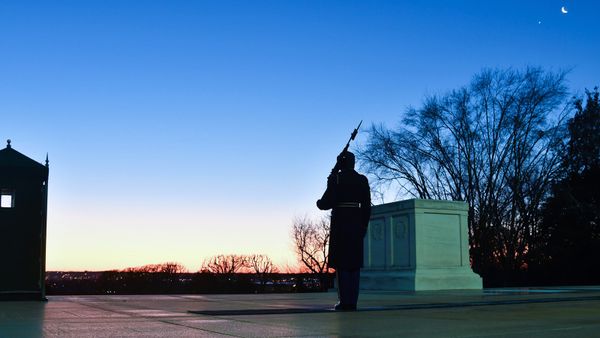
The National Guard serves a dual role in the U.S. military by serving the community and its country. Most of the time, it's under the control of individual states, with the state governor acting as commander in chief. When this occurs, guard units are used to supplement the U.S. Army, bolstering its forces with additional combat units. The Guard responds to domestic emergencies, overseas combat missions, counterdrug efforts, reconstruction missions and more. However, the president can activate the National Guard and place it under federal control.
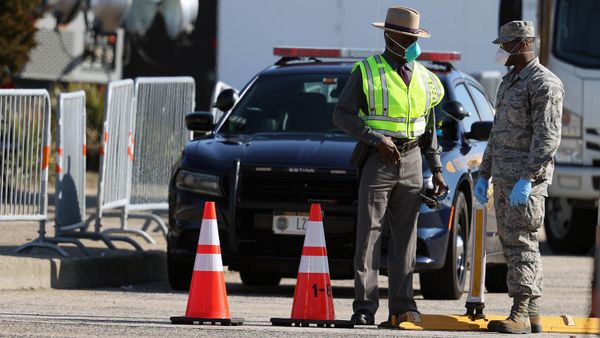
Soldiers in the National Guard train one weekend each month, with one two-week training period each year. They're typically called into action by a state governor, who can send them to the site of any officially declared emergency in the state. This is usually a weather-related emergency, but civil unrest or terrorist attacks are other emergencies they may respond to.
Advertisement
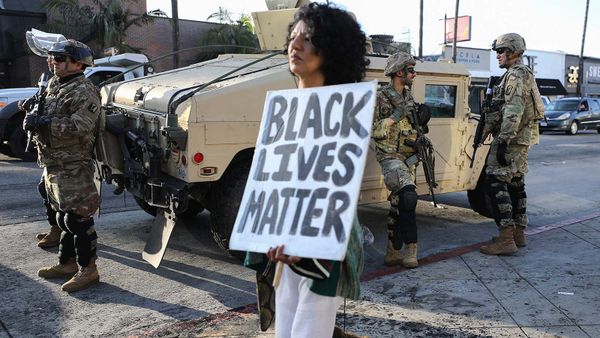
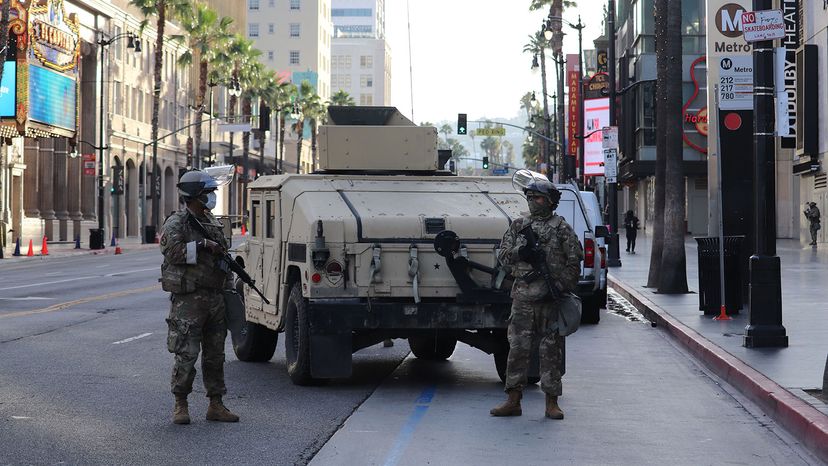
For example, the death of George Floyd (during his police custody in Minneapolis) was followed by mass protests, arson and looting in cities across the U.S. in May 2020. National Guard personnel were activated in 23 states and the District of Columbia [source: Soucy]. In June 2020, 600 to 800 National Guard members from five states were requested to augment the D.C. National Guard in dealing with civil unrest in the nation's capital [source: Browne and Starr]. Guard troops can also be used for security details at borders and airports.
While state governors command their state's guard troops, each state has an adjutant general who acts as a liaison, interpreting the governor's orders into specific tactical decisions.
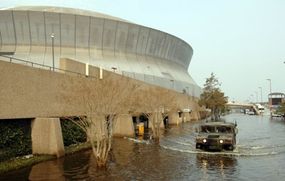
When the president federalizes National Guard troops, they can be used in domestic emergencies much like they are used in state emergencies. However, the troops are not limited to emergencies within their home states. For example, in 2005, National Guard units from all 50 states were used to aid in Hurricane Katrina relief efforts. There were actually more out-of-state National Guard personnel deployed to Louisiana and Mississippi than those states' own National Guards provided [source: Congressional Research Service].
Federalized Guard troops can also be folded into the U.S. Army and be called upon to active service in military operations overseas. In fact, 40 percent of the U.S. Army's current combat capacity, including 43 percent of its piloted and unmanned aircraft are National Guard members [source: Soucy].
The National Guard played a critical role when the U.S. entered World War I, with the 27th "Empire" Division, composed mostly of New York National Guard members, and the 30th "Old Hickory" Division from Tennessee and the Carolinas helping to break through Germany's Hindenburg Line during the 1918 Somme offensive [source: National Guard Bureau]. From 2001 to 2016, the National Guard had 780,000 individual overseas deployments [source: Soucy]. One out of six U.S. soldiers killed in Iraq came from a National Guard Unit.
Most of the time, when someone refers to the National Guard, they're talking about the Army National Guard. However, the Air Force has a National Guard as well. The Air National Guard is a separate organization with the same functions as the Army National Guard, but units (usually wings) can be activated to supplement the U.S. Air Force. The two guards were split in this way by a reorganization of the U.S. military after World War II.
The National Guard's existence is ensured by the Constitution, which has a series of clauses outlining the states' rights to create militias and the federal government's right to utilize those militias. These are a long chain of federal laws, the most important of which are the 1903 Militia Act and the National Defense Act of 1916. A more recent law, the John Warner National Defense Authorization Act of 2007, expanded the president's authority to activate guard units during a natural disaster, terrorist attack, epidemic or other public health emergency, even without the approval from the states' governors [source: Melnyk].
But presidential power to use the National Guard still has limits. Federal law still restricts the president's use of National Guard forces to enforce federal laws within U.S. borders, unless it's to suppress an insurrection [source: Congressional Research Service].
About half of the states in the United States also maintain a state defense force. These forces are more like militias – all of the troops are volunteers, they receive no federal funding and often have to purchase their own uniforms and equipment. A state defense force is separate from the state National Guard, though they may be organized in parallel. Technically, the president has the authority to call on these state militias when needed, but in practical terms, state defense forces are largely immune to federal activation.
For more information on the National Guard and related topics, check out the following links:
Advertisement