
Surviving an Avalanche: If You're the Victim
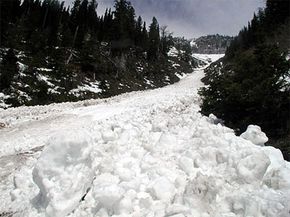
Avalanche fatalities usually have one of three causes -- physical trauma, suffocation and hypothermia. Survival techniques involve getting out of the avalanche before it stops, preventing total burial and reducing the amount of time that the victim is buried.
Virtually all avalanche safety courses will advise you to try to get away from the avalanche as soon as you realize what is happening. The Forest Service National Avalanche Center advises skiers to ski off the slab and snowmobile drivers to try to outpace the avalanche. Call for help one time so your party knows you are in danger. Then, close your mouth so snow doesn't block your airway. If you can't get away from the avalanche:
Advertisement
- Abandon ski equipment. It can drag you down and provide more torque on your extremities, leading to broken bones. If your pack is light and has emergency equipment inside, keep it with you.
- If you are thrown from your snowmobile, try to get away from the machine.
- Use swimming motions to fight your way to the surface of the avalanche.
- Try to grab nearby trees to get away from the snow.
- As the snow slows, cup your hand or arm over your mouth so you will have an air pocket. Thrust any part of your body through the snow as it comes to a stop so rescuers can see you.
- Wait for rescue. Stay calm. Conserve oxygen. Do not try to call for help unless you hear rescuers above you.
Most sources say that a person who is completely buried can live for about 18 minutes. Even though snow is porous and contains a lot of trapped oxygen, victims breathe their exhaled air, causing carbon dioxide poisoning. Warm breath also melts the snow, and it can re-freeze as a solid, non-porous layer of ice that oxygen cannot easily penetrate. With sizeable air pocket that is open to the outside, you can avoid suffocation, but you still run the risk of hypothermia and shock.
Next, we'll look at the steps to take if you witness an avalanche.