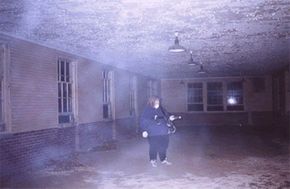
On a January night in 2002, a group of paranormal investigators visited an abandoned mental hospital just south of Chicago, Ill. The hospital had a dark past. Before it was shut down in the 1970s, it had housed the criminally insane. Occasionally, the staff had executed criminals by electrocution.
EVP Image Gallery
Advertisement
The team of investigators walked through Manteno State Mental Hospital, recording both audio and video as they went. They didn't hear or see much while they were there, but when they reviewed their videotape, they discovered something quite startling. In the empty, powerless hospital, they heard very distinctly the sound of a female voice paging Dr. Martin ("Martin" is the best guess -- they are not completely sure of the last name of the doctor).
The voice was recorded by the Southern Wisconsin Paranormal Research Group, one of many research organizations around the world that study electronic voice phenomena (EVP). EVP is the recording of sounds and voices onto tapes, videocassettes and other electronic devices. Those who investigate the phenomenon say that the recordings are the voices of spirits trying to communicate with us. Skeptics say EVP is just radio interference or tricks played by our mind.
In this article, we will find out how researchers study electronic voice phenomena, discover some of the arguments for and against its existence and hear some of the extraordinary voices that have been caught on tape.
Advertisement