If you're a fan of the "Iron Man" comic books and movies, you're probably fascinated with the powered, flight-capable suit of armor that fictional industrialist Tony Stark puts on when he goes out to battle evildoers. Wouldn't it be great to have one of those around?
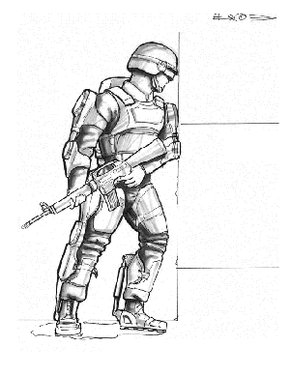
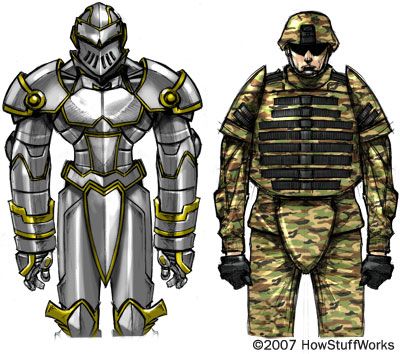
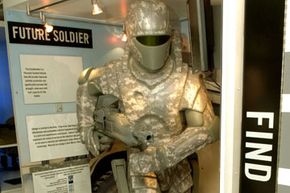
You might be surprised to learn that, someday soon, an only slightly less incredible version of Iron Man's suit may enable U.S. soldiers to run faster, carry heavier weapons and leap over obstacles on the battlefield. And at the same time, it'll shield them from the effects of bullets and bombs. The military has been working on the concept of the powered exoskeleton, a technology designed to augment the human body and its capabilities, since the 1960s. But recent advances in electronics and material science are finally making this idea seem practical.
Advertisement
In 2010, defense contractor Raytheon demonstrated the experimental XOS 2 -- essentially, a wearable robot guided by the human brain -- that can lift two to three times as much weight as an unassisted human, with no effort required by the user. Another company, Trek Aerospace, is developing the Springtail Exoskeleton Flying Vehicle, an exoskeleton frame with a jetpack built in, which could be capable of flying up to 70 miles per hour (112.6 kilometers per hour) and hovering motionlessly thousands of feet above the ground, as well [source: Hanlon].
But others besides the military may benefit from the advent. It's possible that someday people with spinal injuries or muscle-wasting diseases may get around as easily as fully-abled people do, thanks to full-body devices -- essentially, wearable robots -- that enable them to do what their own muscles and nerves can't. Early versions of such powered exoskeletons, like Argo Medical Technologies' $150,000 ReWalk device, are already on the market [sources: Argo Medical Technologies, Ugwu].
How will future generations of powered exoskeletons revolutionize both the battlefield and peacetime existence? And, what technical hurdles must researchers and designers overcome to make powered exoskeletons truly practical for everyday use?
First, let's look at where the concept came from, and how it has evolved.
Advertisement