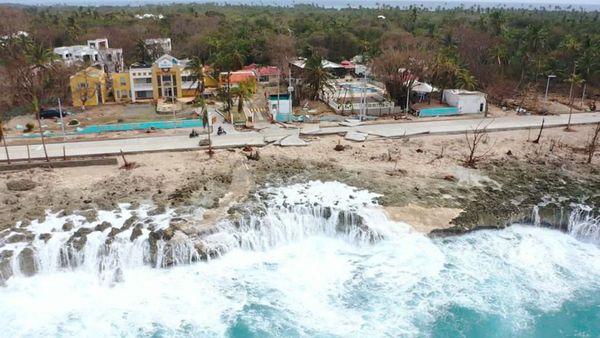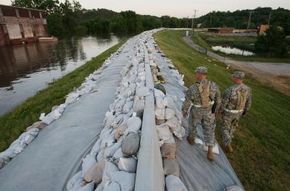
In his poem "The Dry Salvages," T.S. Eliot described the river as "a strong brown god," a powerful force that, while often patient and nurturing, frequently proves itself untamable and merciless. The greatest cities in human history have risen up on the banks of rivers and by the seaside, but in doing so, their builders chose to live in close confines with an unruly force. Rivers have surged to wash away whole communities or changed course to abandon prosperous kingdoms to the dust. Even today, ocean storms threaten to decimate centuries' worth of human endeavor.
Humans have attempted to conquer the problems of changing water levels for thousands of years. One of the oldest weapons they've wielded against the rivers and oceans is the levee, also known as a dike. A levee is simply a man-made embankment built to keep a river from overflowing its banks or to prevent ocean waves from washing into undesired areas.
Advertisement
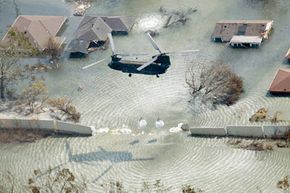
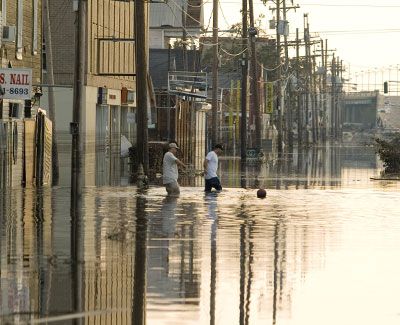
In New Orleans, the levees attempt to perform dual duties: On one side of the city, levees protect against floods from the Mississippi River, and on the other side, they help to keep Lake Pontchartrain at bay.
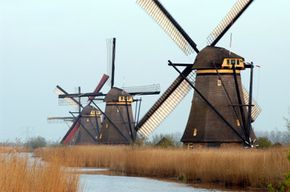
In parts of the Netherlands, dikes stop ocean waters from reclaiming thousands of miles of land, much of which is either at or below sea level. The famous windmills of Holland pump water from behind the dikes and back out to sea to keep the land dry. There are even parts of the Netherlands, called polders, where the Dutch have created new dry land along the sea by diking and draining it.
A levee is typically little more than a mound of less permeable soil, like clay, wider at the base and narrower at the top. These mounds run in a long strip, sometimes for many miles, along a river, lake or ocean. Levees along the Mississippi River may range from 10 to 20 feet (3 to 7 meters) tall. In Holland, they can top 30 feet (10 meters). But there's no set height for levees. Their measurements vary according to the storms the area receives, even if those storms occur only once every hundred or thousand years.
Living by the water provides humans with a number of advantages: fertile farm land, transportation, trade and hydroelectric power. Levees allow humans to enjoy these assets without fear of flooding. But humans have a bad habit of forgetting just how powerful their "strong brown god" really is.
Advertisement