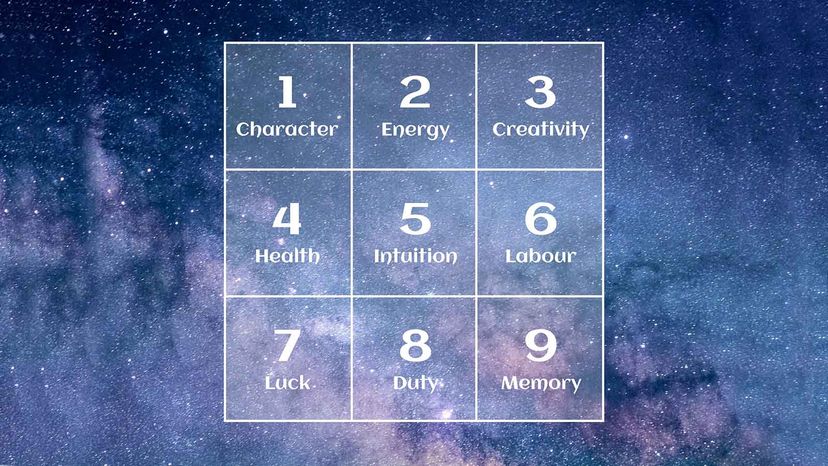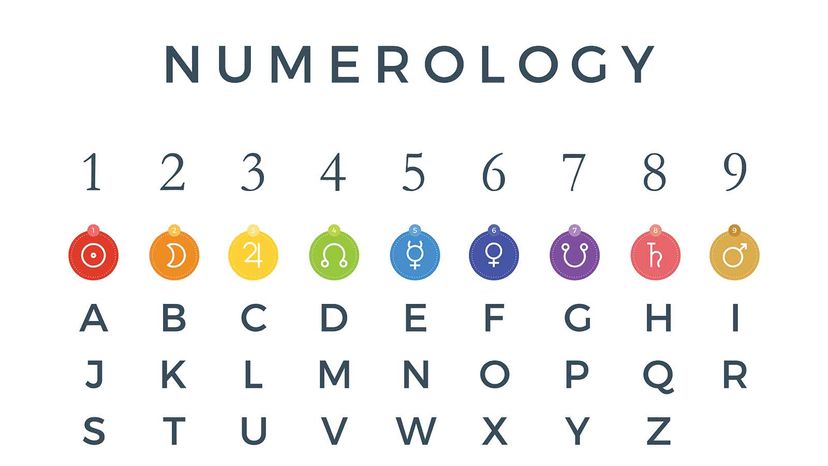
In the world of Harry Potter, Hermione Granger's favorite subject is arithmancy. The novels don't offer much detail, but they make it clear that arithmancy involves the magical properties of numbers. Hermione learns to use complex charts to perform numerical divination, or tell the future using numbers.
In real life, arithmancy is known as numerology. According to numerologists, everything in the world is dependent on numerical patterns. These patterns come from the numbers' inherent vibrations.
Advertisement
As the numerology theory goes, each number has a unique vibration, giving it certain properties. These properties can shed light onto a person's behavior or predict whether romantic partners are compatible.
Numerological chart analysis can determine a person's lucky number or angel numbers. These recurring numbers offer clues into how the world works or the significance of people and events. According to many numerologists, nothing happens by accident — everything happens because of numbers.
Most numerologists credit the Greek philosopher Pythagoras as the founder of numerology. Pythagoras and his followers, known as Pythagoreans, studied mathematics, music and philosophy. Many textbooks credit the Pythagorean school with several important discoveries, including:
- The Pythagorean theorem, which states that in a right triangle, the square of the length of the hypotenuse is equal to the sum of the squares of the other two sides (a2 + b2 = c2)
- The mathematical proportions in musical harmonies, likely discovered using stringed instruments
- The first irrational number, the square root of two or Pythagoras' constant
In addition, Pythagoras and his followers believed in mystical properties of numbers. According to Underwood Dudley, author of "Numerology: Or What Pythagoras Wrought," the Pythagoreans became interested in number mysticism after discovering a particularly fascinating fact about numbers. If you add up a series of odd numbers beginning with the No. 1, the result is always a square number.
Discoveries like this led the Pythagoreans to the conclusion that "all is number." According to one interpretation, this means that people can measure everything in the world and describe it in terms of numbers and proportions. This is a reasonable idea, and it has had a big influence on science and mathematics. But according to another interpretation, "all is number" means that everything in the world is made of numbers and can be reduced to a numerical value.
Advertisement