
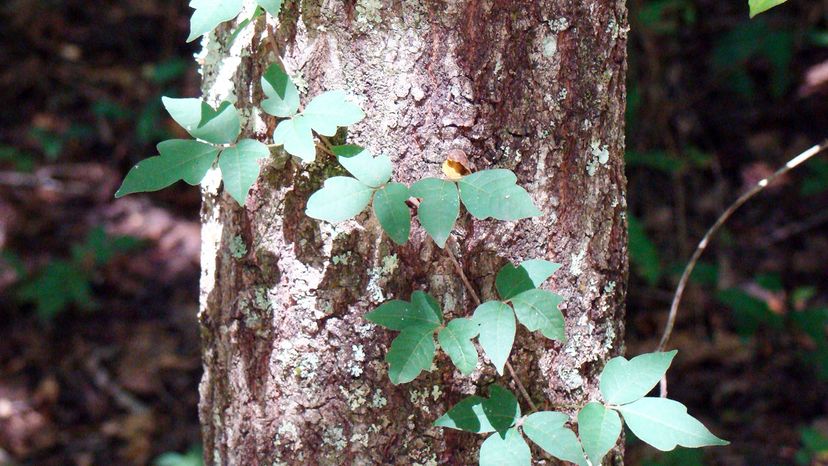
According to the American Skin Association, as many as 50 million Americans have allergic reactions to the poison ivy plant each year. The plant is often very difficult to spot because it closely resembles several other common garden plants. It can also blend in with other similar looking weeds. But if you come into contact with it, you'll soon know because an itchy, blistery rash may form on your skin.
The culprit behind the rash is a chemical in the sap of poison ivy plants called urushiol (oo-roo-shee-ohl). Its name comes from the Japanese word "urushi," meaning lacquer. Urushiol is the same substance that triggers an allergic reaction when people touch poison oak and poison sumac plants. Poison ivy (Toxicodendron radican), Eastern poison oak (Toxicodendron quercifolium), Western poison oak (Toxicodendron diversilobum), and poison sumac (Toxicodendron vernix) are all members of the same family — Anacardiaceae.
Advertisement
In this article, you'll learn where poison ivy grows, how to spot it before you get too close and how to get rid of it. And we'll explain why it causes that nasty, itchy rash.