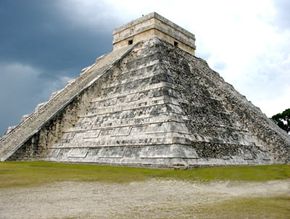
The ancient pyramids are among the most astonishing structures in the world. Built in ancient times by workers who didn't have the benefit of modern tools and machinery, they are a constant source of fascination. Most of us think of ancient Egypt when pyramids come to mind, but they exist in many parts of the world. Why did the ancients build pyramids? What was their purpose? Is there any special meaning behind the pyramid shape? How were they built without earth-moving or heavy-lift machinery? In this article, we'll examine pyramids around the world, how they were constructed and who used them.
What is a pyramid?
A pyramid is a geometrical solid with a square base and four equilateral triangular sides, the most structurally stable shape for projects involving large amounts of stone or masonry. Pyramids of various types, sizes and complexities were built in many parts of the ancient world (like Central America, Greece, China and Egypt). In the history of Egypt and China, they were primarily tombs and monuments to kings and leaders. The pyramids of the Mayans and Aztecs of Central America were mainly religious temples, though some of them housed burial chambers.
Advertisement
The Central American pyramids were smaller and sometimes wider than their Egyptian counterparts. These pyramids also took longer to finish -- they were often built and modified over hundreds of years, while Egyptian pyramids took a couple of decades to construct. Pyramids in Central America were integrated into Aztec and Mayan cities, whereas Egyptian pyramids were located away from the major cities.
The ancestors of these great structures are the burial tombs found throughout North America and Europe -- simple mounds of earth that covered burial chambers. The first tombs of the Egyptian pharaohs were flat, box-shaped buildings called mastabas (Arabic for "bench"). Pharaohs later built grander tombs by adding levels on top of the box to form stepped pyramids. Stepped pyramids are prevalent in Central America. In Mesopotamia, they were called ziggurats.
The Egyptians took pyramid design to new heights, culminating in the construction of the pyramids of Giza in the 26th century B.C. Laborers used 2.3 million blocks of limestone and granite to build the Great Pyramid of Khufu, which stands 146 meters high, has a 230-meter-square base and weighs about 6.5 million tons. A number of pyramids, including the Great Pyramid of Khufu, have survived thousands of years of exposure to the elements, a tribute to the ancient architects, engineers and workers who built them.
In the next section, we'll learn more about the pyramids of Egypt and the evolution of pyramid design.