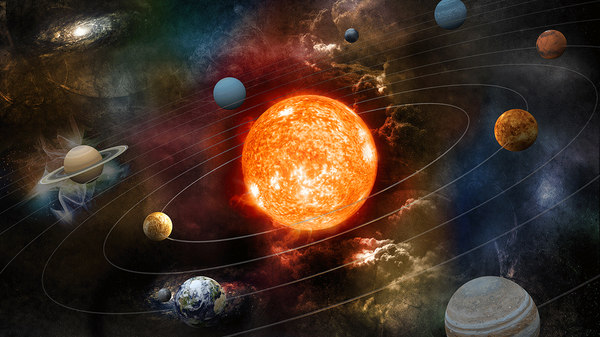
In 1772, a mathematician named Johann Titus and an astronomer named Johann Bode discovered a mathematical sequence that explained the distances from the sun of all the known planets — but there seemed to be one missing.
Titus's series predicted the possibility of a planet orbiting between Mars and Jupiter at 2.8 AU (2.6 x 10⁸ mi / 4.2 x 10⁸ km) from the sun. AU stands for astronomical unit and is based on the mean distance from Earth to the sun, 9.3 x 10⁷ miles (1.5 x 10⁸ km).
Astronomers began to search for this missing planet, and in 1801, an Italian astronomer named Giuseppi Piazzi found a faint body at that distance that he called Ceres. However, Ceres was fainter than Mars or Jupiter, so Piazzi concluded it was much smaller.
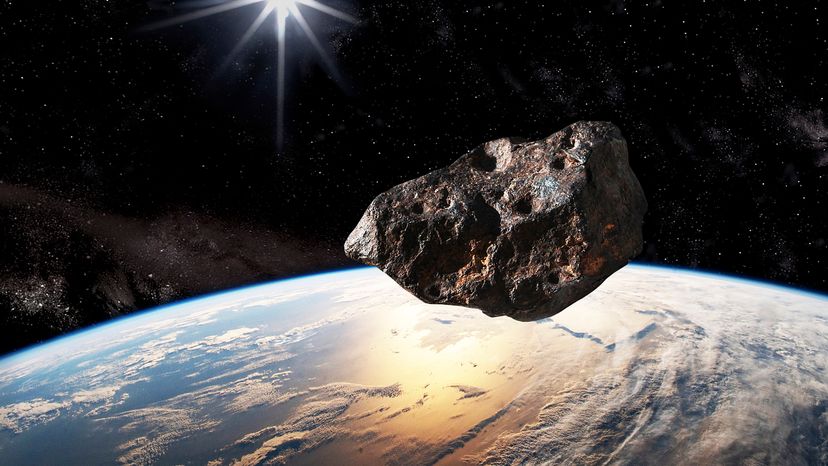
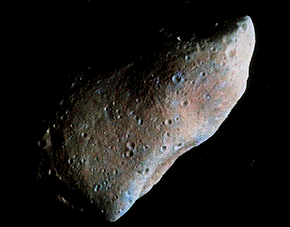
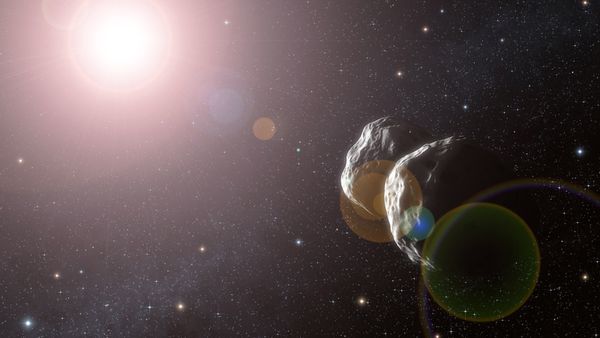
Astronomers later found other small bodies in this same vicinity. These objects were named asteroids (meaning star-like). They are also called minor planets.
Upgrading Space Rocks
In 2006, Ceres was promoted from asteroid to dwarf planet, due to its relatively massive size. Nine years later, NASA's Dawn spacecraft landed on the dwarf planet, making Ceres the first of its kind to receive such an honor.