
The Clean-up
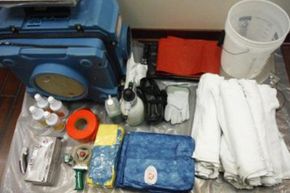
While CTS decon companies will clean up practically anything, the most common scenes they're called in to address are suicides, accidents and "unattended deaths" (a.k.a. decomposing bodies), according to Andrew Whitworth of Aftermath, Inc., an Illinois-based remediation company. And they arrive at these scenes with an enormous body of equipment. Once they assess the damage, they decide which tools will help them them return the room, house or business to its pre-incident state. The gear they choose from typically includes:
- Personal protective gear: a non-porous, one-time-use suit; gloves; filtered respirators and chemical-spill boots
- Biohazard waste containers: 55-gallon (208 liter) heavy duty bags and sealed, hard plastic containers
- Traditional cleaning supplies: mops, buckets, spray bottles, sponges, brushes
Hard-core cleaning supplies (can include):
Advertisement
- Ozone machine (to remove odors)
- Foggers (to thicken a cleaning chemical so it can get all the way into tight places like air ducts, usually for odor removal)
- Hospital-grade disinfectants
- Industrial-strength deodorizers
- Enzyme solvent (to kill bacteria and viruses and liquefy dried blood)
- No-touch cleaning system (to clean blood-coated surfaces from a safe distance – includes heavy-duty sprayer, long scrubbing brush, wet vacuum)
- Putty knives (to scrape up brain matter, which dries into a cement-like consistency)
- Razor blades (to cut out portions of carpet)
- Shovels (in about two hours, large amounts of blood coagulate into a jelly-like goo that can be shoveled into bags)
- Truck-mounted steam-injection machine (to melt dried brain matter that cleaners can't remove with putty knives)
- Chemical treatment tank (to disinfect and store matter sucked up by vacuum systems)
Carpentry/restoration tools: sledgehammers, saws, spackle, paint brushes
Ladders
Camera (to take before-and-after shots for insurance purposes)
Van or truck for transporting all of the tools and for hauling waste to a disposal site
Each type of clean-up scene comes with its own unique horrors. In the case of a violent death, there are bodily fluids to deal with, each tiny drop carrying the possibility of infectious disease. In something like a suicide where a person cuts his wrists or shoots himself in the head, there's tons of blood; if someone is shot in the chest, though, there's very little blood because the lungs suck it in. But no matter how much of it there is, the cleaners have to approach it as if it were carrying bloodborne pathogens like HIV, hepatitis and hantavirus.
That's part of why crime-scene restoration is a specialty in the cleaning industry. It has to go beyond cosmetic.