The evolution of mass transportation has fundamentally shifted human civilization. In the 1860s, a transcontinental railroad turned the months-long slog across America into a week-long journey. Just a few decades later, passenger automobiles made it possible to bounce across the countryside much faster than on horseback. And of course, during the World War I era, the first commercial flights began transforming our travels all over again, making coast-to-coast journeys a matter of hours. But rail trips in the U.S. aren't much faster today than they were a century ago. For engineers looking for the next big breakthrough, perhaps "magical" floating trains are just the ticket.
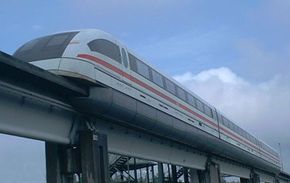
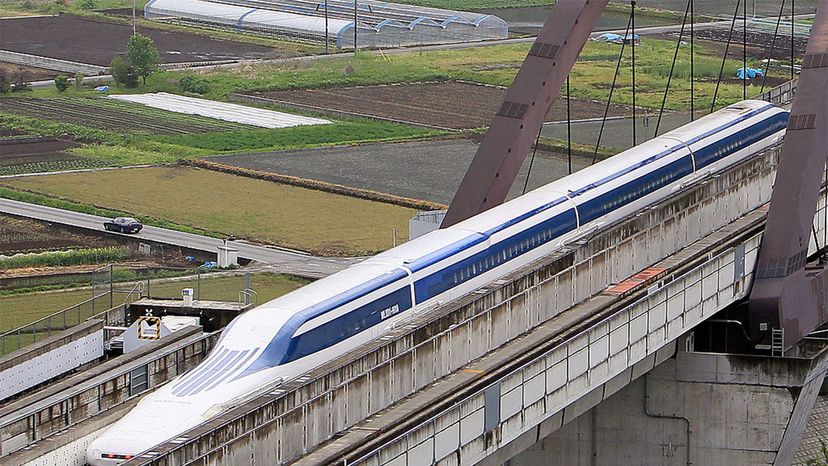
In the 21st century there are a few countries using powerful electromagnets to develop high-speed trains, called maglev trains. These trains float over guideways using the basic principles of magnets to replace the old steel wheel and track trains. There's no rail friction to speak of, meaning these trains can hit speeds of hundreds of miles per hour.
Advertisement
Yet high speed is just one major benefit of maglev trains. Because the trains rarely (if ever) touch the track, there's far less noise and vibration than typical, earth-shaking trains. Less vibration and friction results in fewer mechanical breakdowns, meaning that maglev trains are less likely to encounter weather-related delays.
The first patents for magnetic levitation (maglev) technologies were filed by French-born American engineer Emile Bachelet all the way back in the early 1910s. Even before that, in 1904, American professor and inventor Robert Goddard had written a paper outlining the idea of maglev levitation [source: Witschge]. It wasn't long before engineers began planning train systems based on this futuristic vision. Soon, they believed, passengers would board magnetically propelled cars and zip from place to place at high speed, and without many of the maintenance and safety concerns of traditional railroads.
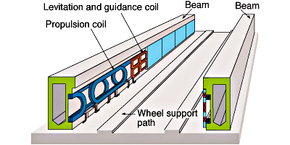
The big difference between a maglev train and a conventional train is that maglev trains do not have an engine — at least not the kind of engine used to pull typical train cars along steel tracks. The engine for maglev trains is rather inconspicuous. Instead of using fossil fuels, the magnetic field created by the electrified coils in the guideway walls and the track combine to propel the train.
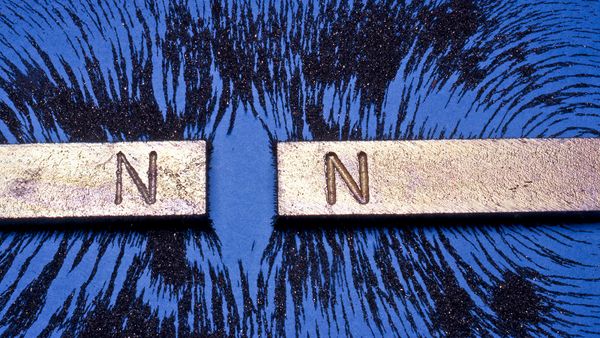
If you've ever played with magnets, you know that opposite poles attract and like poles repel each other. This is the basic principle behind electromagnetic propulsion. Electromagnets are similar to other magnets in that they attract metal objects, but the magnetic pull is temporary. You can easily create a small electromagnet yourself by connecting the ends of a copper wire to the positive and negative ends of an AA, C or D-cell battery. This creates a small magnetic field. If you disconnect either end of the wire from the battery, the magnetic field is taken away.
The magnetic field created in this wire-and-battery experiment is the simple idea behind a maglev train rail system. There are three components to this system:
- A large electrical power source
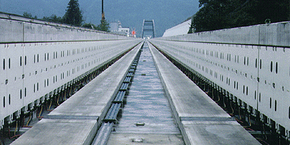
- Metal coils lining a guideway or track
- Large guidance magnets attached to the underside of the train
We'll look at the track next.
Advertisement