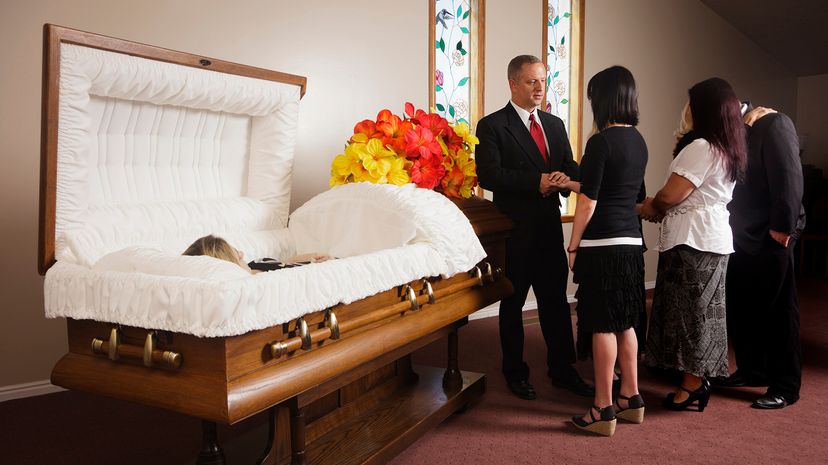
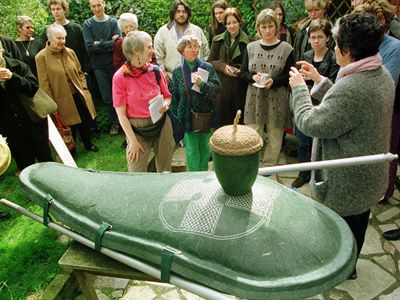
A coffin's basic purpose is to create a barrier around a corpse. But what happens when that's just not enough? Over the years, the funeral industry has developed some specialized coffins to address a variety of needs and concerns.
One example is the protective coffin, which the American funeral industry has promoted heavily because it features a rubber gasket to provide a more durable seal against earth and elements. Some designs have employed an impermeable seal, which might seem like an attractive option initially.
After all, if you're burying a loved one, it's natural to prefer the most secure receptacle available.
However, as a body decays, it produces methane gas — which, if not allowed to leak out, builds up within the coffin and can literally cause it to explode. Since no one wants that, the industry developed burping coffins, which are protective structures that rely on a permeable seal to protect the body while allowing gas to escape.
Although these coffins do add a degree of protection from decay, it's now illegal for funeral providers to claim that these models will preserve the body indefinitely.
Grave-robbing Medical Students
These protective caskets wouldn't have been enough to protect a body from medical students during the early 19th century, though. During this so-called body-snatching period, thieves broke into graves to retrieve corpses for medical education and research.
In response, the funeral industry developed more heavy-duty protective measures. Instead of just a coffin, bodies would often be interred in thick-walled vaults, potentially equipped with several locks and staffed by guards.
Additionally, a mortsafe, a type of iron cage placed over a vault, might have been secured in concrete over the grave. A locked gate would allow loved ones access to the grave.
Not enough money for the more high-tech solutions? Heavy wooden planks or metal slabs placed over the coffin proved difficult for unwanted visitors to remove. Alternatively, stones filling the grave instead of dirt would cause a ruckus if disturbed, drawing attention to would-be body snatchers during the act.
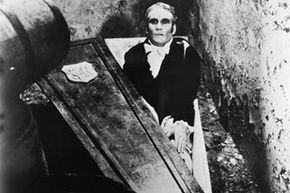
Now let's take a look at the long relationship between coffins and vampires in pop culture.