The history of forensic science dates back thousands of years. Fingerprinting was one of its first applications. The ancient Chinese used fingerprints to identify business documents. In 1892, Sir Francis Galton established the first system for classifying fingerprints. Sir Edward Henry, commissioner of the Metropolitan Police of London, developed his own system in 1896 based on the direction, flow, pattern and other characteristics of fingerprints. The Henry Classification System became the standard for criminal fingerprinting techniques worldwide.
In 1835, Scotland Yard's Henry Goddard became the first person to use physical analysis to connect a bullet to the murder weapon. Bullet examination became more precise in the 1920s when American physician Calvin Goddard helped create the comparison microscope to help determine which bullets came from which shell casings. And in the 1970s, a team of scientists at the Aerospace Corporation in California developed a method for detecting gunshot residue using scanning electron microscopes.
In 1836, a British chemist named James Marsh developed a chemical test to detect arsenic, which was used during a jury trial. Nearly a century later, in 1930, scientist Karl Landsteiner won a Nobel Prize for classifying human blood into various groups. His work paved the way for the future use of blood in criminal investigations. Other scientific tests were developed in the mid-1900s to analyze saliva, semen and other body fluids as well as to make blood tests more precise.
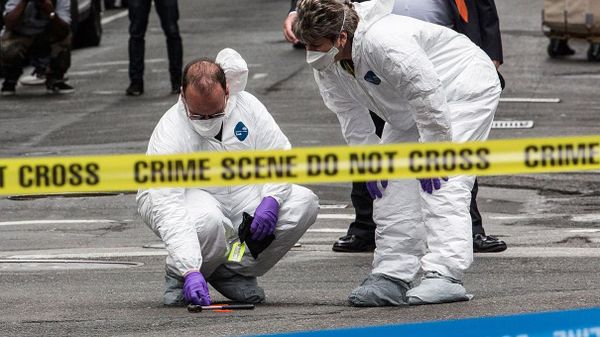
With all of the new forensics techniques emerging in the early 20th century, law enforcement discovered that it needed a specialized team to analyze evidence found at crime scenes. To that end, Edmond Locard, a professor at the University of Lyons, set up the first police crime laboratory in France in 1910. For his pioneering work in forensic criminology, Locard became known as "the Sherlock Holmes of France."
August Vollmer, chief of the Los Angeles Police, established the first American police crime laboratory in the 1920s. When the Federal Bureau of Investigation (FBI) was first founded in 1908, it didn't have its own forensic crime laboratory — that wasn't set up until 1932.
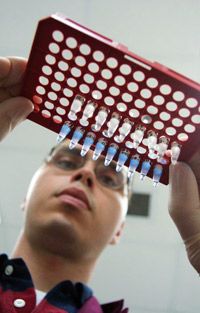
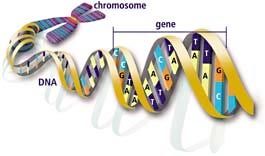
By the close of the 20th century, forensic scientists had a wealth of high-tech tools at their disposal for analyzing evidence from polymerase chain reaction (PCR) for DNA analysis to digital fingerprinting techniques with computer search capabilities.
Next, we'll see some of the applications of these modern forensic technologies.