
Causes of Landslides
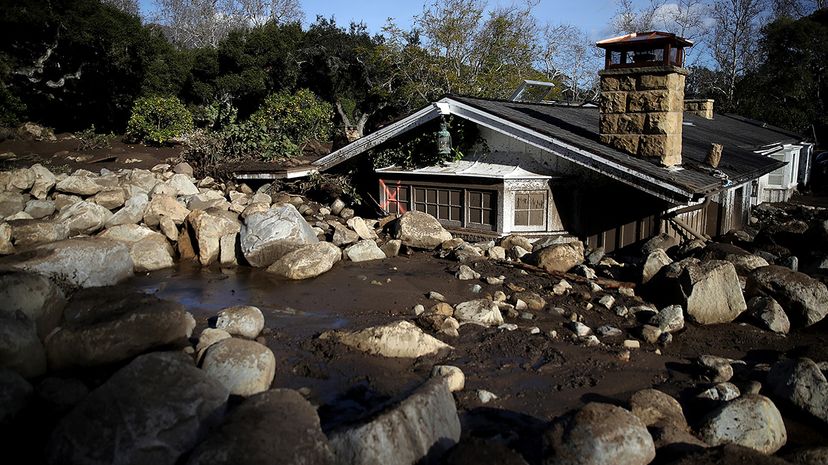
We know gravity is the ultimate force behind any landslide and that weathering plays a part. But what pulls the trigger to set a slide in motion?
Land surfaces are held together by multiple forces. The most important of these is friction. Some soil particles, like clay, cling to each other tightly, while others, like sand, are only loosely joined. All landscapes are held together by friction between the sediment cover and the underlying bedrock, some more tightly than others. If something is introduced to disrupt the friction on an incline, a landslide slips into action. Landslides occur when gravity overcomes the force of friction.
Advertisement
Several common causes of landslides are:
- Water: Perhaps the most common trigger of a landslide, water reduces the friction between the bedrock and the overlying sediment, and gravity sends the debris sliding downhill. In sand and clay soils, a small amount of water may increase stability. You've likely seen this when building a sand castle or working with clay. However, the sediment gets heavier as more water is added and that can cause it to flow downhill. This is why many landslides occur after rainstorms [source: Washington Geological Survey].
- Earthquakes: If the Earth's crust vibrates enough to disrupt the force of friction holding sediments in place on an incline, a landslide can strike. Seismic activity can also make it easier for water to seep into the soil, further destabilizing the slope.
- Wildfires: Plants help keep the soil stable by holding it together like glue with their roots. When this glue is removed, the soil loosens, and gravity acts upon it much more easily. The loss of vegetation after a fire makes the razed land susceptible to slides.
- Volcanoes: Several characteristics of volcanoes make them fertile starting points for especially destructive landslides. On the next page, you'll learn just how powerful these volcanic landslides can be.