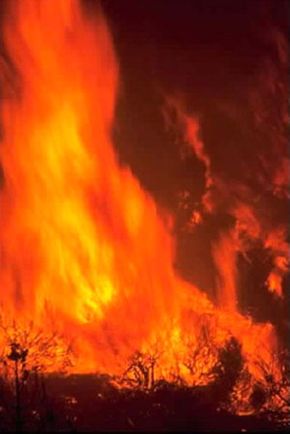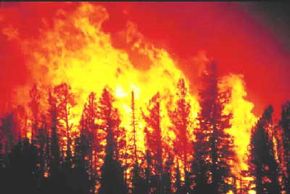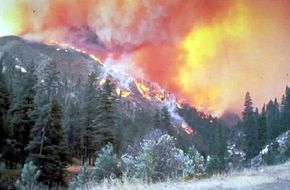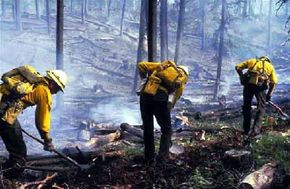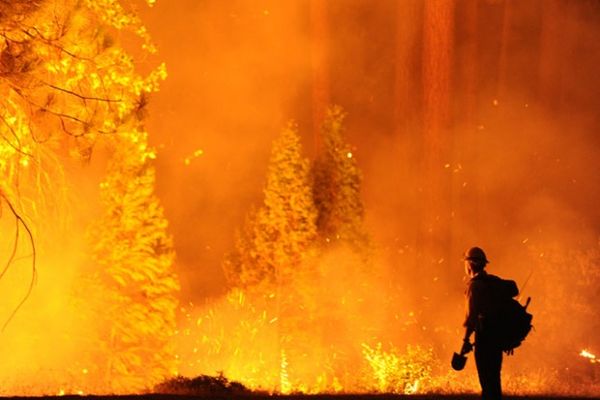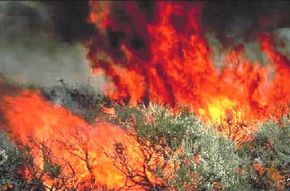
In just seconds, a spark or even the sun's heat alone sets off an inferno. The wildfire quickly spreads, consuming the thick, dried-out vegetation and almost everything else in its path. What was once a forest becomes a virtual powder keg of untapped fuel. In a seemingly instantaneous burst, the wildfire overtakes thousands of acres of surrounding land, threatening the homes and lives of many in the vicinity.
An average of 5 million acres burns every year in the United States, causing millions of dollars in damage. Once a fire begins, it can spread at a rate of up to 14.29 miles per hour (23 kph), consuming everything in its path. As a fire spreads over brush and trees, it may take on a life of its own -- finding ways to keep itself alive, even spawning smaller fires by throwing embers miles away. In this article, we will look at wildfires, exploring how they are born, live and die.
Advertisement
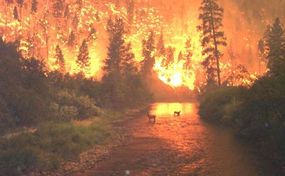
On a hot summer day, when drought conditions peak, something as small as a spark from a train car's wheel striking the track can ignite a raging wildfire. Sometimes, fires occur naturally, ignited by heat from the sun or a lightning strike. However, the majority of wildfires are the result of human carelessness.
Common causes for wildfires include:
- Arson
- Campfires
- Discarding lit cigarettes
- Improperly burning debris
- Playing with matches or fireworks
- Prescribed fires
Everything has a temperature at which it will burst into flames. This temperature is called a material's flash point. Wood's flash point is 572 degrees Fahrenheit (300 C). When wood is heated to this temperature, it releases hydrocarbon gases that mix with oxygen in the air, combust and create fire.
There are three components needed for ignition and combustion to occur. A fire requires fuel to burn, air to supply oxygen, and a heat source to bring the fuel up to ignition temperature. Heat, oxygen and fuel form the fire triangle. Firefighters often talk about the fire triangle when they are trying to put out a blaze. The idea is that if they can take away any one of the pillars of the triangle, they can control and ultimately extinguish the fire.
After combustion occurs and a fire begins to burn, there are several factors that determine how the fire spreads. These three factors include fuel, weather and topography. Depending on these factors, a fire can quickly fizzle or turn into a raging blaze that scorches thousands of acres.
Advertisement