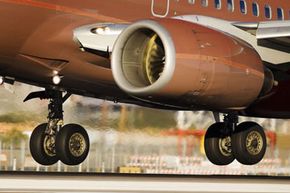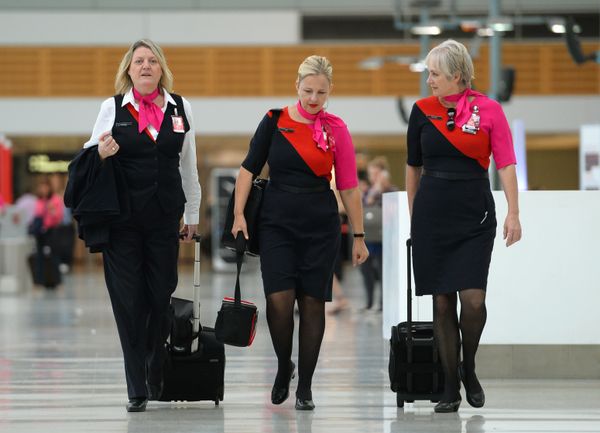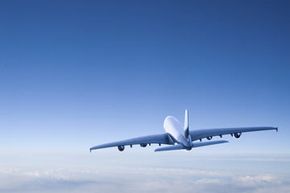
The gigantic, efficient, and ubiquitous Boeing 747 transport is a symbol of the most important aspects of progress in civil aviation: the democratization and globalization of travel. At this instant, thousands of airline terminals around the world are crowded with millions of people representing every nation, all taking advantage of the availability of long-distance travel via flight.
Classic Airplane Image Gallery
![]() The Boeing 747 wasn't just a supremely capable airliner, but was a startlingly successful public relations coup for Boeing. See more classic airplane pictures. |
Although modern, the Boeing 747 also symbolizes another era, when individuals like Juan Trippe of Pan American Airways and Bill Allen of Boeing could decide to undertake a venture of giant size and great risk -- and do so on their own, certain that their decisions would be approved by their boards of directors.
Thus it was on December 22, 1965, that Trippe and Allen signed a letter of intent committing $525 million for 25 aircraft, launching the largest airliner in history, the Boeing Model 747. The initial specifications called for a gross weight of 550,000 pounds, room for up to 400 passengers, a cruise speed of Mach .9, and a range of 5,100 miles.
It was a fantastic challenge, one whose failure had the potential to ruin both airlines. It was fraught with hazard, for new engines had to be designed and built, as did a huge new factory that became the largest building in the world in terms of volume. Even the world's airport runways, taxiways, and terminals had to be redesigned to handle the aircraft.
Jack Waddell was pilot on the first 747 flight, on February 9, 1969. As all test pilots must do, he publicly called the giant new airplane "a pilot's dream." There would be delays in getting the 747 into service, primarily due to problems with the Pratt & Whitney JT9D engines, but it was soon apparent that the Boeing 747 was the new world standard in transportation.
Fast, comfortable, and reliable, Boeing 747s
began racking up one record after another. By 1975, it had carried its 100 millionth passenger, signifying the beginning of the revolution in air transport. That revolution was confirmed by the year 2000, when 3.3 billion passengers had been carried, and 747s had flown over 33 billion statute miles.
Lockheed was delighted when it was awarded the contract to build the C-5A, and Boeing was furious. However, the C-5A contract was a brand-new contractual instrument termed Total Package Procurement. It was an unfair arrangement that was essentially a firm fixed-price development program. The terms of the contract were harsh enough to cause Lockheed to lose hundreds of millions of dollars. Boeing, on the other hand, used the development experience to design the 747, and went on to make billions of dollars in the process. |
Keep reading to see specifications of the Boeing 747.
For more information on airplanes, check out:
More Options: