
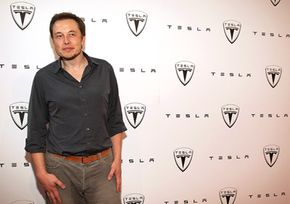
One of the most interesting things about how Elon Musk works is the fact that he does work -- because, really, he doesn't have to. His ventures in the Internet world earned him a considerable fortune. By his early 30s, he was already worth about $200 million. But when people ask him why he hasn't retired -- or bought himself an island, for that matter -- he claims he'd simply get bored. Instead, Elon Musk decided to enter one of the riskiest, costliest, most unforgiving businesses there is: the space business.
Unlike many of the other private attempts to enter space, Musk's rockets are built to enter Earth orbit or beyond, which is a bigger challenge than merely reaching suborbital heights (something SpaceShipOne accomplished). And although Musk has proven his business savvy through several successful ventures (he's linked to PayPal, for one), he's surprised everyone with his space aspirations. Not easily discouraged, he explained in one interview that people are too easily frightened by risk -- in fact, they all too often overestimate the risk involved [source: TIEcon].
Advertisement
Musk continues to push the limits of expectation, and, as a result, was named the Inc. Magazine 2007 entrepreneur of the year [source: Chafkin].
Born in South Africa in 1971, the computer bug bit Musk at an early age. At a mere 12 years old, he wrote code for a video game that he sold to a computer magazine. When he was 17, he moved to Canada on his own and eventually ended up in the U.S. at the University of Pennsylvania where he earned degrees in physics and business. Afterwards, he was set up to begin a graduate program at Stanford in 1995.
But he chose to drop out of the Stanford program before classes began. The Internet was emerging and business opportunities were too tantalizing for Musk to ignore. What did he do next? Find out how he raised his fortune on the next page.