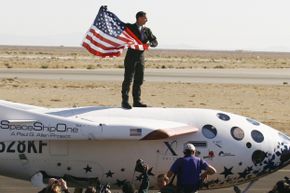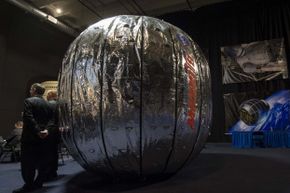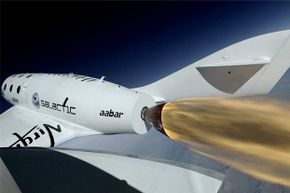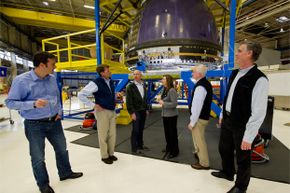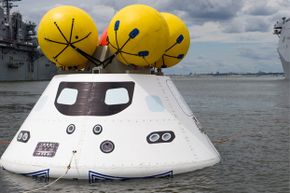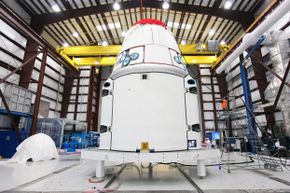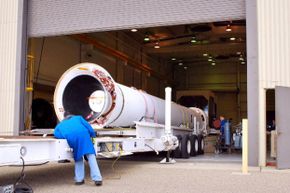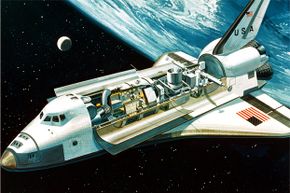
Today, countries and companies small and large jockey for position in the suborbital track, and many analysts think that's a good thing. Privatized rockets and space stations open up orbital access to nations, businesses and even people. With deep enough pockets, they can skip the economic and political risks of establishing their own space program and, for a relative pittance, flag down a parabolic taxi, book lodgings on a space station or secure cargo room for a satellite, experiment or instruments.
NASA, meanwhile, is leveraging its resources to jump-start the process. In particular, its commercial crew initiative, which supports space ambitions at Boeing, Space Exploration Technologies Corp. (SpaceX) and Sierra Nevada Corp., continues to pass milestone after milestone. In preparation for the next phase, called Commercial Crew Transportation Capability, or CCtCap, the space agency issued a draft request for proposals during the summer of 2013 [sources: Chang; NASA].
Advertisement
For the new space race, this decade could well play out the way the late 1990s and early 2000s did for the Internet: as a time of uncertainty, ebullient creativity and, ultimately, economic reality. Dozens of companies are in the running, so we've handicapped our top picks based on who claims the most prestigious pedigree, who boasts the best track record and who simply outclasses the field.