Scientific Method
The scientific method is not a specific set of rules for discovering new scientific knowledge. Rather, it is the general procedure that scientists usually follow.
The first step in scientific inquiry is to state a problem, usually by asking a clear, answerable question about physical or social events. The more specific the question, the better the chance of finding an answer. For example, it may be difficult, if not impossible, to answer a broad question such as "What causes juvenile delinquency?" because delinquent behavior seems to be produced by many interacting factors (for example, family relationships, attitudes of friends, level of education, age, social class, size of community). However, it may be possible to answer a narrower question such as "Does the size of a community affect its rate of juvenile delinquency?"
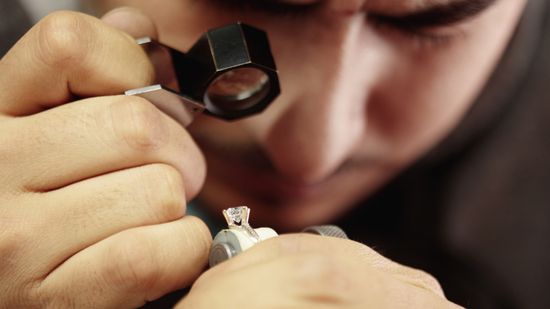
The second step in scientific inquiry is to collect pertinent data through observation or measurement, or both. Whenever possible, the scientist observes and measures things directly. Such instruments as magnifying glasses or electron microscopes assist scientists in making observations. Many times, however, scientists wish to study things that cannot be seen, such as sound, electricity, atmospheric pressure, human opinions, or attitudes. They then must use instruments that detect the presence of the phenomenon and measure its strength. A physicist, for example, can measure atmospheric pressure with a barometer. A sociologist can gauge public opinion on a subject by asking people carefully worded questions.
After collecting data, scientists analyze it and form one or more hypotheses about the problem. (In practice, they may be forming hypotheses while they are collecting data.) A hypothesis may be extremely simple and limited. For example, a botany student may measure the length of 100 pin oak leaves and form the hypothesis that all pin oak leaves are three to five inches (8 to 13 cm) in length. A hypothesis may also be broad and complex. For example, the hypothesis that the earth's surface is divided into sections that move in relation to each other helps explain earthquakes, volcanoes, and many other geological phenomena.
In forming a hypothesis, the scientist uses inductive reasoning. Induction is the process of deriving a general, all-encompassing statement from a limited number of particular facts. There is no set procedure for reasoning inductively, and persons vary greatly in their ability to construct useful inductive statements. Successful induction depends upon creative individual insight.
After a hypothesis is formed, scientists test it. First they determine the consequences of the hypothesis by deductive reasoning. Deduction is the process of drawing particular conclusions from a general, all-encompassing statement. For example, from the hypothesis "All contagious diseases are caused by microorganisms" it might be deduced that "Chicken pox is caused by a microorganism." Scientists test such a hypothesis by making observations or conducting experiments.
Scientists usually follow one of two basic approaches. In one approach, they form deductions about what events should occur and then see if they actually do occur. The occurrence of a deduced consequence provides support for the hypothesis; however, if a supposed consequence does not occur, either the deduction or the hypothesis is incorrect, and has to be changed or rejected.
In the second approach, scientists form deductions about what events should not occur and then see if such events actually do occur. If a deduced impossibility occurs, either the deduction or the hypothesis is incorrect. Repeated failures to disprove a hypothesis, however, only serve to strengthen that hypothesis.
To determine whether or not a supposed event occurs, the scientist uses observation or, more often, experimentation, deliberately manipulating conditions in order to observe what happens. Designing a valid experiment is often the most difficult part of testing a hypothesis. Most experiments are based on the so-called classic experimental design. At the start of a classic experiment, two groups of subjects as identical as possible are set up, and the members of each group are measured for some characteristic. Then one group, called the experimental group, receives the chosen treatment. The other group, called the control group, is left untreated. Afterwards, both groups are re-measured. Any difference in measurement between the experimental and control groups can be attributed to the effect of the chosen treatment.
For example, to determine the effect of fertilizer on plant growth by a classic experiment, scientists might use two groups of seedlings sprouted from the same kind of seeds. First, they would measure the height of each plant. Then they fertilize the seedlings of only one group, while keeping other conditions for both groups constant—that is, making certain each group received the same amount of light, water, etc. After a period of time, they would again measure the height of each plant. The scientists could then attribute differences in height between the plants of one group and the plants of the other group to the application of the fertilizer.
Depending on the results of observations and experiments, scientists accept, reject, or change their hypotheses. When they believe they have developed a valid new hypothesis, they report it to scientific colleagues through scientific journals. Other scientists, in turn, can perform the same experiments to test their validity and can develop new experiments to further test the hypothesis.
Once adequately tested by the scientific community, the hypothesis may be accepted as a theory, a probable explanation or interpretation. Theories that have stood extensive tests are sometimes referred to as laws. Because of the complexity of natural and social phenomena, and the inductive nature of science, scientific laws are not regarded as absolutely true statements. Rather, they are viewed as approximations of the truth or limited representations of reality that will be changed, extended, and improved as more scientific knowledge is discovered.