Key Takeaways
- Space farming studies the effects of microgravity on plant growth, focusing on how plants orient roots and stems with reduced gravity, which is crucial for potential farming on the moon or Mars.
- In space, efficient use of energy is vital, so researchers use light-emitting diodes (LEDs) to mimic natural sunlight for plant growth, considering factors like energy consumption, heat production and durability.
- Researchers test different rooting materials for optimal water and air distribution in low gravity, while space farming equipment must be compact and integrated with life support systems to exchange carbon dioxide and oxygen efficiently.
Ever wonder where we will build homes and expand neighborhoods as we use up more and more of Earth's habitable land? Perhaps space will be the next suburb? But before we start sending children on an intergalactic school bus ride, we must figure out new ways to accomplish everyday tasks in space, like growing food. International organizations are devoting time and resources to the development of sustaining human life beyond Earth. Some of the space programs' goals include the upcoming return to and eventual settlement of the moon, along with the pending manned voyages to Mars.
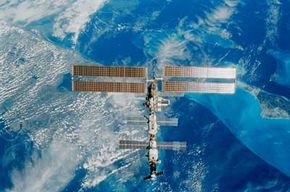
The International Space Station (ISS) provides a cooperative platform on which to research the critical challenges of putting humans in space for a sustained period of time. And researchers must overcome these challenges before any long flights and permanent habitats in space can happen.
Advertisement
Astronaut Image Gallery
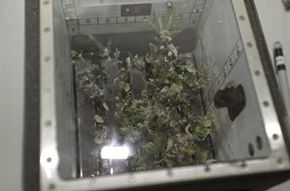
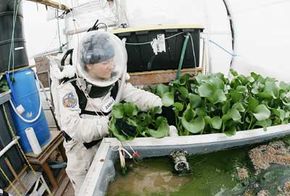
Space farming requires greater understanding if humans are to survive in space without constant contact from Earth. Space farming simply refers to growing plants in space. At first glance this might not seem too tricky, but the inherent properties of space and our ability to travel and live in its environment greatly complicate the situation.
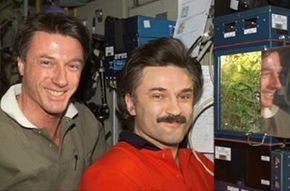
Luckily, the ISS has a whole team of astronauts (green thumb not required) from around the world specializing in a variety of scientific and engineering fields. Astronauts conduct experiments and improve our knowledge of cultivating plants in space, as well as many other critical arenas of science. Earth-bound researchers and scientists analyze the results and conduct their own experiments, thinking up new theories and possible solutions to test.
Before we look into the progress the experts have made in space farming, let's delve a little deeper into the obstacles they face.
Advertisement