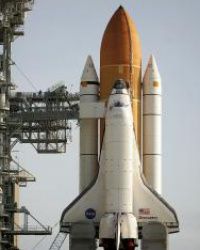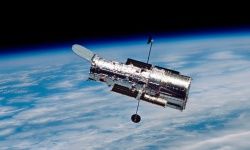
The National Aeronautics and Space Administration (NASA), the U.S. government agency that runs the country's civilian space program, has accomplished some truly amazing feats since its inception in 1958 -- from beating the Soviet Union in the race to put astronauts on the moon, to exploring the surface of Mars with unmanned robotic vehicles. So you're probably not surprised to hear that NASA employs a pretty awesome brain trust of scientific and engineering talent in a wide array of fields, from astronomy and physics to chemistry, biology and materials science.
NASA has invented all sorts of technology to solve the peculiar problems of space exploration. In the 1950s and early 1960s, it created the revolutionary three-axis stabilization control design that enables satellites to point their antennas, instruments and solar panels with precision. Since then, it's been such a prolific problem solver that about one in every 1,000 U.S. patents is granted to someone working on a NASA project [source: Rayl].
Advertisement
In fact, the NASA workforce is so ingenious that quite a few of its inventions are useful for those of us who stay on the ground. The agency even has a special administrative branch, the Technology Utilization Program, which focuses on helping companies turn the ideas behind space gadgetry into industrial and consumer innovations.
The list of inventions is certainly long, but if we have to single out a few favorites, these 10 would top the list.