The History of Chemistry

Alchemy

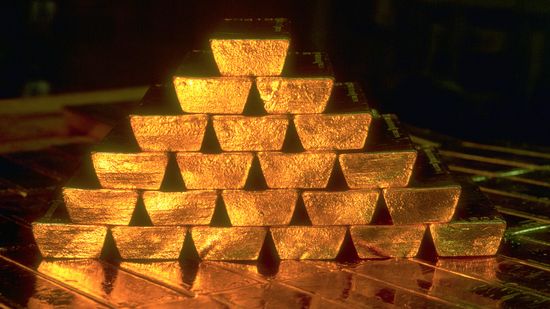
A forerunner of the science of chemistry flourished during the Middle Ages. This was alchemy, a mixture of black magic and scientific knowledge flavored with much superstition. Alchemists sought a mythical philosopher's stone with which they could transform the base metals, such as iron and lead, into gold. They also tried to compound an elixir of life that would make them live forever. They studied the classical Greek philosophers, especially Aristotle, who argued that all substances originated in some way from the four basic elements. The alchemists tried to find a fifth element (the quintessence), which, they believed, could control the changing of one substance into another.

Although their efforts were largely misdirected, the alchemists contributed much useful information as a result of their experiments. Special kinds of equipment, such as the test tube, the closed crucible, and the retort, still used in chemical laboratories today were devised by the alchemists. During the 16th century, certain alchemists and physicians developed the theory that disease must be treated by experimental use of chemicals accompanied by observation. The chief proponent of this theory was Philippus Aureolus Paracelsus, a Swiss physician and alchemist.

Rise of Modern Chemistry

At the end of the 16th century only 10 substances were definitely known to Europeans in pure form-carbon, sulfur, copper, iron, gold, silver, tin, lead, mercury, and antimony. All these had been known to the ancients. Arsenic may have been discovered by Albertus Magnus in the middle of the 13th century, but the arsenic and bismuth known to the alchemists were impure and were often confused with other substances. Zinc alloys had been used for thousands of years, but metallic zinc was known only in the Far East. Platinum was known to the Indians of Mexico and Central and South America, but probably not in pure form.

In the 17th century, people began to question older ideas and started doing experiments. This method led to discoveries from which the fundamental concepts of scientific chemistry were evolved. In 1661 Robert Boyle, an Englishman, published a book called The Sceptical Chemist. In it he defined elements as substances that could not be broken down into simpler substances nor formed by combining simpler substances.

At about the same time the theory prevailed that when a piece of wood or some other combustible material burned, an invisible substance escaped into the air. The theory was put into its final form about 1700 by Georg Stahl, a German physician and chemist, who called the invisible substance phlogiston. The English scientists Joseph Priestley and Henry Cavendish were among its chief proponents. Around the same time, other scientists found ways to examine gases. Carbon dioxide was isolated by Joseph Black.

Antoine-Laurent Lavoisier, a French chemist, discovered by careful weighing that metallic substances are heavier after they are burned than before. This led him to conclude that a burning substance combines with a gas (which he named oxygen) in the air, rather than losing something called phlogiston. Lavoisier's experiments, performed in the late 18th century, conclusively disproved the phlogiston theory. Lavoisier's theory of combustion and his method of careful experimentation are so important that he is often called the father of modern chemistry. Lavoisier also did experiments that pointed out that chemical reactions that take place during respiration in animals resemble combustion.

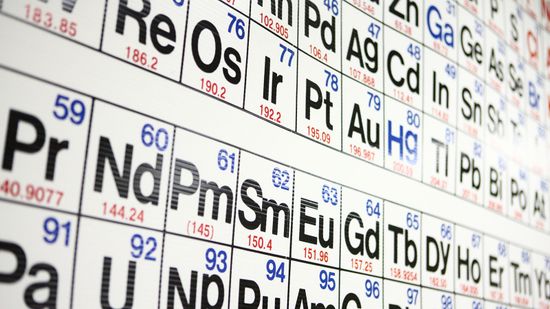
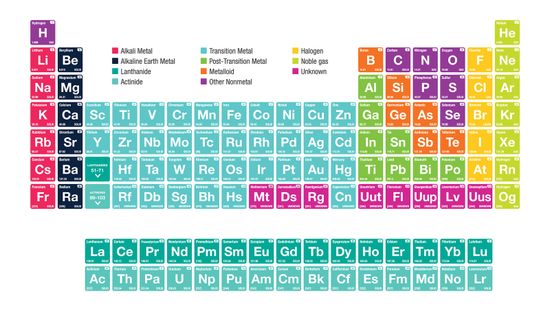
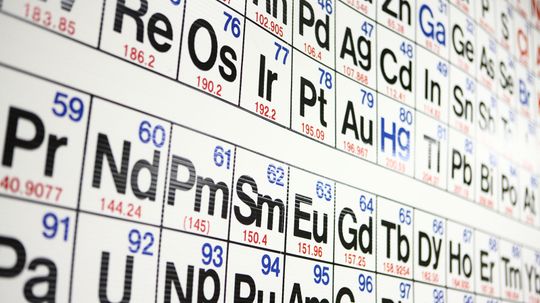
The 19th century saw further revolutions in chemical science. John Dalton, in 1808, formulated the atomic theory of matter. In 1828, Friedrich Whler, a German chemist, prepared an organic compound, urea, in the laboratory. It was the first time that an organic compound had been synthesized. This synthesis proved that there was no essential difference between organic and inorganic substances, as had previously been believed. Dmitri Mendeleev, a Russian chemist, compiled the periodic table of elements in 1869, and predicted the discovery of several new elements. The discovery of radium in 1898 by Pierre and Marie Curie was another important development in chemistry. Justus von Liebig made contribution to the field of organic chemistry in the 1830s.

Wilhelm Oswald and Avante Arrhenius proposed that electrical charge in a solution is transferred by charged particles, or ions. Niels Bohr in 1913 developed the atomic model where electrons orbited a positively charged nucleus.

Parallel to the growth of theoretical chemistry was the growth of industry. In the 19th century, factories were making chemicals such as bleaching powder and sulfuric acid, as well as dyes.

20th-century and Current Developments

Many important advances in chemistry occurred in the 20th century. Organic chemistry expanded in scope to include biochemical reactions. Melvin Calvin discovered the chemical reactions involved in the process by which plants made food. In 1919, the British physicist Lord Rutherford bombarded nitrogen atoms with alpha particles (helium nuclei) to form oxygen and hydrogen atoms. This was the first man-made transmutation of an element, and marked the birth of a new field of study-nuclear chemistry. In 1938, Otto Hahn and Fritz Strassmann, German scientists, discovered the process of nuclear fission. Since World War II, radioactive isotopes produced in nuclear reactors have aided research in chemistry, biology, and medicine.

Chemical research has led to the development of thousands of synthetic materials that have made possible the establishment of new industries. Bakelite, the earliest synthetic resin, was produced in 1909. Since then, plastics such as polyethylene, Teflon, Lucite, and the silicones have found wide-spread application. Drugs such as the sulfa drugs, penicillin, antihistamines, and antibiotics have also been synthesized. The two world wars saw an increase in output by these industries to meet shortfalls of ammunition, metals, and rubber. The food industry also expanded.

New instruments and techniques have made it possible to determine the molecular structure of such complex substances as proteins, nucleic acids, and sterols.

Space exploration, which began in the 1950s, placed new demands on chemical research. Heat-resistant materials, for space vehicles, and liquid and solid propellants, for rocket engines, are among the contributions of chemistry to the space age.

In the 1970s, some commonly used chemicals were found to be harmful to humans and damaging to the environment. Chemicals in certain pesticides were found to accumulate in the tissues of birds, fish, and other wildlife; and chemicals in aerosol sprays, detergents, antifreeze, and other products were found to pollute the environment. Certain chemicals in food products and drugs were found to cause cancer and birth defects. In the United States, cities, states, and the federal government passed laws banning some chemicals, limiting the use of others, and placing restrictions on the handling and disposal of still others.

Biochemistry is an active area of research today. New instruments have enabled biochemists to study the action of chemicals within an organism without harming the organism. Biochemists are studying substances suspected of causing cancer or genetic damage to determine the molecular features responsible for the harmful effects. Other chemists are investigating how chemical pollutants affect the environment and how they decompose into other substances.

Synthetic chemistry is another area of active research. Chemists synthesize many thousands of new compounds each year. They have discovered chemical agents that can be used in reactions to add special groups of atoms to specific parts of other molecules. Researchers design new molecules and use such agents in a series of reactions to build the new compounds. Their techniques have led to the creation of many drugs.

The study of the surface properties of chemical compounds-called surface chemistry-is another field of present-day research. Chemists have learned that surface characteristics cause certain substances-called catalysts-to accelerate the rate of chemical reactions. Chemists today are also working to develop a chemical cell that would use the energy of sunlight to break up water molecules into oxygen and hydrogen. The hydrogen thus produced could be used as fuel.

The metallurgy of ancient peoples involved some of the earliest chemical discoveries. They discovered around 3500 BC that certain ores if heated would produce metals. They created weapons made of copper and jewelry made of gold. Ancient metalsmiths by 3000 BC discovered that by combining ores they could create new metals, or alloys. The first alloy was bronze, made of copper and tin. Tools and weapons made of bronze were sharper and more durable than those made of copper.

Around 1400 BC, the Hittites perfected the smelting of iron ore, a process that required much higher heat and the presence of carbon to draw off the oxygen that is combined with the iron in the ore. Iron was a stronger material than bronze.

The ancients also learned that clay vessels could be made more durable if baked or fired. They also developed a crude glass.

The records left by early civilizations show no knowledge of chemistry as the science we know today. The ancients, however, were acquainted with many useful substances and the methods for their preparation. Certain plants and shellfish were found to yield dyes with which fabrics could be colored. Many herbs and roots were used as medicines. The bark of some kinds of trees provided a substance that tanned leather.

Some early people learned how to make paper, bricks, and glazed pottery. These and other crafts were developed to a high degree, yet none of the ancient artisans understood the nature of the chemical processes involved. Each craft and process was attributed to one god or another and regarded as a miraculous gift bestowed upon mankind.

Some of the philosophers of ancient Greece, however, attempted to explain the nature of matter. They believed that all substances were made up of four basic elements: air, earth, fire, and water. These people advanced several theories as to why substances differ from one another. Some of these theories were remarkably logical; many were almost correct, but none was ever tested by doing an experiment. Democritus of Greece was the first to consider the existence of atoms in the 4th century BC. A hundred years later, Aristotle said that transmutation occurred when a substance changed its state; for example, a solid became liquid or gas. Chemistry did not become a science until people began to investigate systematically the characteristics of the materials and natural forces making up their surroundings.