In "The Empire Strikes Back," the fifth episode of the "Star Wars" films, Han Solo and his crew of fellow Rebels escape from the planet Hoth, only to fly straight into an asteroid field. The field is densely packed, and with huge, spinning rocky matter careening back and forth around the Millennium Falcon, Han Solo must deftly maneuver his spaceship to safety. Unfortunately, according to C3PO, the odds of successfully doing so are very slim -- only 3,720 to 1.
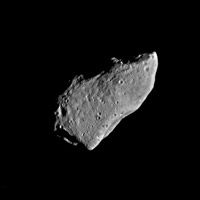
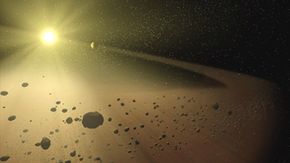
If a spaceship launched from Earth toward our solar system's asteroid belt and attempted to fly though it, would it look the same as "Star Wars," with dangerous debris flying everywhere, putting the mission in jeopardy? As it turns out, navigating through the asteroid belt wouldn't be quite as dramatic -- only a handful of asteroids - which are also considered minor planets - are big enough to cause any damage to a spacecraft, and there's much more space between them than you might think.
Advertisement
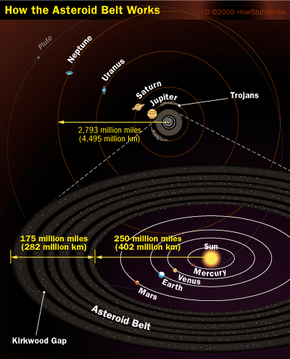
But that doesn't mean the main asteroid belt, located between the orbits of the planets Mars and Jupiter, is any less interesting than the field in "Star Wars." The more astronomers study the composition, activity and formation of the asteroids in their orbit around the sun, the more we understand about how the entire solar system came to be. Some theories even suggest that life on Earth started with asteroids in the planet's early stages. On the other hand, many scientists believe an asteroid caused the mass extinction of the dinosaurs and other organisms 65 million years ago.
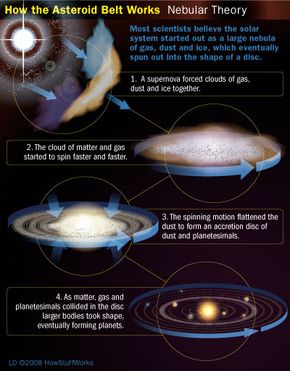
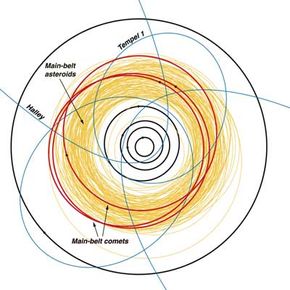
How did the asteroid belt form, and how did it affect the rest of the solar system? What do Mars and Jupiter have to do with it, and how do their orbits affect the main belt? What about the Kuiper belt and the Oort cloud -- are they any different from the main one? Are there other asteroid belts in other solar systems like ours, or is the main belt unique? Keep reading to find out.
Advertisement