
Engineering
Engineering is the discipline of design and construction of mechanical devices, equipment, structures and public works systems. Topics include aircraft technologies, buildings, bridges, robotics and heavy machinery.
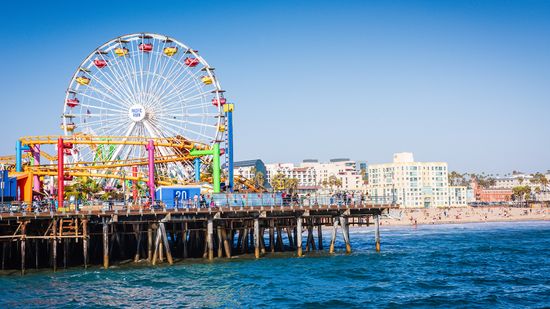
What's the Longest Pier in the U.S.? A List of Non-Industrial Contenders
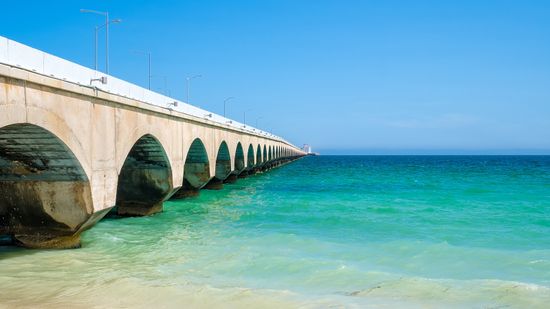
The Longest Pier in the World is in North America

The World's Most Awe-inspiring Glass Buildings

Who Builds Data Centers? Where? Why? We Have So Many Questions

The Steepest Road in the World, Plus 9 Rival Inclines

Here's Longest Bridge in the U.S., Plus 7 Runners-Up

10 Types of Swords for All Sorts of Circumstances

A Horrifying Russian Lathe Accident Highlights Vital Safety Protocols
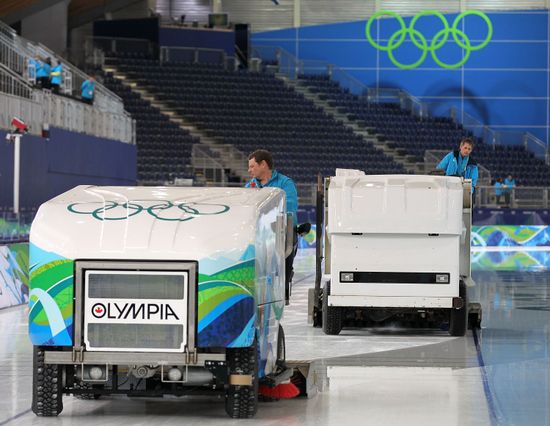
How Zambonis Work

What's the Hardest Wood in the World?
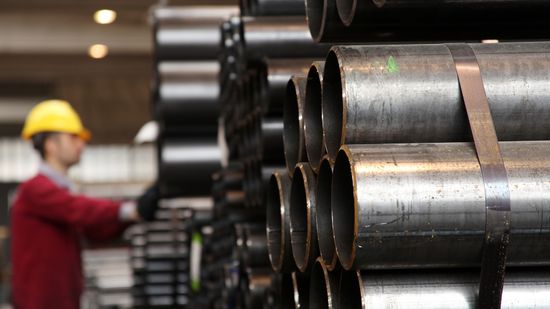
10 Types of Metal (and We Don't Mean the Music)

Are food-based plastics a good idea?

Are Humanoid Robots Really That Advanced Now?

Your Thoughts Could Activate a Tiny Robot Inside Your Own Brain

How Star Wars Works: Fan-built Droids
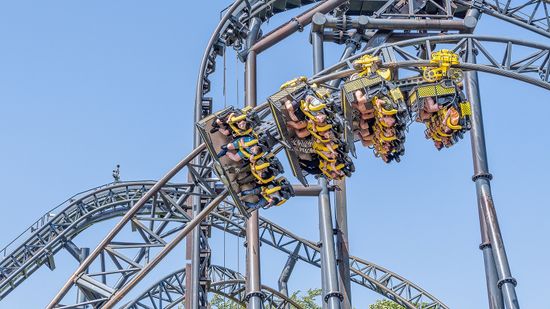
What's the Scariest Roller Coaster in the World? 10 Contenders
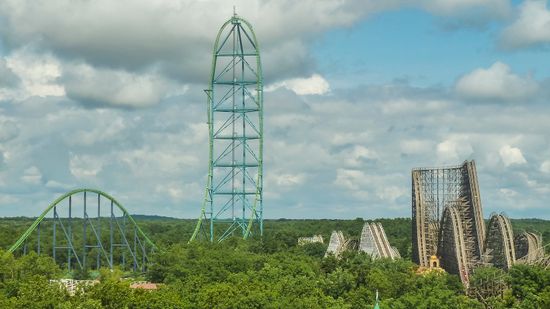
The Tallest Roller Coaster in the World Stood for 19 Years

Tallest Building in the U.S. and 13 Other Stunning Skyscrapers
Learn More / Page 7
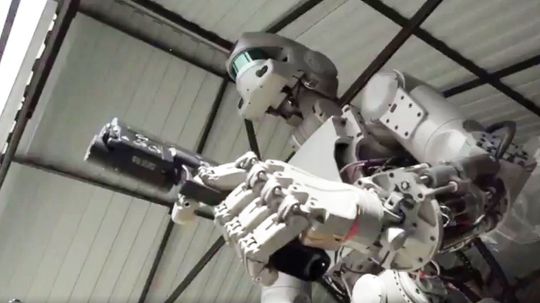
The android known as FEDOR used pistols to display its decision making and dexterity, officials said, not as a preview of robot warfare.

What do you do when you're out of land but want to expand an airport? Try building on water.
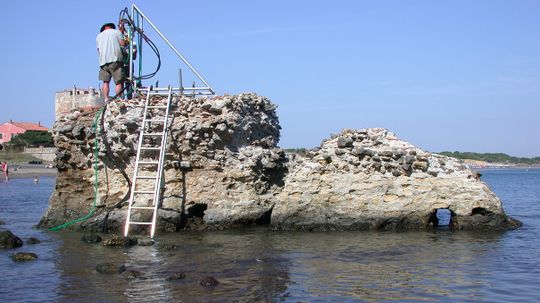
The ancients were able to devise a mix for concrete that actually gets stronger over time thanks to chemical reactions. If only we could rediscover the recipe...
Advertisement

Roundabouts aren't all that complicated, but they're still relatively rare in the U.S., especially when compared with France.

That is, if you're under the age of 25 and your hearing's intact.
By Julia Layton

A robot to simulate mudskipper locomotion gives scientists a look into the success of the first land vertebrate ancestors, and points to our future on other planets.
Environmental engineering existed long before it had a name. It began at the dawn of civilization when we started changing our surroundings to meet our needs.
Advertisement

A hospital stay can be a stressful experience for anybody, and especially for a child. But a smiling new robot named Robin plays games, tells stories and comforts children in need of a friend.

If you think asphalt is what hot tar roads are made of, you'd be wrong. Asphalt is only one ingredient in the recipe that makes up our roads. And it has a very long, very interesting history.
It's easy to confuse the Parthenon and the Pantheon. The names are so similar, and they're both ancient ruins. But despite those similarities, the two structures are very different.
Despite what the nursery rhyme says, London Bridge is not falling down - and never really has. But the bridge that spans the Thames has been rebuilt again and again for two millennia.
Advertisement

You think stainless steel is a strong metal. So would it surprise you to learn it can't hold an edge when it comes to your hair?
The designer of New York's Central Park believed that public parks were 'democratic spaces' belonging to all citizens, and aren't we glad he did?
By Wendy Bowman
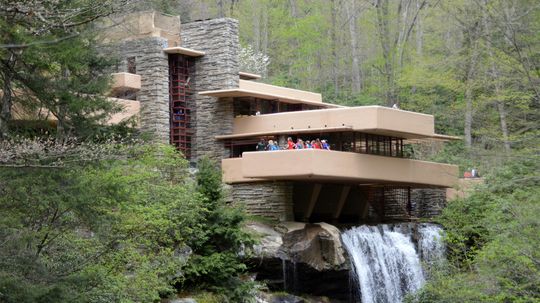
Set over Bear Run, a tributary of the Youghiogheny River in the mountains of southwestern Pennsylvania, Fallingwater is perhaps the architect's best-known work.
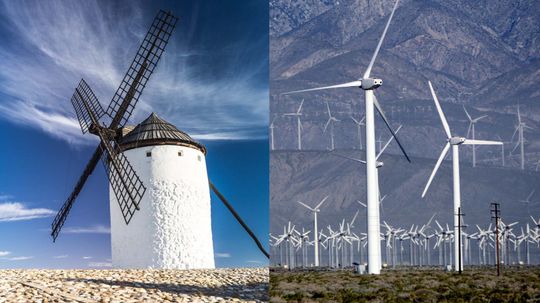
Windmills and wind turbines work on the same core principle to convert wind into energy, but one creates mechanical energy while the other creates electricity. Here's how they work.
Advertisement

First developed in the 1920s, Geiger counters still use the same basic technology to detect radiation, but today can be the size of a smartphone.

Obelisks can be found in cities throughout the world, from Washington, D.C., to Paris, France. But what is the origin of these massive structures?

All steel is not the same, and Damascus steel has a reputation for being the best. But is today's Damascus steel the same as that forged centuries ago?
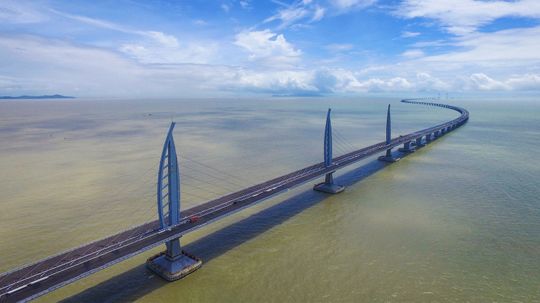
The Hong Kong-Zhuhai-Macao Bridge is 34 miles (55 kilometers) long and connects the territories of Hong Kong and Macao to mainland China for the first time.
Advertisement

Well, heck yeah, we can, and we have. Let's take a look.
By Robert Lamb

We may finally know how the ancient Egyptians built the pyramids.
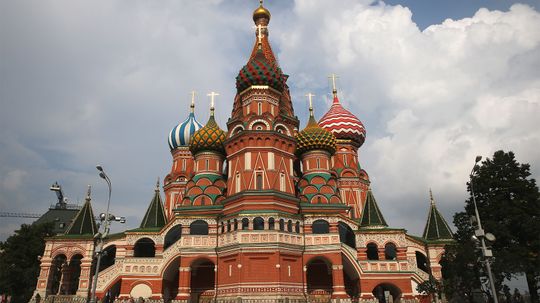
St. Basil's Cathedral in Moscow is an architectural oddball, but travel company RealRussia decided to imagine what it would look like in seven more conventional architectural styles.

In 17th century Japan, wealthy citizens built homes with "nightingale floors" that squeaked, warning them of intruders. In fact, the floors squeaked louder when the steps got lighter.
Advertisement
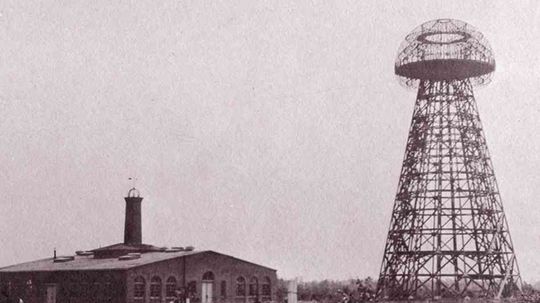
There's a mysterious tower in Texas that strongly resembles Nikola Tesla's Wardenclyffe Tower. Its constructors say they're testing some new forms of electromagnetic waves. But is something else going on?

A new robot ant uses the same technology desert ants use to safely, efficiently navigate through the searing Saharan sun.