
Optics
Optics is the study of the properties and behavior of light. In this section you can learn about everything from holograms to lasers and lenses.
Brown Noise vs. White Noise: Which Is Best for Quality Sleep?

Can a sound wave kill you?

Can two cans and a string really be used to talk over a distance?

7 Types of Alcohol for Drinking, Cleaning and More

Understanding the Empirical Formula in Chemistry
The Most Expensive Metal in the World Isn't Gold or Platinum

How Electricity Works
How Faraday Cages Work

How Gasoline Works

What Does Mummification Have to Do With Gene Hackman?

What do bugs have to do with forensic science?

5 Things You Didn't Know About Autopsies
How Alchemy Paved the Way for Chemistry
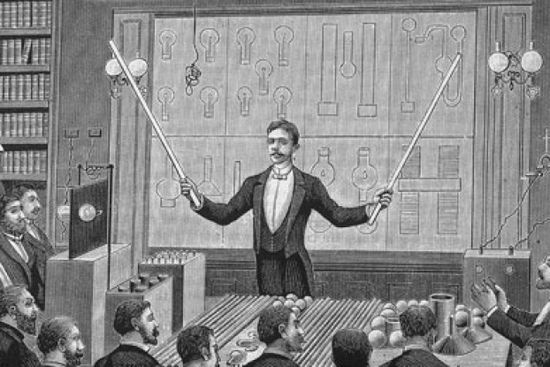
How did Nikola Tesla change the way we use energy?

Time May Not Exist, Say Some Physicists and Philosophers

Why Does Ice Stick to Your Fingers?

What if I forgot to remove a piercing before an MRI?
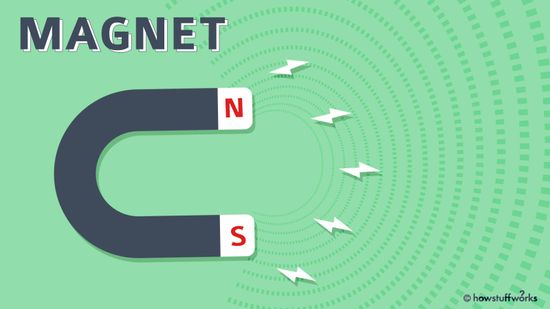
A Kid-friendly Introduction to Magnets and Magnetism

What's the Hardest Math Problem in the World? Try These 9

8 Types of Data That Inform Insights and Relationships
Congruent Angles: Definition, Symbol and Key Theorems

Tonnes vs. Tons: Metric vs. Imperial Measurements Strike Again

The Most Expensive Liquid Is 26,000x the Price of Human Blood

5 Hugely Fun Facts About Mass (Not Weight)

The Demon Core: A Tale of Atomic Ambition and Tragic Fate

Half-Life Formula: Components and Applications
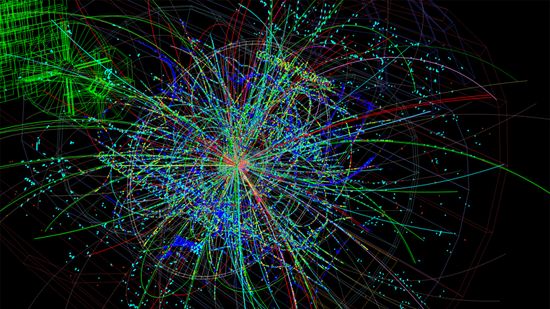
Could an 'X17 Particle' Hint at a Fifth Force in the Universe?
Learn More

The iconic "school bus yellow" was the invention of an educator named Frank Cyr. But if yellow is so good for visibility, why don't all fire trucks use it too?
By Dave Roos
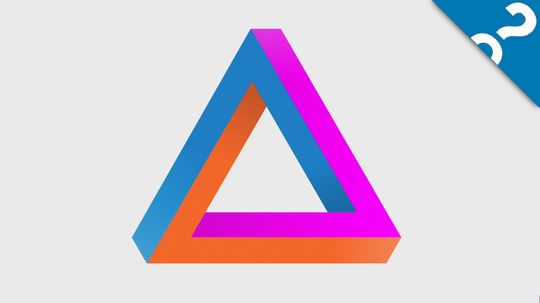
It's true: In 6 easy steps, you too can draw an impossible shape.

All colors that you see fall into the visible light spectrum. Learn about the colors in the visible light spectrum in this article.
By Sascha Bos
Advertisement

Imagine wearing a T-shirt with lettering on it while brushing your teeth. Why are the letters on the T-shirt reversed in the mirror, while your head appears right side up?
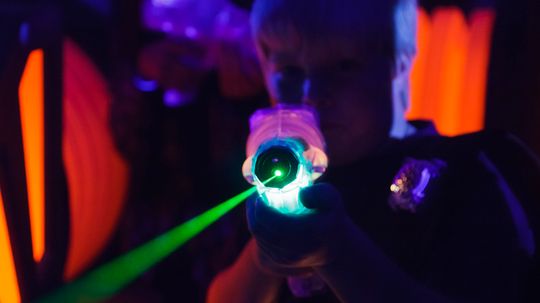
Lasers are used in dental drills, eye surgery and even tattoo removal. But what exactly is a laser? There are numerous types, but all lasers work basically the same way. Learn how they generate such concentrated beams of light.

You're driving down the road on a sunny day, and you see a puddle of water coming up. You look again and it's gone! What happened? You'll be able to answer that question if you read our miraculous mirage article.
By Tom Harris
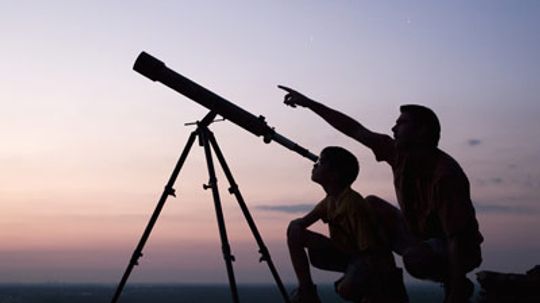
For centuries, curious observers have probed the heavens with the aid of telescopes. Today, both amateur and professional scopes magnify images in a variety of ways.
Advertisement

Just about everyone has seen a television show or movie in which a criminal suspect is questioned while detectives watch from behind a one-way mirror. How does a piece of glass manage to reflect light from one side while remaining clear on the other?

The human eye misses a lot -- enter the incredible world of the microscopic! Explore how a light microscope works.
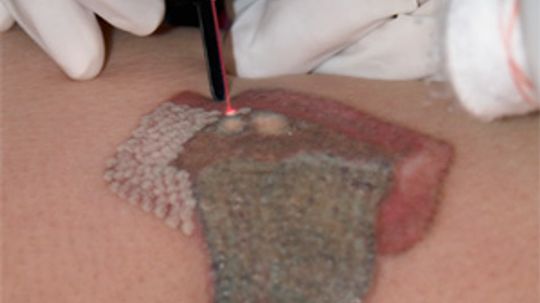
A venerable work of art hangs lifeless in a museum, the once brilliant scene dulled by centuries of dirt and grime. Can laser analysis and modern art restoration techniques save the masterpiece?
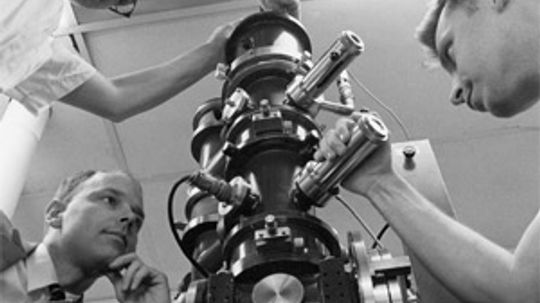
Unlike the cheap microscopes you peered into in school, these advanced instruments can breathe rich detail into the tiny world around us, including the world of nanotechnology.
Advertisement

If you want to see a hologram, you don't have to look much farther than your wallet. But the most impressive holograms are large scale and illuminated with lasers or displayed in a darkened room with carefully directed lighting. Learn how a hologram, light and your brain work together make clear, 3-D images.

Just how far can the human eye see? There's no exact formula to figuring it out, but we do have an idea.
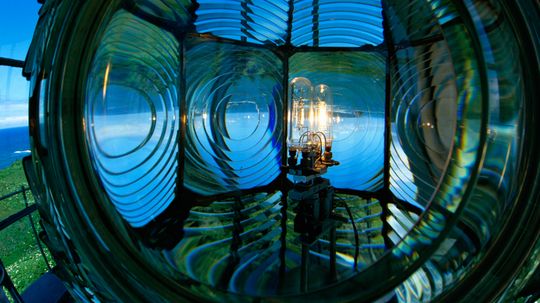
I have a thin piece of plastic mounted on the back window of my RV. It magnifies things so I can see better when I'm backing up. How can such a thin piece of plastic magnify things? A regular glass magnifying lens would have to be curved on both sides and much thicker.

The Diamond synchrotron is a massive facility that houses a beam of light 10 billion times brighter than the sun. But is that all it does?
Advertisement
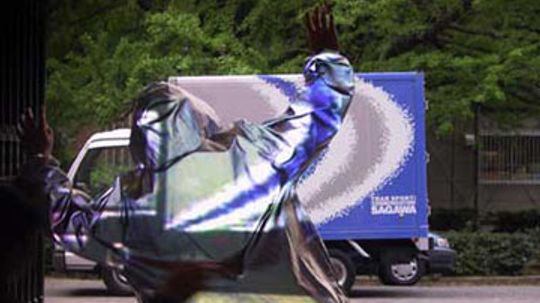
An invisibility cloak seems perfectly believable in the magical world of Harry Potter, but in the real world, it's impossible, right? Not so fast.
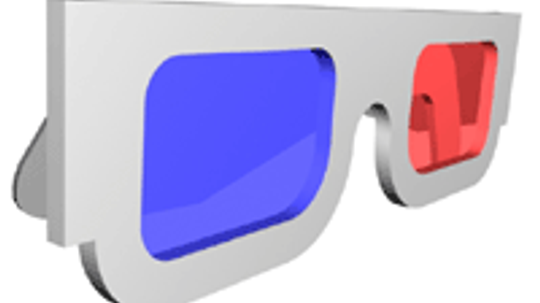
NASA's Mars rovers are sending 3-D images to Earth, so we can see depth and texture on the Martian surface. And how do we see this depth and texture? 3-D glasses, of course! Check out how they work.
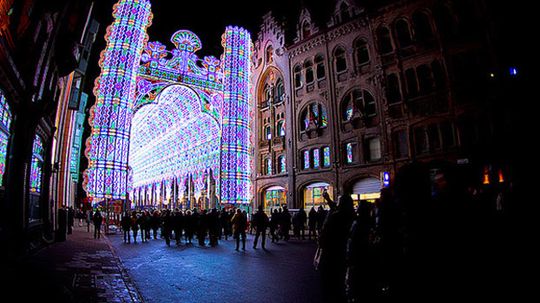
Some of the brightest minds in history have focused their intellects on the subject of light. Einstein even tried to imagine riding on a beam of light. We won't get that crazy, but we will shine a light on everything scientists have found so far.

If you're one of those people who chooses invisibility as your desired superpower, it could mean you have a dark side.
By Alia Hoyt
Advertisement

Why do we love looking at a perfectly stacked display of soup cans or six flower petals around a stamen? Our brains seem wired for it -- but why?
By Dave Roos

It's a young lady! It's an old woman! It's a blue dress! No, it's gold! Why are we fooled by optical illusions and what do they tell us about how the brain works?
Seven ounces a ray! No, that's a lie. Measuring the weight of light is not as straightforward as that. So what's the more complicated explanation?
By Kate Kershner & Yara Simón

Kaleidoscopes have been fascinating people since the early 19th century. Whether you think of kaleidoscopes as toys or as works of art, no matter how often you look inside, you'll never see the same thing twice.
Advertisement
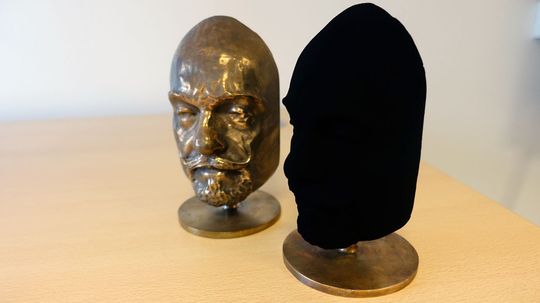
Vantablack is one of the darkest substances known, able to absorb up to 99.965 percent of visible light. But is it the blackest of blacks on the planet?
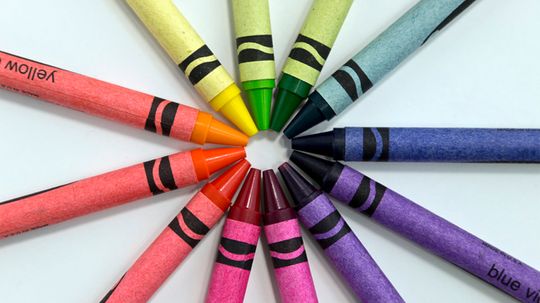
Modern color theory got its start with, believe it or not, Sir Isaac Newton, who also discovered a little thing called gravity and invented calculus.