
Acoustics
Acoustics is the science of sound as it reacts to air, water and solid materials. Learn about topics from radar to white noise, plus find out why you can hear the ocean in a seashell.

7 Types of Alcohol for Drinking, Cleaning and More

Understanding the Empirical Formula in Chemistry

The Most Expensive Metal in the World Isn't Gold or Platinum

How Electricity Works

How Faraday Cages Work

How Gasoline Works

What Does Mummification Have to Do With Gene Hackman?

What do bugs have to do with forensic science?

5 Things You Didn't Know About Autopsies

How Alchemy Paved the Way for Chemistry

How did Nikola Tesla change the way we use energy?
Time May Not Exist, Say Some Physicists and Philosophers

Why Does Ice Stick to Your Fingers?

What if I forgot to remove a piercing before an MRI?
A Kid-friendly Introduction to Magnets and Magnetism

What's the Hardest Math Problem in the World? Try These 9

8 Types of Data That Inform Insights and Relationships
Congruent Angles: Definition, Symbol and Key Theorems

Tonnes vs. Tons: Metric vs. Imperial Measurements Strike Again

The Most Expensive Liquid Is 26,000x the Price of Human Blood

5 Hugely Fun Facts About Mass (Not Weight)

The Demon Core: A Tale of Atomic Ambition and Tragic Fate

Half-Life Formula: Components and Applications
Could an 'X17 Particle' Hint at a Fifth Force in the Universe?

Why Are School Buses Yellow?

HowStuffWorks: How To Draw An Impossible Shape

What Are the Colors in the Visible Spectrum?
Learn More

Do you remember holding a large conch shell up to your ear to hear the ocean? Why does this work even when you're far away from the sea?
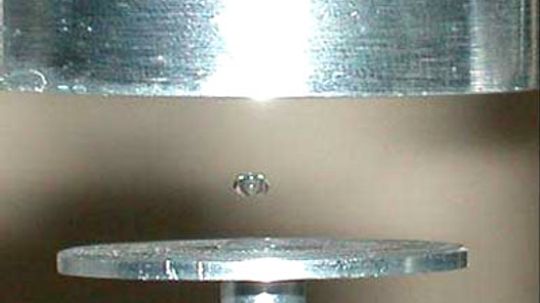
The idea that something so intangible as acoustic levitation can lift objects may seem unbelievable, but it's a real phenomenon.

Overtone is a sound accompanying the main tone produced by a vibrating body. The number and loudness of overtones determine the timbre, or tone color, of a musical sound.
Advertisement

An object free to vibrate tends to do so at a specific rate called the object's natural, or resonant, frequency.
When sound waves strike the ear, these waves produce the sensation of sound. Let's take a look at how sound waves work.

The decibel scale measures sound based on human hearing, which makes it one of the most unusual scientific measurements. How are decibel calculated and what do they tell us about sound?
By Sascha Bos

When an airplane flies faster than the speed of sound, you hear a large booming sound. But how can something that seems so simple cause such a boom?
Advertisement

Radar is used to track storms, planes, and weapons and also to create topographic maps. Learn about radar, radar technology and Doppler shift.

I was watching an old movie today, and two kids (neighbors) were talking to each other using two tin cans and a string. Does that really work? If so, why does it work?

What makes sound a weapon? Review the basics of sound and discover exactly how the LRAD produces its "beam of sound." We'll also explore LRAD's hailing and warning abilities and other uses for sound.
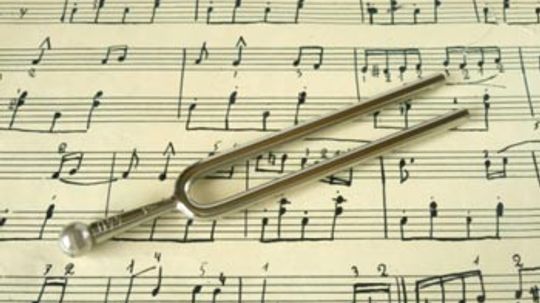
Pianos lose their tuning, guitars fall out of key -- even church organs need to be tuned every now and then. For centuries, the only sure-fire way to tell if an instrument was in tune was to use a tuning fork.
Advertisement
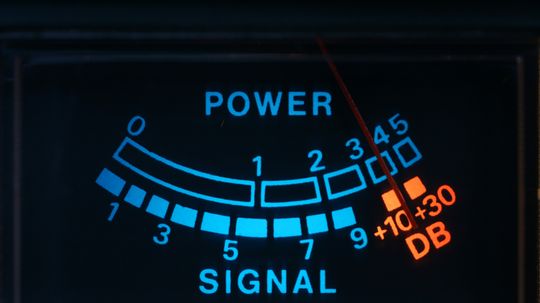
Did you ever wonder how to measure how fast sound travels in the air? Read this article to learn how to measure sound travel in the air.

You know that sound synonymous with a certain laser blaster from a galaxy far, far away? Yeah. It sounds like that.
By Mark Mancini

What is white noise? There's a little more to it than the ambient noise you associate with a humming air conditioner or whirring fan.

A sound wave alone probably won't kill you. Crank the volume on a terrible song, though, and you just might annoy everyone to death.
By Oisin Curran
Advertisement

There are so many things in this world that are possible, and shattering glass with sonic force is one of them - but just how probable is it, really?
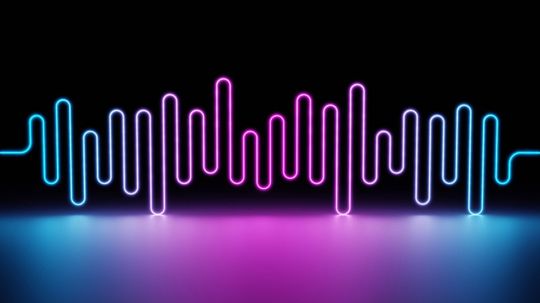
If you have trouble sleeping you might have been told to get a white noise machine. But white isn't the only color of noise out there.